⛹🏾
The Emoji
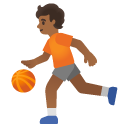
Person Bouncing Ball: Medium-dark Skin Tone
U+26F9 U+1F3FE · :person_bouncing_ball_mediumdark_skin_tone:
Trend 58
Meaning layers
- interpretation
- Used to signal athleticism, gym culture, basketball fandom, or flexing physical skill. Sometimes used ironically to imply someone is 'playing games' or dodging responsibility.
- tiktok usage
- Appears in sports highlights, gym motivation videos, and basketball challenge content. Also used in 'athlete aesthetic' TikToks and POV videos about sports life.
- irony level
- 3 / 10
Platform meanings
- meaning
- Represents basketball culture, athletic identity, sports grind, and hoops lifestyle content
- trend usage
- Paired with basketball challenge videos, gym montages, court freestyle clips, and athlete POV content. Used heavily in Black athletic creator spaces.
- hashtags
- #basketballlife#hooper#sportsTikTok#athletecheck#courtside
- virality score
- 62 / 100
Cultural meanings
🇺🇸
Western / Gen-Z
Strongly associated with basketball culture, Black athletic excellence, and streetwear identity. Widely used without needing context in sports-heavy communities.
🇵🇰
Pakistan & India
Cricket dominates sports culture, so this emoji is less common but used by urban basketball enthusiasts and NBA fans in metro cities like Mumbai or Lahore.
🌍
Middle East
Basketball is gaining popularity, especially among youth in Jordan, Lebanon, and Gulf states. Used by fans of the NBA and local leagues.
🌐
Global Neutral
Universally understood as a sports/basketball symbol with no culturally sensitive implications. Safe and clear across all global contexts.
🇧🇩
Bangladesh
Rarely used in mainstream communication; basketball is a niche sport. Occasionally appears among urban youth following international basketball.
🇱🇰
Sri Lanka
Infrequent use as cricket and volleyball dominate. May appear among school-aged youth involved in basketball programs.
🇨🇳
China
Used among CBA (Chinese Basketball Association) fans and NBA followers, especially given basketball's significant popularity in urban China.
🇯🇵
Japan
Basketball is moderately popular, boosted by NBA interest and anime like 'Slam Dunk'. Used by basketball club members and sports fans.
🇰🇷
South Korea
Growing basketball culture driven by NBA fandom and local KBL league. Used in sports content and among young athletic communities.
🇹🇼
Taiwan
Similar to South Korea — NBA fandom is strong. Used in sports discussions and by youth involved in basketball activities.
🇭🇰
Hong Kong
Urban basketball culture exists; used in recreational sports contexts and among NBA fans consuming international basketball content.
🇵🇭
Philippines
Basketball is the national sport of the Philippines. This emoji is extremely common and carries strong cultural pride and sports identity.
🇮🇩
Indonesia
Basketball is gaining traction among urban youth. Used in sports communities and among fans of international basketball leagues.
🇹🇭
Thailand
Moderate use; basketball is popular in schools and urban areas. Used by youth in sports clubs and among NBA fans.
🇻🇳
Vietnam
Growing sports culture with increasing NBA viewership. Appears in sports content among younger demographics in major cities.
🇲🇾
Malaysia
Used in sports discussions and among youth basketball communities. Basketball is a recognized recreational sport in urban areas.
🇸🇦
Saudi Arabia
Youth basketball culture is expanding. Used in athletic and sports contexts, particularly among younger generations following NBA.
🇦🇪
UAE
Cosmopolitan cities like Dubai have active basketball communities. Used by expats and locals alike in sports and fitness contexts.
🇪🇬
Egypt
Football dominates, but basketball has a following. Used in sports contexts among urban youth and those following international leagues.
🇹🇷
Turkey
Turkey has a strong basketball tradition (EuroLeague, BSL). This emoji is well-recognized and commonly used in sports contexts.
🇮🇷
Iran
Basketball has a following especially post-NBA exposure. Used among sports-interested youth, though sports emoji use is generally moderate.
🇳🇬
Nigeria
Basketball is popular alongside football; many Nigerian players are NBA stars. This emoji carries strong cultural resonance and athletic pride.
🇿🇦
South Africa
Basketball is growing as a sport. Used by urban youth communities and sports enthusiasts following both local and international basketball.
🇬🇧
UK & Ireland
Basketball is a minority sport but growing. Used by fans of the BBL and NBA in sports-specific communities, less mainstream than football.
🇫🇷
France
France has a strong basketball tradition with many NBA stars. This emoji is well-used in sports discussions and carries cultural pride.
🇩🇪
Germany
Basketball is popular via Bundesliga and NBA fandom (boosted by Dirk Nowitzki's legacy). Used in sports contexts with moderate frequency.
🇪🇸
Spain & Italy
Both countries have rich basketball traditions (ACB, Lega Basket, EuroLeague). Widely used in sports contexts with enthusiastic fan bases.
🇧🇷
Brazil
Basketball has a dedicated following. Used in sports content, though football remains dominant. NBA fandom drives emoji use among youth.
🇲🇽
Mexico
Growing basketball culture tied to NBA viewership. Used in sports communities and among younger demographics in urban areas.
🌎
Latin America
Varied by country; Argentina and Puerto Rico have strong basketball cultures. Used in sports content across the region with moderate frequency.
🇦🇺
Australia & NZ
NBL is growing in popularity. Used by sports fans and athletes; less dominant than cricket or rugby but recognized and actively used.
How its meaning shifted
- 2010
Emoji barely existed in mainstream use; basketball-related digital expression relied on text like ':basketball:' or simple ASCII. Skin tone modifiers were not yet available.
- 2015
Introduced with skin tone diversity updates. Used primarily for literal basketball references. Diversity representation was a notable conversation around its release.
- 2020
Saw increased use during NBA bubble season and heightened conversations around racial representation in sports. Became more culturally significant beyond just sport.
- 2026
Integrated deeply into sports content culture, athlete branding, and Black cultural expression online. Part of a broader emoji vocabulary for athletic and competitive identity.
See it on every platform
Adjacent emojis
- Often confused with
- person playing handballperson jugglingperson cartwheeling
- Can replace
- basketballflexed bicepsperson running
Share & embed
Frequently asked
01What does the ⛹🏾 Person Bouncing Ball: Medium-dark Skin Tone emoji mean?
A person dribbling or bouncing a basketball, shown with medium-dark skin tone. Represents the sport of basketball, athletic activity, and physical fitness.
02What does ⛹🏾 mean on TikTok?
Represents basketball culture, athletic identity, sports grind, and hoops lifestyle content
03What does ⛹🏾 mean on WhatsApp?
Casually signals basketball activity — 'heading to the court ⛹🏾' or 'game tonight ⛹🏾'
04What does ⛹🏾 mean in Gen-Z slang?
Used to signal athleticism, gym culture, basketball fandom, or flexing physical skill. Sometimes used ironically to imply someone is 'playing games' or dodging responsibility.
05Is the ⛹🏾 emoji safe to use?
Represents basketball and athletic activity. Completely safe and positive in virtually all contexts.
06What does ⛹🏾 mean in texting?
The bouncing ball motion psychologically conveys rhythm, momentum, and controlled power. It evokes feelings of freedom of movement and competitive confidence.
07What is the shortcode for ⛹🏾?
The shortcode for Person Bouncing Ball: Medium-dark Skin Tone is :person_bouncing_ball_mediumdark_skin_tone:
08What does ⛹🏾 mean in dating?
Used by someone trying to impress a romantic interest with their athletic lifestyle or body. 'Come watch me play ⛹🏾' is a classic low-key flirt.
Safety & usage
- Safe meaning
- Represents basketball and athletic activity. Completely safe and positive in virtually all contexts.
- Caution
- No notable toxic uses documented. Extremely rare edge cases where it might appear in targeted harassment of athletes, but this is not a common pattern.
No significant warning needed. The skin tone modifier (medium-dark) is a positive diversity feature with no harmful associations.
How it looks across platforms


Appearance varies by platform and device. Google Noto, Twemoji, and OpenMoji are open-source.