⛹🏼
The Emoji
Person Bouncing Ball: Medium-light Skin Tone
U+26F9 U+1F3FC · :person_bouncing_ball_mediumlight_skin_tone:
Trend 44
Meaning layers
- interpretation
- Used to flex athletic lifestyle, signal 'ball is life' culture, or ironically reference someone who takes casual pickup games too seriously. Also used as a subtle flex about being active or sporty.
- tiktok usage
- Appears in gym bro content, sports highlight captions, and ironically in 'he thinks he's NBA material' joke videos.
- irony level
- 4 / 10
Platform meanings
- meaning
- Signals sports content, athlete identity, or basketball culture. Also used ironically in 'delulu athlete' humor.
- trend usage
- Appears in sports POV videos, basketball trick shot compilations, and gym routine content. Frequently paired with trending sports audio.
- hashtags
- #BallIsLife#BasketballTikTok#SportsTok#HoopLife#AthleteTok
- virality score
- 52 / 100
Cultural meanings
🇺🇸
Western / Gen-Z
Signals 'ball is life' culture and athletic identity. Used both sincerely by actual ballers and ironically in meme contexts to mock people who overestimate their basketball skills.
🇵🇰
Pakistan & India
Associated with cricket more broadly than basketball, but used by urban youth who follow NBA or play casual basketball. Represents modern, westernized athletic identity among younger generations.
🌍
Middle East
Basketball is growing in popularity in Gulf states and the Levant, particularly among youth. This emoji is used by young, urban, basketball-following demographics on platforms like Instagram and Snapchat.
🌐
Global Neutral
Universally understood as representing sports activity, athletic energy, and an active lifestyle. The skin tone modifier is often selected for personal identification.
🇧🇩
Bangladesh
Used primarily by young urban males who follow NBA or play informal basketball. Signals a modern, westernized sporty identity distinct from dominant cricket culture.
🇱🇰
Sri Lanka
Niche usage mostly among youth in Colombo and other cities who engage with NBA content online. Generally understood as a sports activity indicator.
🇨🇳
China
Basketball has strong cultural roots in China due to Yao Ming's legacy and NBA popularity. This emoji is widely understood and used by sports fans, especially in WeChat and Weibo sports communities.
🇯🇵
Japan
Basketball is moderately popular, boosted by anime like Slam Dunk and Kuroko no Basket. The emoji is used by sports fans and those referencing basketball culture in a fandom context.
🇰🇷
South Korea
Basketball has a niche but dedicated following. The emoji appears in sports fandom contexts and among youth who follow NBA. Occasionally used by K-pop fans when idols reference basketball.
🇹🇼
Taiwan
Used among NBA fans and youth interested in American sports culture. Appears in sports group chats and social media posts about basketball events.
🇭🇰
Hong Kong
NBA fandom is strong in Hong Kong. The emoji is used naturally in sports discussions and among youth who identify with American athletic culture.
🇵🇭
Philippines
Basketball is the national sport of the Philippines, making this emoji extremely culturally relevant. It's used constantly in everyday sports conversations, PBA and NBA discussions, and street ball culture.
🇮🇩
Indonesia
Basketball is growing particularly among urban youth. The emoji is used by fans of NBA and local basketball leagues, often paired with sports commentary.
🇹🇭
Thailand
Used among urban youth and NBA followers. Less common than football-related emojis but recognized and used in appropriate sports contexts.
🇻🇳
Vietnam
Basketball interest is rising among Vietnamese youth influenced by NBA media. The emoji is used in sports discussion groups and among young people signaling a sporty, modern lifestyle.
🇲🇾
Malaysia
Used among urban sports fans who follow NBA. Basketball is popular in schools and among youth, making this emoji fairly common in sports-related social media content.
🇸🇦
Saudi Arabia
Basketball interest is growing with Saudi Arabia's sports investment boom. Used by young Saudis who follow NBA and participate in Vision 2030 sports culture initiatives.
🇦🇪
UAE
Dubai and Abu Dhabi have active basketball communities. The emoji is used by expats and locals who follow NBA and participate in the UAE's growing sports culture.
🇪🇬
Egypt
Basketball has a modest but growing fanbase, especially among Cairo's urban youth. Used in sports chats and among those who follow international basketball leagues.
🇹🇷
Turkey
Turkey has strong basketball culture with successful leagues and international players. This emoji is regularly used in sports discussions, fan communities, and to celebrate Turkish basketball achievements.
🇮🇷
Iran
Basketball has a dedicated following in Iran. The emoji is used in sports contexts among youth, though it carries no unique cultural subtext beyond general athletic activity.
🇳🇬
Nigeria
Basketball is popular in Nigeria alongside football, with several NBA players of Nigerian origin. Used in sports discussions and as cultural pride when Nigerian-heritage NBA players perform well.
🇿🇦
South Africa
Used among urban youth and NBA followers. Basketball is growing in South Africa through grassroots programs, and the emoji appears in sports community discussions.
🇬🇧
UK & Ireland
Basketball is a minority sport but has a growing fanbase especially in cities. Used primarily by NBA fans and those in the urban youth culture sphere where basketball aesthetics are popular.
🇫🇷
France
France has one of Europe's strongest basketball cultures with a proud NBA legacy (Tony Parker, etc.). The emoji is used enthusiastically in French sports communities and basketball fan pages.
🇩🇪
Germany
Used in German sports communities, NBA fan groups, and athletic lifestyle content. Dirk Nowitzki's legacy keeps basketball culturally significant in Germany.
🇪🇸
Spain & Italy
Both countries have strong basketball traditions and EuroLeague followings. The emoji is used in club fan communities, national team support content, and sports media.
🇧🇷
Brazil
Brazil has a strong basketball tradition and passionate NBA fanbase. Used in sports communities, athlete appreciation posts, and among youth who blend basketball with street culture.
🇲🇽
Mexico
NBA popularity is high in Mexico. The emoji is used in sports discussions, fan groups, and by youth who integrate American basketball culture into their identity.
🌎
Latin America
Basketball coexists with football across Latin America. The emoji is used by NBA fans, young athletes, and those who associate basketball with American cultural influence.
🇦🇺
Australia & NZ
Australia has strong basketball culture with multiple NBA stars. The emoji is used in NBL and NBA fan communities, youth sports content, and general athletic lifestyle posts.
How its meaning shifted
- 2010
Barely existed in emoji form; basketball-related communication relied on text or basic smiley faces. The concept of skin tone variants was not yet part of Unicode standards.
- 2015
Introduced with skin tone modifiers under Unicode 8.0, primarily used straightforwardly to indicate basketball or sports activity. Adoption was early and mostly literal.
- 2020
Became more culturally nuanced, appearing in 'ball is life' meme culture, athletic flex content, and increasingly personalized through skin tone selection as emoji diversity awareness grew.
- 2026
Established fixture in sports content, athletic identity expression, and ironic gym-bro meme culture. The skin tone variant is deliberately chosen for self-representation, reflecting mature emoji diversity norms.
See it on every platform
Compare with
Adjacent emojis
- Often confused with
- volleyballperson playing handballperson cartwheeling
- Can replace
- basketballflexed bicepsrunning shoe
Share & embed
Frequently asked
01What does the ⛹🏼 Person Bouncing Ball: Medium-light Skin Tone emoji mean?
A person dribbling or bouncing a basketball, displayed with a medium-light skin tone modifier. Part of the sports and activity emoji set.
02What does ⛹🏼 mean on TikTok?
Signals sports content, athlete identity, or basketball culture. Also used ironically in 'delulu athlete' humor.
03What does ⛹🏼 mean on WhatsApp?
Telling someone you're going to play basketball or any sport. Casual shorthand for 'I'm being active today.'
04What does ⛹🏼 mean in Gen-Z slang?
Used to flex athletic lifestyle, signal 'ball is life' culture, or ironically reference someone who takes casual pickup games too seriously. Also used as a subtle flex about being active or sporty.
05Is the ⛹🏼 emoji safe to use?
Represents athletic activity, basketball culture, sportsmanship, and an active healthy lifestyle.
06What does ⛹🏼 mean in texting?
Evokes feelings of physical empowerment, competitive spirit, and communal team identity. The specific skin tone adds a layer of personal identity expression and cultural representation.
07What is the shortcode for ⛹🏼?
The shortcode for Person Bouncing Ball: Medium-light Skin Tone is :person_bouncing_ball_mediumlight_skin_tone:
08What does ⛹🏼 mean in dating?
Used by sporty individuals to signal an active lifestyle and healthy body image. May be sent by someone saying 'come watch me play' as a low-key date invitation.
Safety & usage
- Safe meaning
- Represents athletic activity, basketball culture, sportsmanship, and an active healthy lifestyle.
- Caution
- Extremely rare, but could theoretically be used to mock someone's athleticism or be combined with other emojis in racially coded ways given the skin tone specificity.
Skin tone modifiers can occasionally be weaponized in targeted harassment to mock specific individuals. No widespread toxic usage pattern exists for this specific emoji.
How it looks across platforms
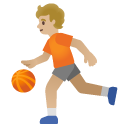


Appearance varies by platform and device. Google Noto, Twemoji, and OpenMoji are open-source.