🧔🏿
The Emoji
Person: Dark Skin Tone, Beard
U+1F9D4 U+1F3FF · :person_dark_skin_tone_beard:
Trend 48
Meaning layers
- interpretation
- Used to represent a rugged, cool, or wise older figure; sometimes used humorously to represent a dad, uncle, or 'the guy who knows things'. Also used for self-representation by dark-skinned bearded individuals.
- tiktok usage
- Appears in 'POV: your uncle who gives unsolicited life advice' content, street fashion showcases, and beard grooming tutorials targeting melanin-rich creators.
- irony level
- 3 / 10
Platform meanings
- meaning
- Represents bearded dark-skinned men in grooming, lifestyle, and identity content. Also used in comedic uncle/dad trope videos.
- trend usage
- Beard transformation videos, melanin men style content, 'Black excellence' grooming routines, POV uncle skits.
- hashtags
- #BeardGang#MelaninMen#BlackMenGrooming#BeardedMen#DarkSkinMen
- virality score
- 52 / 100
Cultural meanings
🇺🇸
Western / Gen-Z
Seen as a representation emoji for dark-skinned bearded men with strong identity pride connotations. Used casually in grooming content, self-expression, and 'uncle figure' humor.
🇵🇰
Pakistan & India
Represents the bearded South Asian man archetype, often associated with Muslim men keeping a beard for religious reasons or Sikh men. Used with respect and religious/cultural significance in many contexts.
🌍
Middle East
Highly culturally significant — beards are associated with Islamic tradition and religious devoutness. This emoji with dark skin tone is commonly used to represent Muslim men in the region.
🌐
Global Neutral
Simply understood as a dark-skinned man with a beard, used for general representation and identification without strong regional connotations.
🇧🇩
Bangladesh
Often used to represent religiously devout Muslim men, as keeping a beard is tied to Islamic tradition. Carries respectful connotations in family and community contexts.
🇱🇰
Sri Lanka
Used to represent South Asian men with beards, particularly in urban contexts. Can carry both religious (Muslim community) and stylistic connotations depending on context.
🇨🇳
China
Less culturally resonant as beards are less common in mainstream Chinese culture. Primarily used to represent foreign men or characters in gaming and media contexts.
🇯🇵
Japan
Used mostly in neutral or fantasy/gaming contexts, as beards are not a dominant cultural symbol in Japanese society. May represent a 'foreign' or rugged masculine archetype.
🇰🇷
South Korea
Associated with the 'bear' or rugged masculine aesthetic that contrasts with mainstream K-beauty ideals. Used in niche communities appreciating non-conventional masculinity.
🇹🇼
Taiwan
Similar to South Korea — used to represent a rugged, non-conventional masculine aesthetic. Also used for representation of South Asian or African characters in media discussions.
🇭🇰
Hong Kong
Used in multicultural contexts to represent diverse male identities. Also appears in discussions about international fashion and grooming trends.
🇵🇭
Philippines
Used to represent dark-skinned bearded men in local or diaspora contexts. Also used humorously in 'tito' (uncle) meme formats common in Filipino internet culture.
🇮🇩
Indonesia
Carries Islamic cultural significance alongside stylistic meaning. Used by Indonesian Muslim men to represent themselves and in religious community content.
🇹🇭
Thailand
Primarily used for representation of foreign or South Asian men. Also seen in fashion and grooming content targeting diverse male audiences.
🇻🇳
Vietnam
Used mainly for representation purposes in diverse or international contexts. Less culturally embedded due to lower prevalence of beards in Vietnamese cultural norms.
🇲🇾
Malaysia
Significant in Muslim-majority contexts where beards carry religious meaning. Used by Malay Muslim men as a self-identifier and in Islamic community discussions.
🇸🇦
Saudi Arabia
Deeply meaningful — beards are tied to Islamic tradition and masculine piety. This emoji is widely used in religious and cultural contexts to represent devout Muslim men.
🇦🇪
UAE
Used in multicultural Dubai/Abu Dhabi contexts to represent diverse bearded men. The dark skin tone resonates with the large South Asian and African expat communities.
🇪🇬
Egypt
Used to represent the religiously devout or traditionally masculine Egyptian man. Beards are associated with Islamic tradition and are widely respected in Egyptian culture.
🇹🇷
Turkey
Beards are associated with both religious conservatism and modern hipster aesthetics in Turkey. This emoji is used across both communities, with the dark skin tone adding diaspora representation.
🇮🇷
Iran
Beards have political and religious connotations in Iran. The emoji is used to represent traditionally religious men, though younger Iranians may use it more casually in grooming contexts.
🇳🇬
Nigeria
Widely used and celebrated — represents the stylish, bearded Nigerian man. Appears heavily in Afrobeats culture, men's grooming content, and identity-pride posts.
🇿🇦
South Africa
Used proudly in South African Black male communities. Associated with style, confidence, and identity especially in urban Johannesburg and Cape Town cultural spaces.
🇬🇧
UK & Ireland
Used by the British and Irish African/South Asian diaspora as a representation emoji. Also used in beard culture communities which are popular across UK grooming scenes.
🇫🇷
France
Used in French African diaspora communities for self-representation. Also appears in French men's grooming culture, which has seen a major beard renaissance.
🇩🇪
Germany
Used in diverse and multicultural communities within Germany. Also appears in beard grooming enthusiast circles which are popular in German men's lifestyle culture.
🇪🇸
Spain & Italy
In Spain and Italy, beards are fashionable and widely embraced. The dark skin tone version is used by North African and Sub-Saharan African diaspora communities for self-representation.
🇧🇷
Brazil
Used in Afro-Brazilian communities with strong cultural pride. Brazil's large Black population gives this emoji significant representation value in social media contexts.
🇲🇽
Mexico
Used by darker-skinned Mexican and Latin American men as a self-identifier. Also appears in Afro-Latino cultural spaces and beard grooming communities.
🌎
Latin America
Across Latin America, used by Afro-Latino men and indigenous communities with darker skin tones. Carries pride and identity meaning in communities reclaiming Afro-Latin representation.
🇦🇺
Australia & NZ
Used within Aboriginal Australian, Māori, and Pacific Islander communities as well as African diaspora communities. Common in men's grooming content and cultural pride posts.
How its meaning shifted
- 2010
The emoji did not exist yet — the base bearded person emoji and skin tone modifiers had not been introduced to Unicode.
- 2015
Skin tone modifiers were introduced to Unicode, making this combination possible. Early usage was primarily for representation and novelty.
- 2020
Gained significant traction during the social media diversity and representation movement. Used widely in beard culture, Black excellence content, and identity-affirming posts.
- 2026
Established as a standard self-representation emoji for dark-skinned bearded men across all platforms. Embedded in grooming culture, religious contexts, and identity expression with broad cultural fluency.
See it on every platform
Compare with
Adjacent emojis
Share & embed
Frequently asked
01What does the 🧔🏿 Person: Dark Skin Tone, Beard emoji mean?
A person with a beard depicted with dark skin tone, representing a bearded individual of darker complexion. Introduced as a skin tone modifier combination for the bearded person emoji.
02What does 🧔🏿 mean on TikTok?
Represents bearded dark-skinned men in grooming, lifestyle, and identity content. Also used in comedic uncle/dad trope videos.
03What does 🧔🏿 mean on WhatsApp?
Refers to a bearded dark-skinned man in the conversation, often a family member or friend being discussed.
04What does 🧔🏿 mean in Gen-Z slang?
Used to represent a rugged, cool, or wise older figure; sometimes used humorously to represent a dad, uncle, or 'the guy who knows things'. Also used for self-representation by dark-skinned bearded individuals.
05Is the 🧔🏿 emoji safe to use?
A neutral representation of a dark-skinned bearded person. Used for identity expression, grooming culture, and cultural representation.
06What does 🧔🏿 mean in texting?
The beard is culturally and psychologically tied to masculinity, wisdom, and maturity. The dark skin tone modifier adds a layer of cultural identity and representation pride, making this emoji carry significant meaning for communities that have historically been underrepresented in digital media.
07What is the shortcode for 🧔🏿?
The shortcode for Person: Dark Skin Tone, Beard is :person_dark_skin_tone_beard:
08What does 🧔🏿 mean in dating?
Used in DMs to describe an attractive bearded man or to hint at a type preference. 'He was 🧔🏿 and I was done for' is a common stylistic use.
Safety & usage
- Safe meaning
- A neutral representation of a dark-skinned bearded person. Used for identity expression, grooming culture, and cultural representation.
- Caution
- Occasionally misused in stereotyping contexts, such as pairing with captions that rely on racial or religious stereotypes about bearded dark-skinned men.
Context-dependent — while the emoji itself is benign, it can be weaponized in Islamophobic, racist, or stereotyping content. Platforms should monitor for harmful combination use.
How it looks across platforms
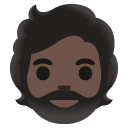


Appearance varies by platform and device. Google Noto, Twemoji, and OpenMoji are open-source.