🧑🏿🦰
The Emoji
Person: Dark Skin Tone, Red Hair
U+1F9D1 U+1F3FF U+200D U+1F9B0 · :person_dark_skin_tone_red_hair:
Trend 52
Meaning layers
- interpretation
- Used for self-representation by dark-skinned redheads, or to celebrate and highlight rare beauty combinations. Also used ironically to represent 'that one rare person' in a situation.
- tiktok usage
- Appears in 'rare combo' videos celebrating unique aesthetic combinations, or in comment sections when someone wants to shoutout a dark-skinned redhead content creator.
- irony level
- 3 / 10
Platform meanings
- meaning
- Represents a dark-skinned person with red hair, often used in celebration of natural or dyed red hair on deep skin tones. Appears in diversity and beauty content.
- trend usage
- Used in 'rare beauty' trends, natural hair transformation videos, and representation-focused content. Comment sections use it to celebrate creators matching this description.
- hashtags
- #DarkSkinRedHair#MelanatedBeauty#RareCombo#RepresentationMatters#NaturalHairJourney
- virality score
- 55 / 100
Cultural meanings
🇺🇸
Western / Gen-Z
Embraced as a symbol of rare, diverse beauty and identity representation. Western Gen Z uses it to celebrate natural and dyed red hair on dark skin and to advocate for visibility in beauty spaces.
🇵🇰
Pakistan & India
Less commonly used as a self-identifier given rarity of natural red hair in the region, but may appear in beauty and fashion content as an aspirational or trendy aesthetic reference.
🌍
Middle East
Used occasionally in beauty and fashion contexts, particularly in Gulf countries where bold hair aesthetics are admired; may reference South Asian or African diaspora communities.
🌐
Global Neutral
Universally interpreted as a representation of a dark-skinned person with red hair; carries a neutral, descriptive function for most global users without deeper cultural layering.
🇧🇩
Bangladesh
Rarely used as a self-identifier; may appear in beauty content or diaspora community spaces online when discussing diverse hair aesthetics.
🇱🇰
Sri Lanka
Primarily used in cosmopolitan urban online spaces; associated with bold fashion choices and unconventional beauty rather than direct personal representation.
🇨🇳
China
Viewed as an exotic or Western-influenced aesthetic combination; sometimes used in fashion-forward or subculture contexts on platforms like Weibo or Xiaohongshu.
🇯🇵
Japan
Associated with fashion-forward subcultures and anime-inspired aesthetics; the combination of dark skin and red hair resonates with fantasy character design themes popular in manga and cosplay communities.
🇰🇷
South Korea
Appears in beauty and K-beauty adjacent conversations about bold hair colors; the dark skin and red hair combination may be referenced in discussions about global beauty diversity.
🇹🇼
Taiwan
Used in progressive and fashion-conscious online spaces; appreciated as a representation of global beauty diversity among younger Taiwanese internet users.
🇭🇰
Hong Kong
Found in multicultural and cosmopolitan online spaces; used by members of African or mixed-race diaspora communities and fashion-forward youth.
🇵🇭
Philippines
Used by Filipino Gen Z to represent friends or public figures matching this description; associated with bold beauty and uniqueness in local beauty discourse.
🇮🇩
Indonesia
Occasionally appears in beauty and diversity discussions; the combination is seen as bold and unconventional in the context of mainstream Indonesian beauty standards.
🇹🇭
Thailand
Used in fashion and beauty contexts, particularly among youth influenced by international beauty trends; associated with bold and alternative aesthetics.
🇻🇳
Vietnam
Primarily used in cosmopolitan contexts; the emoji is seen as representing international or diaspora beauty rather than local identity.
🇲🇾
Malaysia
Used within multicultural Malaysian online communities, particularly among members of African descent or those celebrating diverse beauty standards.
🇸🇦
Saudi Arabia
Used in beauty and fashion discussions; the bold aesthetic combination is admired in certain progressive online circles while remaining outside mainstream local beauty norms.
🇦🇪
UAE
In the diverse, multicultural UAE online space, this emoji is used naturally by expat communities and locals celebrating global beauty diversity.
🇪🇬
Egypt
Used in beauty and pop culture discussions; the combination of dark skin and red hair is seen as striking and aesthetically bold in Egyptian online beauty communities.
🇹🇷
Turkey
Found in progressive youth spaces and beauty communities; associated with uniqueness and bold self-expression in Turkish social media culture.
🇮🇷
Iran
Used sparingly in beauty and fashion content on filtered platforms; the bold aesthetic combination is appreciated in underground or diaspora online communities.
🇳🇬
Nigeria
Carries strong positive resonance in Nigerian online spaces as a celebration of Afrocentric beauty. Used proudly to represent natural or dyed red hair on dark melanated skin.
🇿🇦
South Africa
Embraced in South African beauty and identity spaces, particularly in communities celebrating diverse Black aesthetics and natural hair movements.
🇬🇧
UK & Ireland
Used in multicultural UK online spaces to celebrate diverse beauty; the combination has gained visibility through UK Black beauty influencers and natural hair communities.
🇫🇷
France
In French digital culture, used within Afro-French beauty communities and diversity advocacy spaces; resonates with discussions about visible minority representation.
🇩🇪
Germany
Found in multicultural and diversity-focused online spaces in Germany; used by Afro-German communities and beauty influencers celebrating non-mainstream European beauty.
🇪🇸
Spain & Italy
Used in progressive and multicultural digital circles; the aesthetic is appreciated in fashion-forward communities and among Afro-European diaspora members.
🇧🇷
Brazil
In Brazil's diverse beauty landscape, this emoji celebrates Afro-Brazilian identity and natural hair. Used with pride in communities embracing Black beauty and cultural heritage.
🇲🇽
Mexico
Used in Afro-Mexican and diaspora communities to celebrate Black identity and unique beauty combinations; gaining visibility through representation advocacy movements.
🌎
Latin America
Resonates with Afro-Latino communities across Latin America celebrating melanated beauty and natural hair; used in online spaces advocating for Afro-descendent representation.
🇦🇺
Australia & NZ
Used in multicultural Australian and New Zealand online spaces to celebrate Indigenous and African diaspora beauty; associated with diversity, uniqueness, and bold aesthetics.
How its meaning shifted
- 2010
This specific emoji combination did not exist in 2010; emoji diversity options were extremely limited, with a single generic yellow person representing all users.
- 2015
Skin tone modifiers were introduced to Unicode in 2015, but the red hair variant had not yet been developed; users had no way to represent this specific combination.
- 2020
Following the 2019 introduction of hair style emoji components, this emoji became available and was adopted primarily in representation and diversity conversations online.
- 2026
Now firmly part of identity-affirming digital vocabulary; used regularly by dark-skinned redheads for self-representation, and culturally recognized as a celebration of rare and beautiful aesthetic combinations.
See it on every platform
Compare with
Adjacent emojis
- Often confused with
- person curly hairwoman red hairman red hair
- Can replace
- person dark skin tonered heartfire
Share & embed
Frequently asked
01What does the 🧑🏿🦰 Person: Dark Skin Tone, Red Hair emoji mean?
A gender-neutral person with dark skin tone and red hair, part of the emoji sequence combining the base person emoji with dark skin tone modifier and red hair component.
02What does 🧑🏿🦰 mean on TikTok?
Represents a dark-skinned person with red hair, often used in celebration of natural or dyed red hair on deep skin tones. Appears in diversity and beauty content.
03What does 🧑🏿🦰 mean on WhatsApp?
Used to represent oneself or someone else who is a dark-skinned person with red hair. Casual self-referential usage in group chats.
04What does 🧑🏿🦰 mean in Gen-Z slang?
Used for self-representation by dark-skinned redheads, or to celebrate and highlight rare beauty combinations. Also used ironically to represent 'that one rare person' in a situation.
05Is the 🧑🏿🦰 emoji safe to use?
A representation of a dark-skinned person with red hair; used for identity expression, diversity celebration, and personal representation.
06What does 🧑🏿🦰 mean in texting?
Seeing one's own appearance reflected in digital spaces can carry significant emotional weight, particularly for communities historically underrepresented in mainstream beauty standards. This emoji can evoke feelings of validation and visibility.
07What is the shortcode for 🧑🏿🦰?
The shortcode for Person: Dark Skin Tone, Red Hair is :person_dark_skin_tone_red_hair:
08What does 🧑🏿🦰 mean in dating?
Occasionally used to describe or flirt with someone matching this description, e.g., 'saw the most gorgeous 🧑🏿🦰 today'.
Safety & usage
- Safe meaning
- A representation of a dark-skinned person with red hair; used for identity expression, diversity celebration, and personal representation.
- Caution
- Could theoretically be used in racist or mockery contexts by bad actors, but this is uncommon; the emoji's specificity largely protects it from widespread toxic misuse.
Generally safe to use. Users should be mindful not to use specific skin-toned emojis to describe or stereotype real people without context. Avoid using this emoji in ways that exoticize or fetishize the appearance it represents.
How it looks across platforms
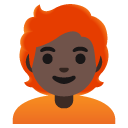


Appearance varies by platform and device. Google Noto, Twemoji, and OpenMoji are open-source.