👨🏿🦰
The Emoji
Man: Dark Skin Tone, Red Hair
U+1F468 U+1F3FF U+200D U+1F9B0 · :man_dark_skin_tone_red_hair:
Trend 35
Meaning layers
- interpretation
- Used to represent a specific person or oneself with dark skin and red hair, often used playfully to describe a rare or unique combination of traits. Sometimes used humorously to refer to the mythical 'Black redhead' as a unicorn-level rarity.
- tiktok usage
- Appears in 'describe yourself in emojis' trends, representation content, and natural hair celebration videos. Used in comment sections to tag or describe someone with this look.
- irony level
- 3 / 10
Platform meanings
- meaning
- Represents diversity, unique appearance, and personal identity. Used in hair transformation and representation videos.
- trend usage
- Appears in 'emoji that describes you' trends, natural hair content, and melanin celebration challenges. Paired with red hair dye transformation videos.
- hashtags
- #BlackAndRedHair#MelaninMagic#RepresentationMatters#NaturalHair#RedLocsCheck
- virality score
- 42 / 100
Cultural meanings
🇺🇸
Western / Gen-Z
Celebrated as a symbol of rare beauty and representation, often used proudly by Black individuals with natural or dyed red hair to assert identity online.
🇵🇰
Pakistan & India
Less commonly used due to cultural unfamiliarity with the phenotype, but recognized in urban social media contexts as a diversity or foreign identity marker.
🌍
Middle East
Interpreted as representing a foreign or unusual appearance; used occasionally in discussions about race and diversity on Arabic social media platforms.
🌐
Global Neutral
Universally understood as a man with dark skin and red hair; used as a straightforward representation emoji without strong cultural weight attached.
🇧🇩
Bangladesh
Rarely encountered in everyday use; may be seen as representing a foreign identity or used in educational contexts about human diversity.
🇱🇰
Sri Lanka
Infrequently used; when deployed, it tends to represent foreigners or be used in discussions about global diversity and inclusion.
🇨🇳
China
Used in academic or curiosity-driven contexts about human genetic diversity; associated with perceived Western or African identity markers.
🇯🇵
Japan
Seen as exotic and rare, sometimes romanticized in pop culture discussions; used in anime fan communities where diverse character designs are celebrated.
🇰🇷
South Korea
Associated with bold fashion and K-beauty adjacent discussions about hair color; occasionally used to describe international celebrities or influencers.
🇹🇼
Taiwan
Used in diversity discussions and international pop culture contexts; recognized as a representation of uniqueness and rare beauty combinations.
🇭🇰
Hong Kong
Appears in cosmopolitan social media discussions about diversity; used by younger users familiar with Western representation conversations.
🇵🇭
Philippines
Used in discussions about mixed heritage and beauty diversity; Filipinos familiar with Afro-Filipino identities may find additional personal resonance.
🇮🇩
Indonesia
Recognized as a symbol of diversity; used occasionally in social media content about global beauty standards and representation.
🇹🇭
Thailand
Associated with unique and bold aesthetics; may appear in discussions about hair color trends or international beauty influences.
🇻🇳
Vietnam
Used in contexts discussing racial diversity and global beauty; less common in everyday communication but present in education-focused content.
🇲🇾
Malaysia
In a multicultural context, used to represent diversity and inclusion; occasionally used in discussions about Afro-descendant or diverse communities.
🇸🇦
Saudi Arabia
Rarely used in conservative social contexts; when it appears, it tends to be in educational or diversity-advocacy discussions on Twitter/X.
🇦🇪
UAE
Used more frequently given the UAE's multicultural population; recognized as representing one of the many diverse identities present in the country.
🇪🇬
Egypt
Used in social media discussions about racial diversity in Egypt and broader Africa; sometimes appears in content about African identity and pride.
🇹🇷
Turkey
Associated with discussions about genetic diversity and unique appearances; used in pop culture and social media contexts without strong cultural weight.
🇮🇷
Iran
Rarely used; when encountered, interpreted as representing a foreign or unusually rare appearance, possibly linked to discussions about global diversity.
🇳🇬
Nigeria
Carries significant cultural pride, as red hair occurs naturally in some Nigerian communities; used to celebrate Afrocentric beauty and Nigerian identity.
🇿🇦
South Africa
Resonates strongly in discussions about South African diversity and the Rainbow Nation; used to celebrate the spectrum of Black South African identities.
🇬🇧
UK & Ireland
Has cultural resonance in discussions about Black British identity and the rare phenomenon of Black individuals with natural red hair; used in representation debates.
🇫🇷
France
Used in discussions about French diversity and Afro-French identity; appears in representation conversations on social platforms like Twitter/X and Instagram.
🇩🇪
Germany
Appears in diversity and inclusion discussions; used by younger German social media users in the context of multicultural representation.
🇪🇸
Spain & Italy
Used in discussions about African diaspora identity in Southern Europe; occasionally appears in representation-focused content and social media debates.
🇧🇷
Brazil
Brazil's rich multicultural heritage gives this emoji resonance; used in discussions about Afro-Brazilian beauty, hair culture, and identity pride.
🇲🇽
Mexico
Used in discussions about Afro-Mexican identity and the recognition of African roots in Mexican heritage; increasingly relevant in representation conversations.
🌎
Latin America
Across Latin America, used to represent Afro-descendant communities and celebrate diverse beauty within the region's mixed-heritage populations.
🇦🇺
Australia & NZ
Used in diversity and inclusion discussions, particularly in Indigenous and Afro-Australian community spaces where representation is a growing topic.
How its meaning shifted
- 2010
Did not exist; emoji diversity was extremely limited in 2010, with only a single generic yellow-toned person emoji available for general use.
- 2015
Skin tone modifiers were introduced in 2015 but hair variation sequences were not yet available; this specific emoji did not yet exist.
- 2020
Began appearing following Unicode 12.0's rollout of hair component ZWJ sequences; used primarily by those celebrating personal identity and representation on Instagram and Twitter.
- 2026
Established as a meaningful representation emoji used by creators, influencers, and everyday users with dark skin and red hair; integrated into DEI conversations, natural hair communities, and diverse emoji sets across all major platforms.
See it on every platform
Compare with
Adjacent emojis
Share & embed
Frequently asked
01What does the 👨🏿🦰 Man: Dark Skin Tone, Red Hair emoji mean?
A man with dark skin tone and red hair, represented as a ZWJ sequence combining the man emoji, dark skin tone modifier, and red hair component.
02What does 👨🏿🦰 mean on TikTok?
Represents diversity, unique appearance, and personal identity. Used in hair transformation and representation videos.
03What does 👨🏿🦰 mean on WhatsApp?
Used to describe a friend or person with this appearance, or as a self-identifier in group chats.
04What does 👨🏿🦰 mean in Gen-Z slang?
Used to represent a specific person or oneself with dark skin and red hair, often used playfully to describe a rare or unique combination of traits. Sometimes used humorously to refer to the mythical 'Black redhead' as a unicorn-level rarity.
05Is the 👨🏿🦰 emoji safe to use?
A representation emoji used to depict a man with dark skin and red hair; entirely safe and positive in the vast majority of contexts.
06What does 👨🏿🦰 mean in texting?
This emoji carries strong identity significance for people who rarely see themselves represented in digital media. Seeing one's own appearance reflected in an emoji can trigger positive feelings of validation and belonging, particularly for those whose appearance is considered rare or underrepresented.
07What is the shortcode for 👨🏿🦰?
The shortcode for Man: Dark Skin Tone, Red Hair is :man_dark_skin_tone_red_hair:
08What does 👨🏿🦰 mean in dating?
Can be used flirtatiously to describe a crush or partner with this specific look, or to self-identify when sliding into DMs. 'Looking for my 👨🏿🦰' energy.
Safety & usage
- Safe meaning
- A representation emoji used to depict a man with dark skin and red hair; entirely safe and positive in the vast majority of contexts.
- Caution
- Extremely rarely misused; could theoretically be deployed in racist or mocking contexts targeting individuals with this appearance, though this is uncommon.
No significant safety concerns. As with any human representation emoji, misuse in derogatory or mocking contexts is possible but not a dominant pattern. Context should always be considered.
How it looks across platforms
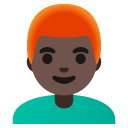


Appearance varies by platform and device. Google Noto, Twemoji, and OpenMoji are open-source.