🤺
The Emoji
Person Fencing
U+1F93A · :person_fencing:
Trend 65
Meaning layers
- interpretation
- Used to signal being in 'attack mode', ready to clap back, roast someone, or engage in verbal combat. Also used when someone is ready to defend themselves or go off on someone.
- tiktok usage
- Appears in comment sections when someone is about to deliver a devastating clapback or when a creator is clearly baiting drama.
- irony level
- 7 / 10
Platform meanings
- meaning
- Symbol of being in 'attack mode' or ready to start drama, often used in comment sections before dropping a hot take.
- trend usage
- Used in stitches and duets where someone is about to absolutely destroy the original video's argument. Common in 'let me explain why you're wrong' content.
- hashtags
- #choosingviolence#attackmode#clapback#combatwithme#readytofight
- virality score
- 62 / 100
Cultural meanings
🇺🇸
Western / Gen-Z
Predominantly used as a 'choosing violence' or 'attack mode' emoji — a staple of chaotic energy meme culture and online clapback culture.
🇵🇰
Pakistan & India
Occasionally used literally for sports content; in online discourse it signals someone is ready to argue or 'roast' someone, especially in English-language social media.
🌍
Middle East
Used mostly in sports contexts; Arabic-speaking youth online communities use it to signal combative readiness in debate or banter.
🌐
Global Neutral
Universally understood as related to competition, combat, or sports; the aggressive subtext may be lost on those unfamiliar with internet meme culture.
🇧🇩
Bangladesh
Primarily understood in literal sports contexts; among younger internet-savvy users, it carries the global 'attack mode' meaning.
🇱🇰
Sri Lanka
Mostly used literally for sports references; limited adoption of the meme-based interpretation outside of highly online communities.
🇨🇳
China
Fencing is a respected Olympic sport in China; the emoji is used in sports content and increasingly in youth internet slang for 'going in' on someone.
🇯🇵
Japan
Used in sports contexts and in online communities to signal a duel or competitive challenge; has mild connotations in anime-adjacent communities.
🇰🇷
South Korea
Popular among competitive gaming and esports communities to signal a 1v1 challenge; also used in K-pop fandoms during 'stan wars.'
🇹🇼
Taiwan
Used in sports commentary and online debate culture; younger users adopt the global meme meaning of combative readiness.
🇭🇰
Hong Kong
Used in both literal sports contexts and in bilingual (Chinese-English) social media to signal readiness for a fight or argument.
🇵🇭
Philippines
Widely used with the global 'attack mode' meaning in Filipino Twitter (X) culture, especially during celebrity drama and political discourse.
🇮🇩
Indonesia
Adopted by Indonesian youth on Twitter/X and TikTok to signal clapback energy; literal use in sports content also common.
🇹🇭
Thailand
Used in online banter and competitive contexts; Thai social media users deploy it when entering a comment argument or expressing competitive spirit.
🇻🇳
Vietnam
Primarily literal in sports content; among younger Vietnamese users online, it begins to carry the meme-based combative meaning.
🇲🇾
Malaysia
Used in both Malay and English-language social media to signal someone is ready to fight back verbally or engage in online drama.
🇸🇦
Saudi Arabia
Mostly used in sports and Olympic coverage; younger users may adopt the global combative meme meaning in Arabic internet slang.
🇦🇪
UAE
Used in multicultural social media contexts; both literal sports use and the global meme interpretation coexist among young UAE residents.
🇪🇬
Egypt
Seen in sports commentary; Egyptian Twitter users occasionally deploy it for dramatic effect in online arguments.
🇹🇷
Turkey
Popular in competitive online communities and during football debates; used to signal someone is entering a heated argument.
🇮🇷
Iran
Used in sports and competition contexts; limited but growing use in meme-based combative signaling among younger internet users.
🇳🇬
Nigeria
Nigerian Twitter culture embraces this emoji heavily for clapback and 'choosing violence' content, often in humorous or dramatic tweets.
🇿🇦
South Africa
Used in a similar way to Western Gen Z — signals combative energy, clapbacks, and entering drama — especially in South African stan culture.
🇬🇧
UK & Ireland
Frequently used in British banter culture to signal 'I'm about to roast someone' or signal combative readiness in a dry, humorous way.
🇫🇷
France
Carries particular cultural resonance as fencing is a deeply French sport; used both literally in sports contexts and in competitive meme culture.
🇩🇪
Germany
Primarily used in sports and competitive contexts; German online communities use it to signal precision-focused argumentation.
🇪🇸
Spain & Italy
Used in passionate online debates and sports banter; both countries' dramatic online communication styles suit the combative emoji well.
🇧🇷
Brazil
Brazilian Twitter/X culture uses it heavily for drama, clapbacks, and 'going off' moments — very popular in stan and pop culture communities.
🇲🇽
Mexico
Used in online banter and humor; Mexican social media users deploy it during arguments and as a signal of competitive or fighting spirit.
🌎
Latin America
Broadly adopted across Latin American social media for combative energy and dramatic online moments; highly expressive cultures embrace it naturally.
🇦🇺
Australia & NZ
Used in Aussie and Kiwi online banter — a natural fit for the culture's love of competitive trash-talk and dry, combative humor.
How its meaning shifted
- 2010
Emoji did not exist yet; fencing was represented textually or with generic sport emojis in early smartphone era.
- 2015
Introduced around this period as part of emoji sports expansions; used almost exclusively in literal sports and Olympic contexts.
- 2020
Began being adopted into meme culture as part of 'choosing violence' and 'chaotic energy' internet trends; usage expanded beyond sports contexts significantly.
- 2026
Firmly established as the premier 'attack mode' and 'choosing violence' emoji in Gen Z and millennial internet culture; literal sports use persists alongside dominant meme usage.
See it on every platform
Adjacent emojis
- Opposite
- white flaghandshakedove
- Often confused with
- daggercrossed swordsperson cartwheeling
- Can replace
- crossed swordsboxing glovefire
Share & embed
Frequently asked
01What does the 🤺 Person Fencing emoji mean?
A person in fencing gear holding a foil in an attacking lunge position, representing the sport of fencing.
02What does 🤺 mean on TikTok?
Symbol of being in 'attack mode' or ready to start drama, often used in comment sections before dropping a hot take.
03What does 🤺 mean on WhatsApp?
Signals that someone is ready to argue, debate, or 'go in' on someone. Used among friend groups before a rant.
04What does 🤺 mean in Gen-Z slang?
Used to signal being in 'attack mode', ready to clap back, roast someone, or engage in verbal combat. Also used when someone is ready to defend themselves or go off on someone.
05Is the 🤺 emoji safe to use?
Represents the sport of fencing, competitive spirit, or playful combative energy in online banter.
06What does 🤺 mean in texting?
Taps into the primal fight-or-flight response but in a socially mediated, gamified context — signals confidence and willingness to engage in conflict without direct physical threat.
07What is the shortcode for 🤺?
The shortcode for Person Fencing is :person_fencing:
08What does 🤺 mean in dating?
Rarely used as a flirt emoji directly; sometimes sent to signal 'I'm up for a sparring match — impress me' or playful teasing in a confident, competitive person.
Safety & usage
- Safe meaning
- Represents the sport of fencing, competitive spirit, or playful combative energy in online banter.
- Caution
- Can be used to signal intent to harass, intimidate, or pile on someone in online spaces when used in coordinated targeting.
Generally safe; however, in certain contexts (e.g., coordinated reply attacks or harassment threads), it can be used as a symbol of aggressive targeting. Context is key.
How it looks across platforms
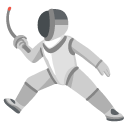


Appearance varies by platform and device. Google Noto, Twemoji, and OpenMoji are open-source.