💇🏻
The Emoji
Person Getting Haircut: Light Skin Tone
U+1F487 U+1F3FB · :person_getting_haircut_light_skin_tone:
Trend 52
Meaning layers
- interpretation
- Used to signal a fresh start, a glow-up moment, or the vibe of treating yourself. Often signals that someone just got or is about to get a haircut, sometimes used ironically to say 'I deserve a treat.'
- tiktok usage
- Appears in 'glow-up transformation' videos, before-and-after content, and self-care TikToks. Also used sarcastically when someone feels they need a reset.
- irony level
- 3 / 10
Platform meanings
- meaning
- Self-care treat, glow-up signal, or transformation content marker.
- trend usage
- Used in hair transformation videos, before-and-after reveals, and self-pampering day vlogs. Also appears in audio trends about treating yourself.
- hashtags
- #haircut#glowup#selfcare#hairtransformation#salonday
- virality score
- 55 / 100
Cultural meanings
🇺🇸
Western / Gen-Z
Strongly associated with self-care culture, glow-ups, and the 'treat yourself' mindset. Used casually and ironically across social media.
🇵🇰
Pakistan & India
Practically used to signal a trip to the salon or barber. In urban youth culture, increasingly tied to self-care and grooming pride.
🌍
Middle East
Used to indicate salon visits, which are culturally significant social events especially for women. Carries warmth and community association.
🌐
Global Neutral
Universally understood as representing a haircut or salon service. Skin tone modifier makes it more personally relatable.
🇧🇩
Bangladesh
Taken literally — signals a haircut appointment. Urban youth may use it in self-care contexts similar to global Gen Z trends.
🇱🇰
Sri Lanka
Primarily practical usage indicating a salon or barber visit. Gradually gaining self-care connotations among younger users.
🇨🇳
China
Used on WeChat and Weibo to signal salon visits or hair makeovers. Beauty culture is strong, so it's well-recognized.
🇯🇵
Japan
Associated with the highly refined Japanese salon culture. Used sincerely to indicate meticulous self-grooming or a salon appointment.
🇰🇷
South Korea
Deeply resonant given Korea's intense beauty and grooming culture. Used frequently for hair transformation content and K-beauty adjacent self-care.
🇹🇼
Taiwan
Used similarly to Japan and South Korea — practical and beauty-positive, associated with trendy salon culture.
🇭🇰
Hong Kong
Used in casual messaging to indicate salon visits. Beauty culture is prominent, so the emoji is well understood and positively received.
🇵🇭
Philippines
Used practically to signal a haircut. Also ties into the strong Filipino salon culture and community grooming traditions.
🇮🇩
Indonesia
Practical usage dominant. Growing self-care movement among Indonesian youth adds aspirational connotations.
🇹🇭
Thailand
Thailand's thriving beauty and wellness industry makes this emoji very relatable. Used for salon posts, beauty content, and self-care signaling.
🇻🇳
Vietnam
Used to communicate haircut or salon visits. Younger generations attach self-improvement and beauty-conscious meanings to it.
🇲🇾
Malaysia
Practical and self-care usage co-exist. Multi-ethnic Malaysian beauty culture means it resonates across communities.
🇸🇦
Saudi Arabia
Strongly associated with women's salon culture, which is a major social institution. Used to signal luxury self-care and social grooming rituals.
🇦🇪
UAE
Dubai and Abu Dhabi's high-end salon culture gives this emoji an aspirational, luxury-adjacent feeling. Used by lifestyle influencers frequently.
🇪🇬
Egypt
Salon visits are a deeply social tradition, especially for women. This emoji signals community bonding and personal upkeep.
🇹🇷
Turkey
Turkish barber and salon culture is iconic globally — this emoji is used with pride in grooming content and self-care posts.
🇮🇷
Iran
Used mostly for practical communication about haircuts. Salon culture is significant domestically, giving it warm, personal connotations.
🇳🇬
Nigeria
Used among urban Nigerians to signal a salon visit, often tied to pride in appearance and grooming as part of social identity.
🇿🇦
South Africa
Practical usage with growing self-care culture associations. Used across communities in Cape Town and Johannesburg beauty spaces.
🇬🇧
UK & Ireland
Used casually and humorously. 'Treating yourself' and 'fresh cut' culture makes it widely understood and lightly sarcastic at times.
🇫🇷
France
French beauty culture is sophisticated — this emoji is used sincerely for salon references and self-care, rarely ironically.
🇩🇪
Germany
Practical usage dominant. Germans tend to use it literally for haircut appointments rather than with ironic or humorous layers.
🇪🇸
Spain & Italy
Beauty and grooming are culturally important. Used warmly and proudly to signal a fresh salon visit or self-care moment.
🇧🇷
Brazil
Brazil's massive beauty industry and salon culture make this highly relatable. Used frequently in beauty content and self-care posts.
🇲🇽
Mexico
Commonly used to signal a trip to the salon or barber. Increasingly part of self-care and glow-up content among younger users.
🌎
Latin America
Across Latin America, salon culture is vibrant and social. This emoji is used warmly and practically with strong positive associations.
🇦🇺
Australia & NZ
Used casually for haircut updates and self-care content. Fits the laid-back but wellness-conscious Australian and Kiwi social media vibe.
How its meaning shifted
- 2010
Emoji barely existed in mainstream use; Unicode's skin tone modifiers weren't introduced yet, so the base haircut emoji was just emerging as a novelty.
- 2015
Skin tone variants introduced in Unicode 8.0 — this specific variant became available. Usage was primarily literal, signaling salon or barber visits.
- 2020
Exploded in self-care culture contexts. The COVID-19 lockdown era made haircuts culturally symbolic of normalcy returning. Used emotionally and practically.
- 2026
Firmly established in self-care, glow-up, and unbothered meme culture. Frequently used ironically and sincerely across Gen Z and Millennial platforms.
See it on every platform
Adjacent emojis
- Often confused with
- barber polecombwoman getting massage
- Can replace
- nail careface with sunglassessparkling heart
Share & embed
Frequently asked
01What does the 💇🏻 Person Getting Haircut: Light Skin Tone emoji mean?
A person with light skin tone receiving a haircut, shown seated with scissors or a comb near their head.
02What does 💇🏻 mean on TikTok?
Self-care treat, glow-up signal, or transformation content marker.
03What does 💇🏻 mean on WhatsApp?
Literally communicates 'I'm getting a haircut' or 'just got a haircut.' Very practical usage in daily chats.
04What does 💇🏻 mean in Gen-Z slang?
Used to signal a fresh start, a glow-up moment, or the vibe of treating yourself. Often signals that someone just got or is about to get a haircut, sometimes used ironically to say 'I deserve a treat.'
05Is the 💇🏻 emoji safe to use?
Represents personal grooming, self-care, and salon visits. Completely benign and positive in standard usage.
06What does 💇🏻 mean in texting?
Getting a haircut is psychologically linked to reinvention and control over one's appearance. This emoji taps into feelings of freshness, self-worth, and the ritual comfort of grooming.
07What is the shortcode for 💇🏻?
The shortcode for Person Getting Haircut: Light Skin Tone is :person_getting_haircut_light_skin_tone:
08What does 💇🏻 mean in dating?
Sometimes used flirtatiously to say 'I'm getting cute for you' or 'getting ready for our date.' Low-key way to hint that you're putting in effort.
Safety & usage
- Safe meaning
- Represents personal grooming, self-care, and salon visits. Completely benign and positive in standard usage.
- Caution
- Extremely rare, but can be used mockingly to tell someone they need to 'clean themselves up' — generally low toxicity risk.
No significant safety concerns. The skin tone modifier adds personal representation but carries no coded harmful meanings. Safe for all audiences.
How it looks across platforms
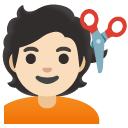


Appearance varies by platform and device. Google Noto, Twemoji, and OpenMoji are open-source.