💆♀️
The Emoji
Woman Getting Massage
U+1F486 U+200D U+2640 U+FE0F · :woman_getting_massage:
Trend 58
Meaning layers
- interpretation
- Used to signal needing a mental break, exhaustion from life's chaos, or treating yourself after a rough day. Often used sarcastically when stressed.
- tiktok usage
- Appears in 'self-care' content, 'that girl' routines, and ironically in videos about being overwhelmed but pretending to be unbothered.
- irony level
- 6 / 10
Platform meanings
- meaning
- Symbol of self-care culture, 'that girl' aesthetic, or ironic coping with chaos
- trend usage
- Used in 'soft life' trend videos, morning routine content, and stress-relief commentary. Common in 'POV: you finally take a day off' videos.
- hashtags
- #selfcare#thatgirl#softlife#treatyourself#spyday
- virality score
- 62 / 100
Cultural meanings
🇺🇸
Western / Gen-Z
Primarily used ironically — 'me surviving another week 💆♀️' — or sincerely in self-care and wellness content as part of the soft life and clean girl aesthetic movements.
🇵🇰
Pakistan & India
Used to indicate spa visits, beauty parlor trips, or relaxation. Also used humorously by women venting about daily stress, though less common in conservative contexts.
🌍
Middle East
Associated with women's beauty salon culture which is very prominent; used to signal a trip to the salon or hammam. Widely understood and positively received.
🌐
Global Neutral
Universally understood as a symbol of relaxation, massage, and self-care, with little cultural controversy or alternate readings across most global audiences.
🇧🇩
Bangladesh
Mostly used to indicate beauty salon visits or relaxation, though less frequently than in neighboring India. Common among younger urban women on social media.
🇱🇰
Sri Lanka
Used to indicate spa or salon visits, popular in beauty and wellness communities. Also used casually to signal tiredness and a desire to unwind.
🇨🇳
China
Associated with massage culture which is deeply embedded in Chinese wellness traditions. Used both literally and to express the need for rest after hard work.
🇯🇵
Japan
Connected to the widespread wellness and onsen (hot spring) culture. Used to indicate relaxation, a spa visit, or a desire for mental peace and quiet.
🇰🇷
South Korea
Heavily tied to Korea's prominent beauty and skincare culture. Used in contexts of skin care routines, jjimjilbang (sauna) visits, and general self-pampering.
🇹🇼
Taiwan
Associated with spa culture and health-focused relaxation practices. Used casually to signal taking care of oneself or recovering from stress.
🇭🇰
Hong Kong
Used to indicate spa days or beauty treatments in a fast-paced, high-stress city context. Often signals a rare moment of taking a break.
🇵🇭
Philippines
Common in beauty and wellness posts, salon visit updates, and self-care content. Often used alongside humor about deserving a break after hardships.
🇮🇩
Indonesia
Used in wellness and beauty contexts, particularly spa culture which is well-developed in Indonesia. Also used to express weariness and desire for rest.
🇹🇭
Thailand
Strongly associated with Thailand's world-famous massage and spa culture. Used literally for massage and wellness content and as a cultural pride symbol.
🇻🇳
Vietnam
Used to indicate spa visits, beauty treatments, or a desire to relax. Wellness culture is growing so this emoji appears increasingly in lifestyle content.
🇲🇾
Malaysia
Associated with spa and beauty salon visits. Used among women in social media to signal self-care days, often alongside beauty product discussions.
🇸🇦
Saudi Arabia
Used in the context of women's beauty salons and wellness retreats which are culturally significant spaces for women. Carries positive, self-care connotations.
🇦🇪
UAE
Strongly tied to luxury spa and wellness culture in Dubai and Abu Dhabi. Used to indicate high-end self-care experiences and luxury lifestyle content.
🇪🇬
Egypt
Associated with beauty and hammam culture. Used to indicate spa visits or expressing the need for relaxation, common among younger women on social media.
🇹🇷
Turkey
Closely linked to the iconic Turkish hammam (bath) tradition. Used to reference both traditional and modern spa experiences, carrying cultural pride.
🇮🇷
Iran
Used among women to indicate beauty salon visits and self-care, which are important social spaces. Less visible on public social media but common in private chats.
🇳🇬
Nigeria
Used to indicate pamper days and beauty salon visits. Common in Nigerian women's lifestyle content and humor about treating yourself after hard work.
🇿🇦
South Africa
Used in wellness and beauty contexts, particularly in urban areas. Often appears in self-care posts and humorous content about deserving a treat.
🇬🇧
UK & Ireland
Used both literally for spa days and ironically in British humor after stressful situations. Fits into the growing wellness and self-care culture.
🇫🇷
France
Associated with French beauty culture and well-being routines. Used to indicate wellness treatments and the French cultural value of taking care of oneself.
🇩🇪
Germany
Used to indicate spa visits and wellness days, fitting into Germany's strong spa (Kur) culture. Less ironic, more straightforwardly wellness-oriented.
🇪🇸
Spain & Italy
Connected to relaxation culture and the importance of rest and self-care in Mediterranean lifestyles. Used in beauty and wellness content warmly.
🇧🇷
Brazil
Used widely in beauty and self-care content in a culture that places high value on body care and wellness treatments. Common in salon and spa promotion.
🇲🇽
Mexico
Used to indicate spa visits, beauty treatments, and self-care. Also appears humorously in meme culture about surviving stress and deserving a break.
🌎
Latin America
Broadly used across Latin America in beauty and wellness contexts, often tied to the cultural value of taking care of your appearance and well-being.
🇦🇺
Australia & NZ
Used casually for spa days, self-care content, and ironically in laid-back Australian humor about needing to chill out after stressful moments.
How its meaning shifted
- 2010
Emoji did not exist in this form; general spa emojis were not yet standardized and the concept of gendered emojis was not yet introduced.
- 2015
Introduced as part of emoji diversity efforts; used primarily literally to indicate massage or spa visits with little ironic or meme usage.
- 2020
Exploded in use during the pandemic self-care movement; appeared in mental health discourse, self-care routines content, and early ironic stress-coping memes.
- 2026
Firmly embedded in wellness culture, ironic burnout humor, and soft life aesthetics. Frequently used to signal both genuine self-care and satirical unbothered energy.
See it on every platform
Compare with
Emoji combinations
Adjacent emojis
- Often confused with
- person getting massageperson in steamy roomperson taking bath
- Can replace
- sparkleswoman in lotus positionnail polish
Share & embed
Frequently asked
01What does the 💆♀️ Woman Getting Massage emoji mean?
A woman receiving a head or facial massage, depicted with closed eyes and hands on her temples or head, conveying relaxation and self-care.
02What does 💆♀️ mean on TikTok?
Symbol of self-care culture, 'that girl' aesthetic, or ironic coping with chaos
03What does 💆♀️ mean on WhatsApp?
Signals needing rest, treating yourself, or unwinding after a long day
04What does 💆♀️ mean in Gen-Z slang?
Used to signal needing a mental break, exhaustion from life's chaos, or treating yourself after a rough day. Often used sarcastically when stressed.
05Is the 💆♀️ emoji safe to use?
Relaxation, self-care, spa days, wellness routines, stress relief, and treating yourself
06What does 💆♀️ mean in texting?
Psychologically linked to the desire for stress relief and somatic comfort. Using this emoji can signal to others that the person is seeking acknowledgment of their need for rest or recovery.
07What is the shortcode for 💆♀️?
The shortcode for Woman Getting Massage is :woman_getting_massage:
08What does 💆♀️ mean in dating?
Sent to hint at wanting a massage from a partner, can be a subtle flirtatious request for physical touch or pampering.
Safety & usage
- Safe meaning
- Relaxation, self-care, spa days, wellness routines, stress relief, and treating yourself
- Caution
- Rarely misused; in some contexts could be used to dismiss someone's stress by sarcastically suggesting they 'just relax', or in rare cases as innuendo
Generally safe. Minimal risk of misuse. Occasionally appears in spam or adult service advertisements but this is context-dependent and not inherent to the emoji.
How it looks across platforms
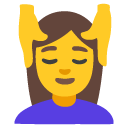
Appearance varies by platform and device. Google Noto, Twemoji, and OpenMoji are open-source.