🏌🏿
The Emoji
Person Golfing: Dark Skin Tone
U+1F3CC U+1F3FF · :person_golfing_dark_skin_tone:
Trend 38
Meaning layers
- interpretation
- Used ironically to signal wealth, leisure, or someone who is 'out of touch' with everyday struggles. Also used sincerely to celebrate Black golfers breaking into the historically white-dominated sport.
- tiktok usage
- Appears in videos about expensive hobbies, 'rich people things,' or celebrating Black excellence in golf. Sometimes used in 'soft life' content.
- irony level
- 6 / 10
Platform meanings
- meaning
- Signals luxury lifestyle content, Black excellence in sports, or ironic wealth flexing. Frequently appears in 'soft life' or 'rich vibes' trend videos.
- trend usage
- Used in transitions where someone goes from everyday clothes to golf attire, or in 'POV: you're unbothered' videos.
- hashtags
- #BlackGolfers#SoftLife#GolfTok#BlackExcellence#LuxuryLife
- virality score
- 42 / 100
Cultural meanings
🇺🇸
Western / Gen-Z
Used ironically to signal 'old money' vibes or to mock out-of-touch elites, but also sincerely in Black excellence contexts to celebrate representation in historically white spaces.
🇵🇰
Pakistan & India
Golf is an elite hobby in South Asia, so this emoji signals wealth and upper-class status. The dark skin tone modifier is largely overlooked and the focus is on the activity itself.
🌍
Middle East
Golf is a popular sport among the Gulf elite, so this emoji is used sincerely in contexts of luxury leisure, business networking, and upscale lifestyle signaling.
🌐
Global Neutral
Universally understood as representing someone playing golf, a sport associated with leisure, wealth, and refined taste. The skin tone modifier adds representation without changing the core meaning.
🇧🇩
Bangladesh
Golf is a rare and elite sport in Bangladesh, so this emoji is primarily associated with wealthy individuals or expat communities. Used more aspirationally than literally.
🇱🇰
Sri Lanka
Golf is associated with the upper class and colonial-era clubs in Sri Lanka. The emoji signals elite status or aspirational wealth, used sparingly in everyday conversation.
🇨🇳
China
Golf has a complex status in China — once popular among the elite but subject to government scrutiny. The emoji can signal wealth but is used cautiously in political contexts.
🇯🇵
Japan
Golf is extremely popular among Japanese business culture and middle-aged demographics. This emoji is used sincerely in golf communities and business social settings to signal shared interests.
🇰🇷
South Korea
Golf is hugely popular in South Korea across generations. The dark skin tone variant is less specifically noted, and the emoji is used enthusiastically in golf community chats and sports content.
🇹🇼
Taiwan
Golf is a leisure sport for the middle and upper class in Taiwan. The emoji is used straightforwardly in sports and lifestyle contexts without much ironic layering.
🇭🇰
Hong Kong
Golf is associated with colonial-era elite clubs and modern business networking in Hong Kong. The emoji signals a wealthy, professional lifestyle.
🇵🇭
Philippines
Golf is popular among Filipino upper and middle classes. The emoji is used genuinely in golf communities and as an aspirational symbol of leisure and success.
🇮🇩
Indonesia
Golf is an elite sport tied to business culture in Indonesia. The emoji signals high socioeconomic status and is used in luxury lifestyle content.
🇹🇭
Thailand
Golf is very popular in Thailand, particularly among business elites and the growing middle class. The emoji is used sincerely across golf-related social media content.
🇻🇳
Vietnam
Golf is a growing sport in Vietnam, associated with business networking and the new wealth class. The emoji signals affluence and is used in professional and lifestyle contexts.
🇲🇾
Malaysia
Golf is popular across ethnic communities in Malaysia. The emoji is used in golf community chats, sports discussions, and as a general symbol of leisure and success.
🇸🇦
Saudi Arabia
Golf is gaining popularity in Saudi Arabia as part of Vision 2030's entertainment expansion. The emoji is used in luxury lifestyle and sports contexts, particularly around LIV Golf events held there.
🇦🇪
UAE
Golf is enormously popular in the UAE, with world-class courses in Dubai and Abu Dhabi. The emoji is used frequently and sincerely in luxury lifestyle, business, and sports content.
🇪🇬
Egypt
Golf is associated with elite clubs in Cairo and Alexandria. The emoji signals wealth and upper-class leisure, used aspirationally rather than commonly.
🇹🇷
Turkey
Golf has a growing but niche following in Turkey, mainly among the upper class and tourists. The emoji signals wealth or aspirational leisure in social media posts.
🇮🇷
Iran
Golf exists in Iran but is limited to elite clubs. The emoji carries connotations of Western-influenced wealth and is used among upper-class circles discussing leisure and lifestyle.
🇳🇬
Nigeria
Golf is popular among Nigerian business elites and is growing among the middle class. The dark skin tone modifier resonates positively as a representation of Black Africans in the sport.
🇿🇦
South Africa
Golf has strong roots in South Africa with a complicated racial history during apartheid. The dark skin tone modifier carries particular significance as a symbol of Black inclusion in the sport.
🇬🇧
UK & Ireland
Golf is a popular sport across the UK, but carries class associations. The emoji is used sincerely by golfers but also ironically to mock posh or out-of-touch attitudes.
🇫🇷
France
Golf is considered a bourgeois sport in France. The emoji carries class connotations and is used either sincerely in golf communities or sarcastically in political commentary.
🇩🇪
Germany
Golf is popular among German professionals as a networking and leisure activity. The emoji is used straightforwardly in sports and business contexts without much irony.
🇪🇸
Spain & Italy
Golf is growing in Spain and Italy, associated with coastal resort culture and business tourism. The emoji is used in tourism, sports, and luxury lifestyle content.
🇧🇷
Brazil
Golf is a niche sport in Brazil, strongly associated with the wealthy elite. The emoji signals extreme affluence and is often used ironically in commentary on inequality.
🇲🇽
Mexico
Golf is popular among the Mexican upper class and in tourist regions like Los Cabos. The emoji signals wealth and luxury and is used in elite social circles and tourism content.
🌎
Latin America
Across Latin America, golf is largely an elite sport. The emoji signals wealth and high social status, sometimes used ironically in commentary on economic disparity.
🇦🇺
Australia & NZ
Golf is a popular and accessible sport in Australia and New Zealand across socioeconomic groups. The emoji is used sincerely and enthusiastically in golf communities without strong class stigma.
How its meaning shifted
- 2010
The skin tone modifier did not yet exist in 2010 — the base golf emoji was just beginning to emerge and was used primarily to literally indicate the sport of golf.
- 2015
Skin tone modifiers were introduced in Unicode 8.0 (2015). The dark skin tone golfing emoji was used mostly by Black golf enthusiasts and diversity advocates celebrating emoji representation.
- 2020
Usage expanded significantly during the social justice conversations of 2020. The emoji became a symbol of Black excellence in traditionally white spaces and was used ironically to comment on wealth and inequality.
- 2026
By 2026, the emoji is used across ironic wealth culture, Black excellence content, and TikTok 'soft life' aesthetics. It functions both as sincere representation and as a versatile symbol of aspirational luxury.
See it on every platform
Adjacent emojis
- Often confused with
- person playing hockeycricket gamebaseball
- Can replace
- golfflag in holeperson golfing
Share & embed
Frequently asked
01What does the 🏌🏿 Person Golfing: Dark Skin Tone emoji mean?
A person with dark skin tone playing golf, swinging a golf club. This is a skin tone modifier variant of the base Person Golfing emoji.
02What does 🏌🏿 mean on TikTok?
Signals luxury lifestyle content, Black excellence in sports, or ironic wealth flexing. Frequently appears in 'soft life' or 'rich vibes' trend videos.
03What does 🏌🏿 mean on WhatsApp?
Casually sent when discussing weekend plans involving golf or leisure activities. Can also signal 'I'm living my best life today.'
04What does 🏌🏿 mean in Gen-Z slang?
Used ironically to signal wealth, leisure, or someone who is 'out of touch' with everyday struggles. Also used sincerely to celebrate Black golfers breaking into the historically white-dominated sport.
05Is the 🏌🏿 emoji safe to use?
A person of dark skin tone playing golf — a completely benign depiction of a leisure sport activity with positive representation value.
06What does 🏌🏿 mean in texting?
The dark skin tone modifier adds a layer of cultural significance — it can evoke pride in representation, especially given golf's historically exclusionary racial dynamics. For some, it signals upward mobility or aspiration.
07What is the shortcode for 🏌🏿?
The shortcode for Person Golfing: Dark Skin Tone is :person_golfing_dark_skin_tone:
08What does 🏌🏿 mean in dating?
Rarely used as a flirt tool, but could signal 'I'm the type who has their life together and enjoys refined leisure.' Might appear in a dating profile to signal affluence or an active lifestyle.
Safety & usage
- Safe meaning
- A person of dark skin tone playing golf — a completely benign depiction of a leisure sport activity with positive representation value.
- Caution
- Could theoretically be used in racist commentary about who 'belongs' in golf spaces, though this is rare. More commonly misused to mock wealthy individuals or politicians in a generally non-harmful way.
No significant safety concerns. The skin tone modifier exists to promote diversity and should be celebrated. Context-dependent irony about class and wealth is the extent of potentially sensitive usage.
How it looks across platforms
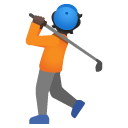


Appearance varies by platform and device. Google Noto, Twemoji, and OpenMoji are open-source.