🧑🏻🦼➡️
The Emoji
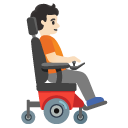
Person In Motorized Wheelchair Facing Right: Light Skin Tone
U+1F9D1 U+1F3FB U+200D U+1F9BC U+200D U+27A1 U+FE0F · :person_in_motorized_wheelchair_facing_right_light_skin_tone:
Trend 32
Meaning layers
- interpretation
- Used to represent mobility, independence, accessibility advocacy, or disabled identity. Also adopted as a casual 'moving forward' or 'on my way' symbol, or to signal someone who uses a wheelchair in a non-stigmatizing, matter-of-fact way.
- tiktok usage
- Appears in disability advocacy content, accessibility check videos, and 'charging through life' motivational clips. Sometimes used humorously to say 'rolling out' or 'peace I'm out.'
- irony level
- 3 / 10
Platform meanings
- meaning
- Disability pride, accessibility advocacy, or humorous 'I'm out of here' expression
- trend usage
- Appears in #DisabilityTok, wheelchair user day-in-life content, and motivational 'keep moving forward' trends
- hashtags
- #DisabilityTok#WheelchairLife#AccessibilityMatters#DisabilityPride#RollingThrough
- virality score
- 38 / 100
Cultural meanings
🇺🇸
Western / Gen-Z
Widely used in disability pride and accessibility advocacy contexts; Gen Z in the West treats it as a matter-of-fact representation of wheelchair users and sometimes humorously as 'rolling out' of bad situations.
🇵🇰
Pakistan & India
Primarily used literally to reference someone with a disability; gaining traction in urban disability rights communities and NGO content advocating for accessible infrastructure.
🌍
Middle East
Used sincerely to represent disability and in government or NGO posts about accessibility; cultural sensitivity around disability means it's rarely used humorously and is treated with respect.
🌐
Global Neutral
Universally understood as representing a person in a motorized wheelchair; used across languages and cultures to indicate disability, mobility, or accessibility topics.
🇧🇩
Bangladesh
Used mainly in formal disability rights contexts and charity or NGO communications; limited casual usage but growing in accessibility advocacy online spaces.
🇱🇰
Sri Lanka
Appears in social media posts about disability support programs and accessibility initiatives; used sincerely by disability communities and advocates.
🇨🇳
China
Used in disability awareness campaigns and government posts about inclusive infrastructure; less common in casual usage but understood as representing disabled individuals.
🇯🇵
Japan
Used respectfully in disability-related content, accessibility discussions, and universal design posts; Japan's strong culture of consideration for others gives this emoji a sincere, dignified connotation.
🇰🇷
South Korea
Appears in disability rights content and K-content about inclusivity; younger Koreans may use it in 'moving forward' motivational contexts influenced by hustle culture.
🇹🇼
Taiwan
Used in disability advocacy and accessibility infrastructure discussions; Taiwan's progressive stance on disability rights means it's respected and appears in policy and community content.
🇭🇰
Hong Kong
Used in accessibility discussions and disability support communities; also occasionally used in casual contexts to mean 'speeding through' something.
🇵🇭
Philippines
Appears in disability awareness posts, charitable content, and OFW communities discussing family members with disabilities; used sincerely and empathetically.
🇮🇩
Indonesia
Used in disability rights advocacy and government accessibility program posts; also used by faith-based communities when discussing care for individuals with disabilities.
🇹🇭
Thailand
Seen in disability support and tourism accessibility content; Thailand's growing focus on accessible tourism gives this emoji traction in travel and hospitality contexts.
🇻🇳
Vietnam
Used in government and NGO disability awareness campaigns; less common in casual social media but growing as disability representation becomes more visible.
🇲🇾
Malaysia
Appears in disability advocacy content and accessible infrastructure discussions; multicultural Malaysian social media uses it sincerely across communities.
🇸🇦
Saudi Arabia
Used in official government and NGO disability inclusion posts as part of Vision 2030 accessibility goals; treated with dignity and rarely used casually.
🇦🇪
UAE
Common in UAE government accessibility initiative posts and inclusive tourism content; aligned with the UAE's international image of forward-thinking inclusivity.
🇪🇬
Egypt
Used in disability rights posts and charitable campaigns; cultural attitudes toward disability mean it's used sensitively, primarily in advocacy and support contexts.
🇹🇷
Turkey
Appears in disability rights discussions and municipal accessibility announcements; also used by individuals with disabilities to represent themselves on social media.
🇮🇷
Iran
Primarily used in formal disability support and medical contexts; cultural norms mean it's rarely used casually but appears in advocacy and awareness content.
🇳🇬
Nigeria
Used in disability rights advocacy posts and content about inclusive education and employment; growing usage among Nigerian disability activists on Twitter and Instagram.
🇿🇦
South Africa
Common in disability rights and inclusive education discussions; South Africa's constitutional focus on equality gives this emoji meaningful weight in advocacy content.
🇬🇧
UK & Ireland
Used across disability pride, accessibility campaigns, and casual 'rolling through' humor; UK disability activists have embraced it as part of online identity and advocacy.
🇫🇷
France
Appears in disability rights discussions and posts about French accessibility laws; used both seriously in advocacy and occasionally humorously in casual contexts.
🇩🇪
Germany
Used in accessibility regulation discussions, disability employment posts, and personal representation; Germany's structured approach to disability rights is reflected in formal usage.
🇪🇸
Spain & Italy
Used in disability awareness campaigns and accessible tourism content; Mediterranean social media gives it a warm, community-oriented connotation when used in support contexts.
🇧🇷
Brazil
Appears in disability rights posts, inclusive education discussions, and personal identity content; Brazilian disability influencers use it widely on Instagram and TikTok.
🇲🇽
Mexico
Used in disability advocacy and accessibility discussions; also appears in family-oriented contexts when referencing a family member with a disability, used with warmth.
🌎
Latin America
Broadly used across Latin America in disability rights campaigns and solidarity posts; growing disability influencer community uses it for authentic self-representation.
🇦🇺
Australia & NZ
Used in disability pride, accessibility advocacy, and casual 'on the move' contexts; Australian and NZ disability communities have strong online presences that embrace this emoji.
How its meaning shifted
- 2010
This specific emoji sequence did not exist; motorized wheelchair representation was absent from emoji sets, leaving disabled users underrepresented in digital communication.
- 2015
Basic wheelchair emoji existed but lacked motorized variants, skin tone options, and directional variants; disability representation in emoji was minimal and static.
- 2020
The person in motorized wheelchair emoji was introduced as part of Unicode's disability inclusion push; used primarily by disability advocates and newly represented users with pride and relief.
- 2026
Now used widely across disability communities, accessibility advocacy, and casual contexts; the directional variant and skin tone modifier make it one of the more nuanced and personally meaningful representation emojis available.
See it on every platform
Adjacent emojis
Share & embed
Frequently asked
01What does the 🧑🏻🦼➡️ Person In Motorized Wheelchair Facing Right: Light Skin Tone emoji mean?
A person using a motorized wheelchair, facing right, with light skin tone. The sequence combines the person in motorized wheelchair emoji with a rightward arrow and light skin tone modifier.
02What does 🧑🏻🦼➡️ mean on TikTok?
Disability pride, accessibility advocacy, or humorous 'I'm out of here' expression
03What does 🧑🏻🦼➡️ mean on WhatsApp?
Represents a wheelchair user, mobility, or someone saying they are on the move
04What does 🧑🏻🦼➡️ mean in Gen-Z slang?
Used to represent mobility, independence, accessibility advocacy, or disabled identity. Also adopted as a casual 'moving forward' or 'on my way' symbol, or to signal someone who uses a wheelchair in a non-stigmatizing, matter-of-fact way.
05Is the 🧑🏻🦼➡️ emoji safe to use?
Represents a person in a motorized wheelchair facing right; used for disability representation, accessibility advocacy, and identity expression.
06What does 🧑🏻🦼➡️ mean in texting?
The forward-facing direction implies agency and momentum. For disabled individuals, this emoji can carry deep personal resonance, representing autonomy and self-determination. For allies, it evokes empathy and solidarity.
07What is the shortcode for 🧑🏻🦼➡️?
The shortcode for Person In Motorized Wheelchair Facing Right: Light Skin Tone is :person_in_motorized_wheelchair_facing_right_light_skin_tone:
08What does 🧑🏻🦼➡️ mean in dating?
Rarely used in flirtatious contexts; when it is, it might humorously mean 'coming to pick you up' or 'rolling my way into your heart.'
Safety & usage
- Safe meaning
- Represents a person in a motorized wheelchair facing right; used for disability representation, accessibility advocacy, and identity expression.
- Caution
- Rarely used in toxic contexts; could theoretically be used to mock disability in extremely bad-faith interactions, but this is uncommon and socially condemned.
Using this emoji to mock or stereotype disabled people is considered ableist and harmful. It should be used respectfully, ideally by or in genuine solidarity with wheelchair users.
How it looks across platforms
Appearance varies by platform and device. Google Noto, Twemoji, and OpenMoji are open-source.