🧎🏻➡️
The Emoji
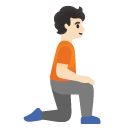
Person Kneeling Facing Right: Light Skin Tone
U+1F9CE U+1F3FB U+200D U+27A1 U+FE0F · :person_kneeling_facing_right_light_skin_tone:
Trend 48
Meaning layers
- interpretation
- Used to show being humbled, bowing down to someone's greatness, or dramatically pleading for something. Can also signal 'I'm literally on my knees begging you' in a hyperbolic, comedic way.
- tiktok usage
- Appears in comment sections to worship a creator or express extreme admiration. Also used in 'POV: you're begging your parents' skits.
- irony level
- 6 / 10
Platform meanings
- meaning
- Represents worship, extreme admiration, or begging. Used to show you are completely at someone's mercy or in awe of their content.
- trend usage
- Appears in duets and comment sections praising viral creators. Also used in trend videos about things people 'kneel for' (food, shows, celebs).
- hashtags
- #kneeling#bowingdown#imsodone#pleading#worship
- virality score
- 52 / 100
Cultural meanings
🇺🇸
Western / Gen-Z
Widely used as hyperbolic worship or comedic begging — 'I'm on my knees for this song/show/person.' Irony and sincerity coexist freely.
🇵🇰
Pakistan & India
More commonly interpreted as a gesture of prayer or religious prostration; also used in dramatic Bollywood-style pleading contexts in casual chats.
🌍
Middle East
Associated with religious supplication (du'a posture awareness) and deep respect; used carefully given the cultural weight of kneeling in devotional contexts.
🌐
Global Neutral
Universally understood as a gesture of kneeling — conveying respect, prayer, humility, or pleading without strong cultural distortion.
🇧🇩
Bangladesh
Interpreted through a devotional lens, often linked to prayer or showing extreme deference to elders or authority figures in digital conversations.
🇱🇰
Sri Lanka
Used to convey deep respect or religious reverence; also appears in casual chats to dramatize begging a friend for a favor.
🇨🇳
China
Kneeling carries strong cultural weight — associated with deep apology, mourning, or ultimate respect. Used carefully; may be seen as overly dramatic in casual contexts.
🇯🇵
Japan
Resonates with the concept of dogeza (prostration of deep apology or respect); used sincerely in respectful contexts and ironically in otaku/meme communities.
🇰🇷
South Korea
Appears in fan culture (K-pop fandoms) to signal worship of an idol. Also used in meme contexts around 'bowing to greatness.'
🇹🇼
Taiwan
Similar to broader East Asian interpretations — respect and humility; also adopted in meme and fan community usage for idol worship.
🇭🇰
Hong Kong
Used in both traditional respectful contexts and modern meme culture, often to signal ironic submission to a clever remark or pop culture moment.
🇵🇭
Philippines
Frequently used in fan communities (P-pop, K-pop) to signal adoration. Also appears in religious contexts given the strong Catholic culture.
🇮🇩
Indonesia
Interpreted as a sign of deep respect or prayer; in Gen Z circles it's adopted for comedic worship of an idol or a viral trend.
🇹🇭
Thailand
Associated with spiritual kneeling in Buddhist practice; in younger digital culture it's adopted for fan worship and comedic begging.
🇻🇳
Vietnam
Carries connotations of respect and submission; younger users adopt it in meme contexts to express admiration for something excellent.
🇲🇾
Malaysia
Used across multicultural contexts — prayer and reverence in religious conversations, comedic begging or worship in casual Gen Z chats.
🇸🇦
Saudi Arabia
Strongly associated with prayer (salah) and religious supplication; used with care in respectful devotional contexts; less common in casual meme usage.
🇦🇪
UAE
Appears in multicultural digital conversations — both sincere (religious, respectful) and humorous (fan worship, begging) depending on the social circle.
🇪🇬
Egypt
Linked to reverence and supplication; in younger Egyptian internet culture it's also used humorously to signal being completely defeated by something great.
🇹🇷
Turkey
Used in both traditional respect-signaling contexts and modern meme culture to express bowing down to someone's wit or achievement.
🇮🇷
Iran
Interpreted as a gesture of humility or prayer in more traditional contexts; adopted in youth internet culture to signal admiration or comedic defeat.
🇳🇬
Nigeria
In Nollywood-influenced digital culture, it signals dramatic pleading or reverence. Also used to hype up someone's success or glow-up.
🇿🇦
South Africa
Used across diverse communities — in some contexts as a sign of respect, in youth culture as a meme of worship or hyperbolic admiration.
🇬🇧
UK & Ireland
Used with typical British understatement broken — reserved for genuinely impressive things. Often ironic: 'Right, I'm 🧎🏻➡️, you've outdone yourself.'
🇫🇷
France
Adopted in ironic, self-aware digital humor — used to mock excessive sycophancy or to genuinely express being floored by art, fashion, or food.
🇩🇪
Germany
Used straightforwardly to express sincere admiration or, in meme contexts, to signal complete surrender to an argument or superior skill.
🇪🇸
Spain & Italy
Used with dramatic flair — fits the expressive communication style. Signals passionate admiration, begging, or theatrical reverence in casual conversation.
🇧🇷
Brazil
High irony and humor usage — 'de joelhos' (on my knees) is a cultural expression of worship, making this emoji a natural digital extension of that sentiment.
🇲🇽
Mexico
Used for comedic dramatic effect — begging, worshipping a favorite artist, or expressing total defeat in a funny way. Warm and expressive usage.
🌎
Latin America
Broadly used across Latin America to signal dramatic admiration, passionate pleading, or humorous submission to someone's excellence.
🇦🇺
Australia & NZ
Used in casual banter — often ironic or comedic, signaling 'I'm bowing to this' with a laid-back, self-aware tone typical of Australian humor.
How its meaning shifted
- 2010
Emoji did not exist yet; kneeling was conveyed through text like '*kneels*' or prayer hands when those became available.
- 2015
Still not introduced; directional person emojis were not yet part of the standard set. Kneeling sentiment expressed through 🙏 or descriptive text.
- 2020
Introduced around this era as part of expanded directional emoji sets; initial usage was literal — prayer, proposal, and exercise contexts.
- 2026
Fully embedded in Gen Z meme vocabulary for worship, begging, and ironic submission. Skin tone variant signals personalization and identity expression. Frequently combined with other emojis for compound meanings.
See it on every platform
Compare with
Adjacent emojis
Share & embed
Frequently asked
01What does the 🧎🏻➡️ Person Kneeling Facing Right: Light Skin Tone emoji mean?
A person kneeling and facing to the right, displayed with a light skin tone modifier. The figure is shown in a kneeling posture oriented toward the right side.
02What does 🧎🏻➡️ mean on TikTok?
Represents worship, extreme admiration, or begging. Used to show you are completely at someone's mercy or in awe of their content.
03What does 🧎🏻➡️ mean on WhatsApp?
Begging a friend for something — a favor, a secret, or forgiveness. Conveys dramatic humility.
04What does 🧎🏻➡️ mean in Gen-Z slang?
Used to show being humbled, bowing down to someone's greatness, or dramatically pleading for something. Can also signal 'I'm literally on my knees begging you' in a hyperbolic, comedic way.
05Is the 🧎🏻➡️ emoji safe to use?
Represents kneeling as an act of humility, prayer, respect, exercise, or proposal. Used in meme culture to show admiration or comedic submission.
06What does 🧎🏻➡️ mean in texting?
Kneeling as a posture psychologically signals vulnerability, submission, or deep respect. In digital communication it externalizes a felt power dynamic — the sender lowering themselves before the recipient.
07What is the shortcode for 🧎🏻➡️?
The shortcode for Person Kneeling Facing Right: Light Skin Tone is :person_kneeling_facing_right_light_skin_tone:
08What does 🧎🏻➡️ mean in dating?
Used playfully to signal 'I would get on my knees for you,' which can carry romantic or flirtatious connotations depending on context and relationship closeness.
Safety & usage
- Safe meaning
- Represents kneeling as an act of humility, prayer, respect, exercise, or proposal. Used in meme culture to show admiration or comedic submission.
- Caution
- Rarely weaponized; in very niche toxic communities it could be used to mock someone for 'submitting' or 'simping.' Skin tone specificity could occasionally be tied to targeted harassment but is not inherently problematic.
Generally safe. Be aware that kneeling imagery can carry protest connotations (e.g., taking a knee) which may provoke political reactions in certain contexts on polarized platforms.
How it looks across platforms
Appearance varies by platform and device. Google Noto, Twemoji, and OpenMoji are open-source.