🧎🏾➡️
The Emoji
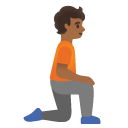
Person Kneeling Facing Right: Medium-dark Skin Tone
U+1F9CE U+1F3FE U+200D U+27A1 U+FE0F · :person_kneeling_facing_right_mediumdark_skin_tone:
Trend 48
Meaning layers
- interpretation
- Used to express submission, humility, begging, worship, or being 'on your knees' for something you love or someone you respect. Also used ironically to indicate total defeat or desperation.
- tiktok usage
- Appears in 'I'm literally kneeling' captions when reacting to something overwhelmingly good, like a celebrity post or a life-changing moment.
- irony level
- 6 / 10
Platform meanings
- meaning
- Symbol of extreme admiration, stan culture worship, or comedic over-the-top desperation
- trend usage
- Used in duets or comment sections praising creators — 'I'm kneeling at your feet for this content'
- hashtags
- #kneeling#ImNotWorthy#BowingDown#StanCulture#FYP
- virality score
- 52 / 100
Cultural meanings
🇺🇸
Western / Gen-Z
Primarily used as a meme or ironic worship gesture — 'I'm on my knees for this album drop' — with high comedic and stan culture energy.
🇵🇰
Pakistan & India
May be interpreted as a gesture of respect, supplication, or religious humility; also used in dramatic Bollywood-style expressions of pleading.
🌍
Middle East
Resonates with Islamic concepts of humility and prostration; can be used sincerely in religious contexts or casually for dramatic effect in youth chat.
🌐
Global Neutral
Universally understood as kneeling, conveying submission, respect, prayer, or begging across most contexts regardless of cultural background.
🇧🇩
Bangladesh
Associated with religious humility and respectful gestures; younger users may also use it in meme contexts similar to South Asian internet culture.
🇱🇰
Sri Lanka
Understood through a lens of religious reverence or traditional respect; less common in casual digital communication but recognizable.
🇨🇳
China
May be associated with historical kowtow gestures of deep respect; modern youth use it more ironically to express being overwhelmed by something.
🇯🇵
Japan
Evokes the bow or seiza kneeling posture, both culturally significant; used in anime fan communities to express reverence or comedic submission.
🇰🇷
South Korea
Associated with deep bowing culture and idol worship; K-pop fans use it heavily to express devotion to their favorite artists.
🇹🇼
Taiwan
Used similarly to South Korea and Japan — carries reverence and fan worship energy, especially in entertainment fandoms.
🇭🇰
Hong Kong
Used in a blend of Western meme culture and local Cantonese internet humor; signals dramatic admiration or self-deprecating humor.
🇵🇭
Philippines
Understood through Catholic kneeling for prayer as well as comedic begging culture; very common in Filipino meme formats.
🇮🇩
Indonesia
Carries religious connotations related to Islamic prayer posture; also used humorously in youth digital culture to express pleading or awe.
🇹🇭
Thailand
Kneeling is associated with deep respect for royalty and elders; the emoji may carry more solemn weight here than in Western contexts.
🇻🇳
Vietnam
Interpreted through cultural lenses of filial piety and respect; also adopted by younger users in meme and stan culture contexts.
🇲🇾
Malaysia
Used across Malay, Chinese, and Indian Malaysian communities to express humility or dramatic admiration; religious overtones possible.
🇸🇦
Saudi Arabia
Strong association with Islamic prayer and supplication; used sincerely in religious messaging or sarcastically among youth.
🇦🇪
UAE
In a multicultural digital landscape, used both for religious humility and as a Western-style meme reaction by younger cosmopolitan users.
🇪🇬
Egypt
Used to convey respect, begging, or religious humility; Egyptian internet culture also adapts it into comedic pleading meme formats.
🇹🇷
Turkey
Interpreted as a gesture of humility or begging; Turkish youth culture uses it in meme contexts similar to Western Gen Z usage.
🇮🇷
Iran
May carry religious significance related to prayer and submission; younger Iranians on social media also use it in ironic or dramatic contexts.
🇳🇬
Nigeria
Used in Afrobeats fan culture to worship artists, and in everyday chat to express dramatic begging or reverence for something impressive.
🇿🇦
South Africa
Adapted into local meme culture as a sign of extreme admiration; used across communities to bow down to iconic figures or moments.
🇬🇧
UK & Ireland
Used with quintessential British dry humor — either genuine admiration or deeply ironic prostration before something absurdly ordinary.
🇫🇷
France
Used with a slightly ironic flair; French internet culture may deploy it to mock exaggerated reverence or use it in theatrical admiration.
🇩🇪
Germany
Less common in casual usage; when used, tends to be sincere in expressing respect or humorous when acknowledging extreme expertise.
🇪🇸
Spain & Italy
Used with dramatic Mediterranean flair to express passionate admiration or comedic begging — fits well with expressive online culture.
🇧🇷
Brazil
Heavily used in Brazilian stan culture to worship celebrities, especially in BBB (Big Brother Brasil) and music fandoms.
🇲🇽
Mexico
Used in fan communities and casual chat to express worship-level admiration or comedic begging, often with layered humor.
🌎
Latin America
Across Latin America, used to express intense admiration for celebrities or cultural icons, often paired with fire or crown emojis.
🇦🇺
Australia & NZ
Used with casual self-deprecating humor or to ironically bow down to something that impressed them; fits Aussie understatement culture.
How its meaning shifted
- 2010
This specific directional emoji variant did not exist in 2010; kneeling and directional emoji were not yet part of Unicode.
- 2015
Still pre-release; basic kneeling emoji were not widely available and skin tone modifiers for directional emojis were limited.
- 2020
Directional person emojis began appearing; used primarily in literal contexts for accessibility and representation, with growing meme adoption.
- 2026
Fully integrated into stan culture, worship memes, and ironic submission contexts; recognized across platforms as a versatile reaction emoji.
See it on every platform
Adjacent emojis
Share & embed
Frequently asked
01What does the 🧎🏾➡️ Person Kneeling Facing Right: Medium-dark Skin Tone emoji mean?
A person kneeling and facing to the right, displayed with a medium-dark skin tone. The emoji shows a human figure in a kneeling position oriented toward the right side.
02What does 🧎🏾➡️ mean on TikTok?
Symbol of extreme admiration, stan culture worship, or comedic over-the-top desperation
03What does 🧎🏾➡️ mean on WhatsApp?
Begging someone for a favor or expressing dramatic admiration in group chats
04What does 🧎🏾➡️ mean in Gen-Z slang?
Used to express submission, humility, begging, worship, or being 'on your knees' for something you love or someone you respect. Also used ironically to indicate total defeat or desperation.
05Is the 🧎🏾➡️ emoji safe to use?
Represents kneeling as an act of humility, prayer, devotion, or dramatic admiration in digital communication.
06What does 🧎🏾➡️ mean in texting?
Kneeling is a universally recognized posture of vulnerability and deference. Digitally, it can signal both sincere admiration and performative helplessness depending on context.
07What is the shortcode for 🧎🏾➡️?
The shortcode for Person Kneeling Facing Right: Medium-dark Skin Tone is :person_kneeling_facing_right_mediumdark_skin_tone:
08What does 🧎🏾➡️ mean in dating?
Used to say 'I'm on my knees for you' — expressing intense attraction or flattery, sometimes playfully dramatic.
Safety & usage
- Safe meaning
- Represents kneeling as an act of humility, prayer, devotion, or dramatic admiration in digital communication.
- Caution
- Rarely weaponized, but could be used to mock someone for 'begging' or to demean someone by implying they should kneel to another person.
Context-dependent: in politically charged environments, kneeling emojis (especially with darker skin tones) may carry associations with racial justice protests and the 'taking a knee' movement. Use with awareness.
How it looks across platforms
Appearance varies by platform and device. Google Noto, Twemoji, and OpenMoji are open-source.