🏋🏿
The Emoji
Person Lifting Weights: Dark Skin Tone
U+1F3CB U+1F3FF · :person_lifting_weights_dark_skin_tone:
Trend 68
Meaning layers
- interpretation
- Used to signal gym culture, grind mentality, physical transformation journeys, or 'no days off' hustle energy. Also deployed ironically when doing the bare minimum feels monumental.
- tiktok usage
- Appears in gym transformation videos, 'day in my life' fitness content, and motivational montages. Also used humorously when lifting groceries or doing trivial tasks.
- irony level
- 5 / 10
Platform meanings
- meaning
- Represents gym culture, fitness grind, and body transformation. Also used ironically for everyday 'heavy lifting' moments.
- trend usage
- Appears in gym progress videos, 'POV: you actually went to the gym' content, and motivational soundbites. Fitness creators use it as a signature emoji.
- hashtags
- #gymtok#liftingweights#fitnessmotivation#gainsseason#noexcuses
- virality score
- 72 / 100
Cultural meanings
🇺🇸
Western / Gen-Z
A gym-grind staple emoji used sincerely for fitness flex content and ironically for mocking hustle culture. The dark skin tone is appreciated as representation in mainstream fitness media.
🇵🇰
Pakistan & India
Used in fitness-conscious urban communities to signal gym culture and physical discipline. Often seen in WhatsApp gym groups and motivational status updates among youth.
🌍
Middle East
Represents strength and fitness dedication, popular among gym-going youth in Gulf states. The dark skin tone may sometimes limit personal identification but is used broadly.
🌐
Global Neutral
Universally understood as gym and weightlifting activity. Carries connotations of strength, hard work, and physical dedication across most cultures.
🇧🇩
Bangladesh
Used among urban fitness communities and gym-goers, especially youth following global fitness trends on social media.
🇱🇰
Sri Lanka
Appears in gym community WhatsApp groups and social media fitness content. Fitness culture is growing among Sri Lankan youth who identify with this emoji.
🇨🇳
China
Used in fitness and bodybuilding communities on WeChat and Weibo. Gym culture is rapidly growing in urban China, making this emoji increasingly relevant.
🇯🇵
Japan
Associated with serious athletic training and discipline — values highly respected in Japanese culture. Used in sports and fitness contexts without much irony.
🇰🇷
South Korea
Popular in fitness communities influenced by K-pop idol training culture and the growing gym aesthetic trend among Korean youth.
🇹🇼
Taiwan
Used by fitness enthusiasts and gym communities on Instagram and Line. Reflects the growing health-conscious culture among Taiwanese youth.
🇭🇰
Hong Kong
Gym culture is well-established in Hong Kong, making this emoji common in fitness social media content and sports community chats.
🇵🇭
Philippines
Used sincerely in gym and fitness contexts. Filipino fitness influencer culture on TikTok and Instagram drives usage of this emoji.
🇮🇩
Indonesia
Common in fitness group chats and social media among urban Indonesian youth who are increasingly embracing gym culture.
🇹🇭
Thailand
Appears in Muay Thai, gym, and fitness content. Thailand's strong martial arts and athletic culture gives this emoji broad relevance.
🇻🇳
Vietnam
Used by growing urban fitness communities. Gym culture is rising among Vietnamese youth, and this emoji is adopted alongside global fitness trends.
🇲🇾
Malaysia
Multiracial gym communities in Malaysia use this emoji widely. The dark skin tone is embraced positively in diverse Malaysian social contexts.
🇸🇦
Saudi Arabia
Used in male fitness communities prominently. With Vision 2030 promoting active lifestyles, gym culture is booming and this emoji is widely recognized.
🇦🇪
UAE
Very relevant in the UAE's highly fitness-conscious expat and local communities. Gym culture is a major part of Dubai and Abu Dhabi social life.
🇪🇬
Egypt
Used among Egyptian gym-goers and fitness enthusiasts. Growing fitness culture in Egyptian cities drives social media use of this emoji.
🇹🇷
Turkey
Gym and sports culture in Turkey is strong, and this emoji is used straightforwardly in fitness content and sports community discussions.
🇮🇷
Iran
Used in underground and mainstream gym communities. Bodybuilding has a strong following in Iran, making this emoji culturally resonant.
🇳🇬
Nigeria
Strongly embraced, particularly with the dark skin tone, as a symbol of Black athletic excellence and strength. Popular in Nigerian fitness and motivational content.
🇿🇦
South Africa
The dark skin tone makes this especially meaningful for South African Black fitness communities. Used in gym content, motivational posts, and sports culture.
🇬🇧
UK & Ireland
Used in gym bro culture and fitness content. Also deployed ironically in British humor contexts to mock over-the-top effort or hustle culture.
🇫🇷
France
Used in fitness contexts but also carries ironic use in French social media humor. French gym culture is prominent in urban areas.
🇩🇪
Germany
Represents discipline and physical training — values that resonate strongly in German culture. Used earnestly in fitness and sports contexts.
🇪🇸
Spain & Italy
Gym culture and physical aesthetics are valued in southern European culture, making this emoji common in fitness content and sports community posts.
🇧🇷
Brazil
Deeply tied to Brazilian gym and body culture, which is globally recognized. Used enthusiastically in fitness content, especially alongside capoeira and crossfit trends.
🇲🇽
Mexico
Used in fitness and sports content. Mexican gym culture is growing rapidly among youth, and this emoji signals dedication and physical pride.
🌎
Latin America
Broadly used across Latin America to represent gym culture and physical strength. Fitness is a growing lifestyle trend across the region.
🇦🇺
Australia & NZ
Used in straightforward gym and fitness contexts. Also deployed in Australian dry humor to mock exaggerated effort or hustle culture narratives.
How its meaning shifted
- 2010
Emoji did not exist yet in this form. Weightlifting emoji were not part of early Unicode sets, and skin tone modifiers were not introduced until 2015.
- 2015
Newly introduced alongside skin tone modifiers. Used almost exclusively in literal fitness and gym contexts. Representation milestone celebrated in diverse online communities.
- 2020
Expanded to ironic and meme usage alongside sincere gym content. Became associated with hustle culture discourse. Black fitness visibility movements boosted the dark skin tone variant specifically.
- 2026
Fully integrated into both sincere fitness content and ironic Gen Z humor. The dark skin tone variant is actively chosen as an expression of identity and representation, not just default usage. Appears in broader empowerment and motivational contexts beyond just physical fitness.
See it on every platform
Adjacent emojis
- Often confused with
- flexed biceps dark skin toneman dancingperson cartwheeling
- Can replace
- flexed bicepsfiretrophy
Share & embed
Frequently asked
01What does the 🏋🏿 Person Lifting Weights: Dark Skin Tone emoji mean?
A person lifting weights or performing a weightlifting exercise, shown with dark skin tone modifier. Represents strength training, gym activity, powerlifting, and physical fitness.
02What does 🏋🏿 mean on TikTok?
Represents gym culture, fitness grind, and body transformation. Also used ironically for everyday 'heavy lifting' moments.
03What does 🏋🏿 mean on WhatsApp?
Tells someone you are at the gym, finished a workout, or are feeling strong and productive today.
04What does 🏋🏿 mean in Gen-Z slang?
Used to signal gym culture, grind mentality, physical transformation journeys, or 'no days off' hustle energy. Also deployed ironically when doing the bare minimum feels monumental.
05Is the 🏋🏿 emoji safe to use?
Physical fitness, gym culture, strength training, athletic dedication, and motivational messaging.
06What does 🏋🏿 mean in texting?
Triggers associations with discipline, self-improvement, and physical agency. The dark skin tone variant carries added cultural weight around representation and visibility in fitness spaces traditionally dominated by certain demographics.
07What is the shortcode for 🏋🏿?
The shortcode for Person Lifting Weights: Dark Skin Tone is :person_lifting_weights_dark_skin_tone:
08What does 🏋🏿 mean in dating?
Sent to signal physical fitness or attraction to someone who is athletic. Can be a subtle flex or an invitation to discuss gym habits as a shared interest.
Safety & usage
- Safe meaning
- Physical fitness, gym culture, strength training, athletic dedication, and motivational messaging.
- Caution
- Can be used to body-shame or mock someone for their physique — 'you need this 🏋🏿' sent unsolicited. Also weaponized in toxic fitness culture to shame non-athletic lifestyles.
Generally safe and positive. Minor risk of being used in body-shaming or unsolicited fitness advice contexts. The dark skin tone occasionally subject to racially coded misuse in trolling contexts.
How it looks across platforms
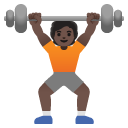


Appearance varies by platform and device. Google Noto, Twemoji, and OpenMoji are open-source.