🧑🏽🦱
The Emoji
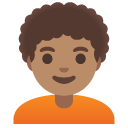
Person: Medium Skin Tone, Curly Hair
U+1F9D1 U+1F3FD U+200D U+1F9B1 · :person_medium_skin_tone_curly_hair:
Trend 48
Meaning layers
- interpretation
- Used to represent oneself or a friend with curly hair, often deployed as a self-identifier in bios and captions. Also used ironically when describing chaotic or 'unhinged' energy.
- tiktok usage
- Appears in 'this is me' POV videos, curly hair care routines, and aesthetic self-description clips.
- irony level
- 2 / 10
Platform meanings
- meaning
- Self-representation emoji used in POV content, curly hair tutorials, and mixed-race or brown identity videos.
- trend usage
- Common in 'things only curly-haired people understand' trends and medium-skin-tone beauty content.
- hashtags
- #curlyhairtiktok#melanin#curls#browngirl#naturalhair
- virality score
- 55 / 100
Cultural meanings
🇺🇸
Western / Gen-Z
Commonly used as a self-identifier by curly-haired Gen Z individuals in the US and Canada; celebrated in the natural hair movement and body positivity culture.
🇵🇰
Pakistan & India
Used by South Asian users, particularly those with wavy or curly hair textures, to represent themselves; resonates with the growing desi natural hair community online.
🌍
Middle East
Moderately used by Arab and Persian users with curly hair textures; appreciated for its medium skin tone which aligns with common skin tones in the region.
🌐
Global Neutral
Universally understood as a gender-neutral person with curly hair; broadly used across cultures for neutral human representation.
🇧🇩
Bangladesh
Used by Bangladeshi users as a self-identifier, particularly those who appreciate the medium skin tone representation that reflects their complexion.
🇱🇰
Sri Lanka
Appreciated in Sri Lankan communities as the medium skin tone closely mirrors common local complexions; used in casual self-referential contexts.
🇨🇳
China
Less commonly used compared to lighter-skinned emojis; may be used by Chinese users familiar with international diversity discussions.
🇯🇵
Japan
Relatively niche use in Japan; associated more with foreigners or international characters in creative contexts due to the curly hair detail.
🇰🇷
South Korea
Used occasionally in K-content discussions about diverse beauty standards; more common in international fan communities than domestic ones.
🇹🇼
Taiwan
Used by Taiwanese netizens in diversity-inclusive conversations; the curly hair is seen as exotic and interesting rather than a direct self-representation.
🇭🇰
Hong Kong
Used in multicultural Hong Kong circles, particularly in international school communities and expat groups.
🇵🇭
Philippines
Resonates well with Filipino users due to the medium skin tone matching many local complexions; used frequently in casual self-representation.
🇮🇩
Indonesia
Popular among Indonesian users for self-representation, as the medium skin tone aligns with many Indonesian complexions; common in youth-oriented social media.
🇹🇭
Thailand
Used somewhat sparingly in Thailand where lighter skin tones are more culturally idealized; however, growing in use among progressive youth communities.
🇻🇳
Vietnam
Occasionally used by Vietnamese users in international or cosmopolitan contexts; the curly hair element is seen as a distinctive foreign or mixed-heritage marker.
🇲🇾
Malaysia
Widely used in Malaysia's diverse multicultural population, particularly by Malay and Indian-Malaysian users for whom the medium skin tone is relatable.
🇸🇦
Saudi Arabia
Used by younger Saudi users in casual digital communication; the medium skin tone is relatable but curly hair may be associated with specific ethnic groups.
🇦🇪
UAE
Common in the UAE's diverse expat and multicultural communities; represents the wide range of nationalities and appearances in the region.
🇪🇬
Egypt
Used by Egyptian users, particularly those with curly or wavy hair textures common in North Africa; the medium skin tone resonates with many Egyptian complexions.
🇹🇷
Turkey
Used by Turkish users with curly hair textures common in Anatolia; appreciated for its gender-neutral framing and medium skin representation.
🇮🇷
Iran
Used occasionally by Iranian users, particularly younger generations on international platforms; curly hair is common in Iran making the emoji somewhat relatable.
🇳🇬
Nigeria
Widely embraced in Nigeria as part of the natural hair movement; the curly hair and medium skin tone resonate with many Nigerians celebrating Afro-textured hair.
🇿🇦
South Africa
Popular across South Africa's diverse communities; particularly resonant with mixed-race (coloured community) and Black South African users celebrating natural hair.
🇬🇧
UK & Ireland
Used by British and Irish users of South Asian, Afro-Caribbean, or mixed heritage as a representation emoji; common in multicultural urban communities.
🇫🇷
France
Used among French users from North African (Maghrebi) and Afro-Caribbean backgrounds; part of broader digital diversity representation conversations.
🇩🇪
Germany
Used in Germany's multicultural communities, particularly by users of Turkish, Middle Eastern, and Afro-German backgrounds for self-representation.
🇪🇸
Spain & Italy
Resonates in Spain and Italy where darker complexions and curly hair are common in southern regions; used proudly in self-representation by Mediterranean and Latin-heritage users.
🇧🇷
Brazil
Highly popular in Brazil due to the country's racial diversity; embraced by Afro-Brazilian and mixed-heritage users as part of the natural hair (cabelo natural) movement.
🇲🇽
Mexico
Used by Mexican users, particularly those of Indigenous, mestizo, or Afro-Mexican descent who identify with the medium skin tone and natural hair representation.
🌎
Latin America
Broadly embraced across Latin America where curly hair and medium skin tones are extremely common; a key emoji for Afro-Latinx and mestizo self-expression.
🇦🇺
Australia & NZ
Used in Australia and New Zealand's multicultural communities, particularly by Aboriginal, Torres Strait Islander, Pacific Islander, and South Asian diaspora users.
How its meaning shifted
- 2010
Did not exist — skin tone modifiers and hair component ZWJ sequences had not yet been introduced to Unicode.
- 2015
Still not available; Unicode was introducing basic skin tone modifiers but hair-specific sequences were not yet standardized.
- 2020
Became more widely used following Unicode 12.0's rollout of hair component emojis; initial adoption in natural hair and diversity communities online.
- 2026
Established as a standard self-representation tool across platforms; embraced in DEI conversations, natural hair communities, and as a personal identity marker in bios and captions.
See it on every platform
Compare with
Adjacent emojis
Share & embed
Frequently asked
01What does the 🧑🏽🦱 Person: Medium Skin Tone, Curly Hair emoji mean?
A gender-neutral person with medium skin tone and curly hair, used to represent people of diverse ethnicities and hair types.
02What does 🧑🏽🦱 mean on TikTok?
Self-representation emoji used in POV content, curly hair tutorials, and mixed-race or brown identity videos.
03What does 🧑🏽🦱 mean on WhatsApp?
Used as a quick self-reference, often as 'that's me' in group chats among friends of similar appearance.
04What does 🧑🏽🦱 mean in Gen-Z slang?
Used to represent oneself or a friend with curly hair, often deployed as a self-identifier in bios and captions. Also used ironically when describing chaotic or 'unhinged' energy.
05Is the 🧑🏽🦱 emoji safe to use?
A neutral, inclusive representation of a person with medium skin tone and curly hair; used for self-expression and identity.
06What does 🧑🏽🦱 mean in texting?
Representation emojis carry significant psychological weight for people who have historically been underrepresented in media; seeing oneself in an emoji fosters identity affirmation.
07What is the shortcode for 🧑🏽🦱?
The shortcode for Person: Medium Skin Tone, Curly Hair is :person_medium_skin_tone_curly_hair:
08What does 🧑🏽🦱 mean in dating?
Used lightly as a self-descriptor in flirty bios or DMs — 'that's me 🧑🏽🦱' — to signal physical appearance in a low-key way.
Safety & usage
- Safe meaning
- A neutral, inclusive representation of a person with medium skin tone and curly hair; used for self-expression and identity.
- Caution
- Rarely weaponized; in very niche contexts could be used in racially coded messages, though this is uncommon.
Generally safe. Be mindful that selecting skin-tone-specific emojis in certain contexts can attract unsolicited commentary about race; no significant abuse patterns detected.
How it looks across platforms


Appearance varies by platform and device. Google Noto, Twemoji, and OpenMoji are open-source.