👩🏽🦱
The Emoji
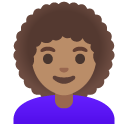
Woman: Medium Skin Tone, Curly Hair
U+1F469 U+1F3FD U+200D U+1F9B1 · :woman_medium_skin_tone_curly_hair:
Trend 54
Meaning layers
- interpretation
- Used as a self-identifier by curly-haired women of medium complexion, often as a 'this is me' shorthand. Also used generally to represent any confident, expressive woman regardless of exact appearance match.
- tiktok usage
- Appears in 'curly girl method' content, natural hair journeys, and relatability videos where creators identify themselves or their vibe. Often paired with hair care tips.
- irony level
- 2 / 10
Platform meanings
- meaning
- Self-representation emoji for curly-haired medium-skin-tone women, often used in hair tutorials, natural hair journey vlogs, and confidence content.
- trend usage
- Curly girl method challenges, 'day in my life' videos, Latina/mixed-race creator content, and relatability skits about curly hair struggles.
- hashtags
- #curlygirl#naturalhair#curlyhair#melaninmagic#curlyhaircheck
- virality score
- 58 / 100
Cultural meanings
🇺🇸
Western / Gen-Z
Strongly embraced as a representation and identity emoji, especially by Gen Z women with curly hair who celebrate their natural texture. Widely used in self-love and body-positivity contexts.
🇵🇰
Pakistan & India
Used by South Asian women with naturally wavy or curly hair to represent themselves, though the medium skin tone may not perfectly match all South Asian skin tones. Gaining traction in urban youth communities celebrating natural beauty.
🌍
Middle East
Used by women in the Middle East to represent themselves, particularly those with naturally curly or wavy hair. Cultural hair-covering norms mean this emoji is often used in digital-only self-expression spaces.
🌐
Global Neutral
Universally understood as representing a medium-skin-toned curly-haired woman. Recognized across cultures as a positive representation of diverse femininity.
🇧🇩
Bangladesh
Used occasionally by younger Bangladeshi women on social media who identify with the curly or wavy hair depiction. Less common than lighter or darker skin tone variants in local usage.
🇱🇰
Sri Lanka
Embraced by Sri Lankan women with naturally curly or wavy hair as a closer match to their appearance than many default emoji. Used in social media content around natural beauty.
🇨🇳
China
Rarely used in mainland China as the curly hair aesthetic is not traditionally dominant. May be used in international or multicultural contexts, or to represent non-Chinese characters in creative content.
🇯🇵
Japan
Used mostly in international or creative contexts in Japan. Japanese users may employ it to represent a foreign character or a curly-haired friend rather than self-identification.
🇰🇷
South Korea
Occasionally used in K-beauty and international fashion communities to represent diversity. Not commonly used for self-identification as curly hair is less typical in Korean beauty standards.
🇹🇼
Taiwan
Similar to Japan and South Korea — used more for representing diversity or international characters than self-identification. Growing in use among younger, globally connected Taiwanese users.
🇭🇰
Hong Kong
Used in cosmopolitan Hong Kong contexts among diverse populations and international communities. More common among expat and multicultural social circles.
🇵🇭
Philippines
Well-received in the Philippines where many Filipinos have naturally wavy or curly hair. Used for self-representation and in natural hair communities emerging on Filipino social media.
🇮🇩
Indonesia
Growing use in Indonesia among women embracing their natural hair texture, particularly in Jakarta's cosmopolitan beauty and wellness communities.
🇹🇭
Thailand
Primarily used to represent non-Thai characters or diversity in content. Some Thai women with naturally curly hair adopt it but it remains niche.
🇻🇳
Vietnam
Used sparingly for self-representation. More common in content about international beauty standards or when representing diverse characters in creative writing.
🇲🇾
Malaysia
Embraced by Malaysia's diverse population — particularly among Malay, Indian-Malaysian, and mixed-heritage women with curly hair. Used in natural hair and beauty communities.
🇸🇦
Saudi Arabia
Used primarily in digital and private communication spaces. Women use it to express themselves in online communities where hair visibility is personal and empowering.
🇦🇪
UAE
Common in Dubai and Abu Dhabi's highly cosmopolitan digital spaces. Used by the diverse expat and local population to represent curly-haired women across many ethnicities.
🇪🇬
Egypt
Used by Egyptian women who identify with naturally curly or wavy hair — a common hair type in Egypt. Appears in beauty and self-care content celebrating natural Middle Eastern hair textures.
🇹🇷
Turkey
Used by Turkish women with naturally curly hair to represent themselves, particularly in Instagram and TikTok content celebrating natural beauty and rejecting Eurocentric standards.
🇮🇷
Iran
Used in online spaces, particularly by younger Iranian women expressing identity and natural beauty. The digital context is especially important given offline dress codes.
🇳🇬
Nigeria
Widely embraced in Nigeria as part of the natural hair movement. Used alongside Afrocentric beauty content, though the tighter curl emoji variants may also be preferred.
🇿🇦
South Africa
Popular in South Africa's diverse beauty communities. Used by mixed-heritage and coloured community women as a close representation of their curly hair texture.
🇬🇧
UK & Ireland
Used by British and Irish women of color, particularly those of South Asian, Caribbean, and mixed heritage. Common in natural hair and diversity-celebrating communities.
🇫🇷
France
Used in France among the diverse Francophone community, particularly women of North African, Caribbean, or mixed heritage. Appears in content about representation and natural beauty.
🇩🇪
Germany
Used in Germany among women of diverse backgrounds — Turkish-German, Afro-German, and mixed-heritage communities — to represent themselves and celebrate natural hair.
🇪🇸
Spain & Italy
Popular among Spanish and Italian women with naturally curly Mediterranean hair who see this as a relatable representation. Also used by Latina communities in Spain.
🇧🇷
Brazil
Very popular in Brazil where curly and wavy hair is extremely common. Frequently used in #cachosgram (curly hair community) content and by women celebrating their natural hair.
🇲🇽
Mexico
Widely used by Mexican women, especially those of mixed Indigenous or Afro-Mexican heritage with naturally curly hair. Common in natural beauty and cultural pride content.
🌎
Latin America
Broadly popular across Latin America where diverse hair textures are common. Used extensively in the natural hair movement (cabello natural) and Latina identity content.
🇦🇺
Australia & NZ
Used in Australia and New Zealand's multicultural communities, particularly among women of Pacific Islander, Aboriginal, South Asian, and mixed heritage who identify with the curly hair representation.
How its meaning shifted
- 2010
This specific emoji did not exist in 2010. General person and face emojis were available but lacked skin tone modifiers or hair type variations entirely.
- 2015
Still non-existent as a distinct emoji. Skin tone modifiers were introduced in 2015 (Unicode 8.0) but hair-specific emoji combinations were not yet available.
- 2020
Introduced as part of Unicode 12.0 (2019) and widely adopted by 2020. Quickly embraced by natural hair communities, Latina creators, and representation advocates on Instagram and TikTok.
- 2026
Established as a staple identity emoji for curly-haired medium-skin-tone women. Used routinely in bios, natural hair content, and diversity discussions. Normalized alongside growing representation movements.
See it on every platform
Compare with
Adjacent emojis
Share & embed
Frequently asked
01What does the 👩🏽🦱 Woman: Medium Skin Tone, Curly Hair emoji mean?
A woman emoji with medium skin tone and curly hair, representing a curly-haired woman of medium complexion. Part of the Unicode emoji family supporting diverse human representation.
02What does 👩🏽🦱 mean on TikTok?
Self-representation emoji for curly-haired medium-skin-tone women, often used in hair tutorials, natural hair journey vlogs, and confidence content.
03What does 👩🏽🦱 mean on WhatsApp?
Used as a self-referential emoji when a woman wants to insert herself into the conversation or describe her current look/mood.
04What does 👩🏽🦱 mean in Gen-Z slang?
Used as a self-identifier by curly-haired women of medium complexion, often as a 'this is me' shorthand. Also used generally to represent any confident, expressive woman regardless of exact appearance match.
05Is the 👩🏽🦱 emoji safe to use?
A positive representation emoji used for self-identification, cultural pride, and celebrating natural curly hair. Completely benign and empowering in standard usage.
06What does 👩🏽🦱 mean in texting?
This emoji carries strong identity-affirmation psychology, especially for women of color who historically lacked representation. Using it can signal self-acceptance, cultural pride, and belonging within communities celebrating natural beauty.
07What is the shortcode for 👩🏽🦱?
The shortcode for Woman: Medium Skin Tone, Curly Hair is :woman_medium_skin_tone_curly_hair:
08What does 👩🏽🦱 mean in dating?
Sometimes used by someone describing themselves or their type in dating contexts — 'looking for someone to match my energy 👩🏽🦱'. Low flirtation intensity but carries a self-confident undertone.
Safety & usage
- Safe meaning
- A positive representation emoji used for self-identification, cultural pride, and celebrating natural curly hair. Completely benign and empowering in standard usage.
- Caution
- Extremely rare, but could theoretically be used in a mocking or stereotyping context targeting curly-haired or mixed-race women. This is highly unusual and context-dependent.
No significant safety concerns. As with all person emojis with specific characteristics, there is a minor potential for misuse in mocking or stereotyping, but this is not a common usage pattern.
How it looks across platforms


Appearance varies by platform and device. Google Noto, Twemoji, and OpenMoji are open-source.