🤽🏿
The Emoji
Person Playing Water Polo: Dark Skin Tone
U+1F93D U+1F3FF · :person_playing_water_polo_dark_skin_tone:
Trend 18
Meaning layers
- interpretation
- Used to flex athletic identity, represent hustle and grind mentality, or casually reference swimming, sports, or summer vibes. Sometimes used ironically to describe someone 'in over their head' in a situation.
- tiktok usage
- Appears in sports edits, athlete POV videos, summer pool content, and occasionally as metaphor for 'keeping your head above water' during stressful times.
- irony level
- 3 / 10
Platform meanings
- meaning
- Represents athletic energy, water sports, summer competition, or being 'in the trenches' of a tough situation.
- trend usage
- Used in sports highlight videos, 'day in the life of an athlete' content, summer pool vlogs, and motivational fitness content.
- hashtags
- #WaterPolo#AthleteTok#PoolSeason#SportsLife#SwimLife
- virality score
- 22 / 100
Cultural meanings
🇺🇸
Western / Gen-Z
Used mainly by actual water polo players or as a niche sports flex; occasionally used ironically to describe chaotic multitasking energy.
🇵🇰
Pakistan & India
Water polo is a niche sport here, so this emoji is rarely used; when it appears, it's typically by sports enthusiasts or Olympic followers.
🌍
Middle East
Water polo has limited cultural penetration in most Middle Eastern countries; emoji use is mainly confined to Olympic watchers or expatriate sports communities.
🌐
Global Neutral
Universally understood as representing water polo or aquatic sports; safe and non-controversial across cultures.
🇧🇩
Bangladesh
Very niche usage; water polo is not a widely practiced sport here, so this emoji is mainly seen among Olympic sports fans or urban youth.
🇱🇰
Sri Lanka
Rarely used in everyday communication; may appear among sports-specific communities or those following international aquatic competitions.
🇨🇳
China
Water polo has some state-supported presence; the emoji may appear during Olympic coverage or in school sports contexts, but is not commonly used casually.
🇯🇵
Japan
Japan has an active water polo team, so this emoji sees moderate use among sports fans, especially during high school and college athletic events.
🇰🇷
South Korea
Used by sports enthusiasts and Olympic followers; water polo is gaining a modest following, especially among younger athletes.
🇹🇼
Taiwan
Niche usage, primarily among Olympic sports followers and aquatic sports communities.
🇭🇰
Hong Kong
Moderate niche use within sports communities; the emoji may appear in school sports contexts or international games discussions.
🇵🇭
Philippines
Very limited use; water polo is not widely known here, so the emoji is mainly for sports enthusiasts following international events.
🇮🇩
Indonesia
Niche use among aquatic sports communities; the emoji may gain brief visibility during Southeast Asian Games or Olympics.
🇹🇭
Thailand
Seldom used in daily communication; appears mainly among sports fans tracking international aquatics competitions.
🇻🇳
Vietnam
Very niche; water polo is not a mainstream sport, so this emoji is limited to Olympic fans or athletic community pages.
🇲🇾
Malaysia
Limited mainstream use; may appear during international sports coverage or among university sports clubs.
🇸🇦
Saudi Arabia
Rare usage in everyday communication; more likely to appear in professional sports media or among youth following Olympic events.
🇦🇪
UAE
The UAE has growing aquatic sports programs; the emoji sees some use among expatriate communities and sports enthusiasts.
🇪🇬
Egypt
Egypt has a regional water polo tradition; the emoji appears among sports fans and school sports communities with some frequency.
🇹🇷
Turkey
Turkey has an active water polo culture; the emoji is used by sports communities, fans, and during national championships coverage.
🇮🇷
Iran
Iran has a notable water polo history; the emoji appears in sports media and among dedicated fans of the national team.
🇳🇬
Nigeria
Very rare; water polo is not widely practiced here, and the emoji is mainly seen among global sports followers.
🇿🇦
South Africa
Niche usage within the country's sports community; may appear around Olympic participation or school aquatics programs.
🇬🇧
UK & Ireland
Mostly niche use by actual players or Olympic fans; occasionally used humorously to describe someone flailing dramatically.
🇫🇷
France
France has a competitive water polo tradition; the emoji is used by sports fans, especially around European championships and the Olympics.
🇩🇪
Germany
Germany has an established water polo league; the emoji sees use among sports communities and during international competition coverage.
🇪🇸
Spain & Italy
Both countries are water polo powerhouses; the emoji is notably more popular here, used by fans, players, and sports media with genuine pride.
🇧🇷
Brazil
Water polo exists in Brazil's sports landscape; the emoji appears during Pan American Games and Olympic coverage.
🇲🇽
Mexico
Limited use; mainly appears among Olympic followers or sports enthusiasts tracking aquatic events.
🌎
Latin America
Niche across Latin America except where specific nations compete internationally; mostly seen in Olympic or Pan American Games contexts.
🇦🇺
Australia & NZ
Australia has a strong water polo tradition; the emoji sees moderate use among sports communities, school athletics, and Olympic followers.
How its meaning shifted
- 2010
This emoji did not exist in 2010 — water polo as an emoji concept had not yet been introduced to Unicode.
- 2015
A basic water polo emoji was introduced around this time period; usage was sparse and confined mainly to sports enthusiasts and emoji collectors.
- 2020
Skin tone variants became more widely available and used; the dark skin tone variant saw increased adoption alongside broader diversity emoji awareness movements.
- 2026
Remains a niche but stable sports emoji; used authentically by athletes and sports communities, with occasional ironic or metaphorical use by Gen Z in broader contexts.
See it on every platform
Adjacent emojis
- Often confused with
- person rowing boatperson swimmingperson playing handball
- Can replace
- person swimmingwater wavesports medal
Share & embed
Frequently asked
01What does the 🤽🏿 Person Playing Water Polo: Dark Skin Tone emoji mean?
A person playing water polo in a swimming pool, raising one arm to throw or block a ball, depicted with dark skin tone modifier (Fitzpatrick scale type VI).
02What does 🤽🏿 mean on TikTok?
Represents athletic energy, water sports, summer competition, or being 'in the trenches' of a tough situation.
03What does 🤽🏿 mean on WhatsApp?
Signals water polo, swimming, pool activities, or general athletic/sporty identity in casual conversation.
04What does 🤽🏿 mean in Gen-Z slang?
Used to flex athletic identity, represent hustle and grind mentality, or casually reference swimming, sports, or summer vibes. Sometimes used ironically to describe someone 'in over their head' in a situation.
05Is the 🤽🏿 emoji safe to use?
Represents the sport of water polo and athletic participation; completely safe and positive in virtually all contexts.
06What does 🤽🏿 mean in texting?
Evokes themes of perseverance and physical endurance — water polo is notoriously one of the most physically demanding sports, so this emoji can subtly signal toughness or resilience.
07What is the shortcode for 🤽🏿?
The shortcode for Person Playing Water Polo: Dark Skin Tone is :person_playing_water_polo_dark_skin_tone:
08What does 🤽🏿 mean in dating?
Rarely used as a flirt tool, but could signal an athletic, active lifestyle to a potential partner — 'I swim, I play sports, I'm fit and disciplined.'
Safety & usage
- Safe meaning
- Represents the sport of water polo and athletic participation; completely safe and positive in virtually all contexts.
- Caution
- No known toxic or harmful associations with this emoji.
No warnings necessary; this emoji is universally benign and sport-specific.
How it looks across platforms
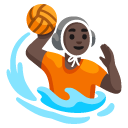


Appearance varies by platform and device. Google Noto, Twemoji, and OpenMoji are open-source.