🤽🏽
The Emoji
Person Playing Water Polo: Medium Skin Tone
U+1F93D U+1F3FD · :person_playing_water_polo_medium_skin_tone:
Trend 18
Meaning layers
- interpretation
- Used to flex aquatic athleticism, niche sports identity, or to signal someone is genuinely that sporty kid no one expected. Sometimes used ironically to represent 'treading water' in life situations.
- tiktok usage
- Appears in athlete POV content, niche sport representation videos, and sometimes humorously in 'unexpected sports I do' reveal trends.
- irony level
- 4 / 10
Platform meanings
- meaning
- Represents water polo athletes, pool sports culture, and niche athletic identity; also used metaphorically for working hard in chaotic environments.
- trend usage
- Featured in 'sports no one knows I do' trends, athlete day-in-my-life content, and swim team culture videos.
- hashtags
- #waterpolo#nichesport#swimlife#athletecheck#poolvibes
- virality score
- 28 / 100
Cultural meanings
🇺🇸
Western / Gen-Z
Gen Z in Western countries use it mostly for niche sports flex culture or ironically to describe staying afloat in stressful situations; water polo is cool precisely because it's obscure.
🇵🇰
Pakistan & India
Rarely used due to low cultural familiarity with water polo; when used, it's typically by urban youth who follow international sports or aspire to Olympic-level athletics.
🌍
Middle East
Limited everyday usage, but seen among youth in Gulf states with access to international sports clubs; occasionally appears in Olympic-related social media content.
🌐
Global Neutral
Universally understood as a sports or aquatic activity emoji; broadly represents athleticism, water sports, and active lifestyles without strong cultural baggage.
🇧🇩
Bangladesh
Very rarely used; water polo has minimal presence in Bangladeshi sports culture, so its appearance is mostly limited to general sports conversations or Olympic discussions.
🇱🇰
Sri Lanka
Uncommon in everyday usage; might appear in sports enthusiast communities or during international sports events like the Olympics among younger demographics.
🇨🇳
China
Used by sports enthusiasts and during Olympic season when China's water polo teams compete; the medium skin tone may be noted as mismatched by some users who prefer lighter tone modifiers.
🇯🇵
Japan
Japan has a modest water polo tradition, so this emoji sees occasional use in sports club communities, Olympic discussions, and school athletics content.
🇰🇷
South Korea
Occasionally used in sports content, though water polo is not a dominant sport; more commonly appears during Olympic coverage or in K-sports community discussions.
🇹🇼
Taiwan
Seen primarily in Olympic-related social media posts and among sports enthusiasts; generally understood but not widely used in everyday communication.
🇭🇰
Hong Kong
Used in sports communities and during international competitions; Hong Kong's international exposure means water polo is more recognized here than in some neighboring regions.
🇵🇭
Philippines
Rarely used in mainstream communication; may appear in university sports communities or during Southeast Asian Games coverage where water polo is sometimes featured.
🇮🇩
Indonesia
Limited usage tied mainly to Olympic discussions or SEA Games coverage; the emoji signals athletic aspiration and international sports awareness.
🇹🇭
Thailand
Occasionally used in sports fan communities, especially during Olympic broadcasts; water polo is known but not widely practiced or followed.
🇻🇳
Vietnam
Infrequent usage; appears primarily in sports enthusiast groups or during Olympic season when Vietnamese sports media covers aquatic events.
🇲🇾
Malaysia
Used in sports circles and during international competitions; Malaysians familiar with the Olympics may use it to discuss water polo matches or athletes.
🇸🇦
Saudi Arabia
Uncommon in everyday use; may appear among youth in international schools or expat communities with access to Western sports culture and facilities.
🇦🇪
UAE
More common than in other Gulf states due to Dubai and Abu Dhabi's international sports infrastructure and large expat population engaged with global sports culture.
🇪🇬
Egypt
Egypt has a historical water polo tradition in North Africa, so this emoji carries slightly more recognition here; used in sports community discussions and Olympic contexts.
🇹🇷
Turkey
Turkey has a water polo presence, particularly in Mediterranean sports leagues, so this emoji sees moderate use among sports fans and athletes.
🇮🇷
Iran
Iran has competed in water polo internationally, so the emoji is recognized in sports contexts; used in sports fan communities and during Olympic or Asian Games coverage.
🇳🇬
Nigeria
Very rarely used; water polo has minimal presence in Nigerian sports culture, which is dominated by football and athletics — likely only appears in globally-connected sports discussions.
🇿🇦
South Africa
Occasionally used in sports communities; South Africa has some water polo infrastructure, so it appears among school and club sports participants during competitions.
🇬🇧
UK & Ireland
Used among school and university sports communities where water polo is a recognized club sport; also appears ironically in British humor about posh or obscure sports.
🇫🇷
France
France has a strong water polo tradition, so the emoji is more recognizable here; used authentically by athletes, fans, and during national team coverage.
🇩🇪
Germany
Germany's strong sports culture includes water polo at club level; the emoji is used in sports communities, swimming clubs, and during Bundesliga or international coverage.
🇪🇸
Spain & Italy
Both countries have strong water polo traditions and Olympic histories; the emoji is genuinely used by fans, players, and sports media to represent the sport enthusiastically.
🇧🇷
Brazil
Brazil's aquatic sports culture makes this emoji somewhat recognizable; used in sports communities and during Olympic discussions, though football dominates the sports emoji landscape.
🇲🇽
Mexico
Occasionally used in sports and Olympic contexts; Mexico's water polo presence is limited but the emoji appears among university athletes and sports enthusiasts.
🌎
Latin America
Generally low usage across Latin America except in countries with more developed aquatic sports programs; mostly appears in Olympic-season social media content.
🇦🇺
Australia & NZ
Australia's strong aquatic sports culture gives this emoji moderate recognition; used among swim club members, water polo players, and sports fans particularly during Olympic campaigns.
How its meaning shifted
- 2010
Emoji did not exist yet; water polo representation in digital communication was limited to text abbreviations or generic sports emoji.
- 2015
The base water polo emoji was introduced around this period; usage was minimal and primarily literal among actual water polo players and sports enthusiasts.
- 2020
Skin tone modifiers normalized its use; seen more frequently in athlete social media, Olympic content, and beginning to be used metaphorically for 'treading water' in life.
- 2026
Used both literally by niche sports communities and metaphorically by Gen Z to describe the exhausting performance of staying afloat in overwhelming modern life; ironic usage has grown.
See it on every platform
Adjacent emojis
- Often confused with
- person swimmingperson rowing boatsplashing sweat symbol
- Can replace
- person swimmingwater wavesports medal
Share & embed
Frequently asked
01What does the 🤽🏽 Person Playing Water Polo: Medium Skin Tone emoji mean?
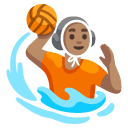
A person playing water polo in a swimming pool, shown with one arm raised as if throwing or blocking a ball, with medium skin tone applied via Fitzpatrick scale modifier.
02What does 🤽🏽 mean on TikTok?
Represents water polo athletes, pool sports culture, and niche athletic identity; also used metaphorically for working hard in chaotic environments.
03What does 🤽🏽 mean on WhatsApp?
Telling friends about water polo practice, games, or to signal being at the pool doing something athletic.
04What does 🤽🏽 mean in Gen-Z slang?
Used to flex aquatic athleticism, niche sports identity, or to signal someone is genuinely that sporty kid no one expected. Sometimes used ironically to represent 'treading water' in life situations.
05Is the 🤽🏽 emoji safe to use?
A sports emoji representing an athlete playing water polo; entirely safe and positive in all standard contexts.
06What does 🤽🏽 mean in texting?
People who use this emoji often feel pride in belonging to an underrepresented or lesser-known sports community, signaling a desire for recognition and belonging within a specific athletic identity.
07What is the shortcode for 🤽🏽?
The shortcode for Person Playing Water Polo: Medium Skin Tone is :person_playing_water_polo_medium_skin_tone:
08What does 🤽🏽 mean in dating?
Could be used to flirt by implying physical fitness, endurance, and an active lifestyle — 'I'm basically an athlete 🤽🏽' energy on a dating profile.
Safety & usage
- Safe meaning
- A sports emoji representing an athlete playing water polo; entirely safe and positive in all standard contexts.
- Caution
- No known toxic or coded meanings; extremely unlikely to be weaponized due to its specificity and low cultural baggage.
No significant warnings. The skin tone modifier (medium) is a neutral representation of human diversity and carries no negative connotations.
How it looks across platforms


Appearance varies by platform and device. Google Noto, Twemoji, and OpenMoji are open-source.