🏃🏽➡️
The Emoji
Person Running Facing Right: Medium Skin Tone
U+1F3C3 U+1F3FD U+200D U+27A1 U+FE0F · :person_running_facing_right_medium_skin_tone:
Trend 62
Meaning layers
- interpretation
- Used to convey escaping a situation, moving on, running away from problems, or literally being on the go. Also used humorously to signal avoidance of responsibilities or awkward situations.
- tiktok usage
- Appears in 'running away from my problems' meme formats, motivation content, fitness TikToks, and ironic 'me leaving the situation' reaction clips.
- irony level
- 6 / 10
Platform meanings
- meaning
- Symbolizes escaping, running toward goals, fitness motivation, or humorously fleeing from problems or cringe situations.
- trend usage
- Featured in POV videos, 'running from my past self' transformation content, gym motivation posts, and ironic avoidance humor.
- hashtags
- #runningaway#fitnessmotivation#merunning#escapingreality#runnerlife
- virality score
- 68 / 100
Cultural meanings
🇺🇸
Western / Gen-Z
Heavily meme-coded — primarily used to signal running away from problems, awkward situations, or responsibilities. Rarely taken literally by younger users.
🇵🇰
Pakistan & India
Used both literally for fitness and sports content, and increasingly in meme contexts to represent avoidance or escaping family obligations and social expectations.
🌍
Middle East
Used in fitness and sports contexts, particularly around marathon events in cities like Dubai or Riyadh. Also used humorously to indicate leaving an uncomfortable situation.
🌐
Global Neutral
Universally understood as representing running or moving quickly. Interpreted as either physical exercise or urgency depending on context.
🇧🇩
Bangladesh
Primarily used in fitness and motivational contexts. Also seen in humorous social media posts about avoiding responsibilities or daily chaos.
🇱🇰
Sri Lanka
Used in social media to represent physical activity and sports, particularly around cricket or athletic events. Occasionally used humorously to avoid drama.
🇨🇳
China
Used in fitness and athletic content on platforms like WeChat and Weibo. Associated with health trends and morning run culture popular among urban youth.
🇯🇵
Japan
Associated with running events like marathons, which are culturally significant in Japan. Also used in productivity and self-improvement content to signal forward progress.
🇰🇷
South Korea
Frequently used in fitness content tied to Korean wellness and diet culture. Also appears in idol fan communities to represent idols sprinting or in humorous escape memes.
🇹🇼
Taiwan
Used in casual fitness posts and motivational content. Also appears in meme culture to represent avoiding awkward or uncomfortable situations.
🇭🇰
Hong Kong
Used in marathon and running event communities, which are popular in Hong Kong. Also carries meme usage around fleeing stressful work environments.
🇵🇭
Philippines
Used in motivational and fitness content. Also frequently deployed as a humorous reaction to awkward family gatherings or uncomfortable conversations.
🇮🇩
Indonesia
Used in fitness and lifestyle content. Also appears in Gen Z meme formats to indicate avoidance of social obligations or toxic situations.
🇹🇭
Thailand
Used in sport and health content, particularly around the growing running culture in Bangkok. Also used playfully to mean getting out of a difficult situation.
🇻🇳
Vietnam
Appears in fitness and active lifestyle content. Also used in humorous social media posts to indicate escaping responsibilities or uncomfortable truths.
🇲🇾
Malaysia
Used in running club communities and fitness content. Also functions as a meme emoji for humorously fleeing embarrassing or awkward situations online.
🇸🇦
Saudi Arabia
Primarily used in sports and fitness contexts, especially with growing marathon culture in Saudi cities. Occasionally used to signal urgency or being on the move.
🇦🇪
UAE
Common in Dubai Marathon and fitness influencer content. Also used in expat communities to humorously signal running away from work pressure or desert heat.
🇪🇬
Egypt
Used in sports and motivational posts. Also appears in Egyptian meme culture to represent fleeing from problems or being chased — often with comedic intent.
🇹🇷
Turkey
Used in fitness and sports contexts. Also deployed humorously in social media to represent escaping drama or awkward situations in everyday Turkish social life.
🇮🇷
Iran
Used in athletic and fitness content. In younger online communities, it signals moving forward or escaping difficult circumstances with subtle ironic undertones.
🇳🇬
Nigeria
Used in fitness and hustle culture content, often tied to grinding and ambition. Also used humorously to represent running from poverty, stress, or embarrassing situations.
🇿🇦
South Africa
Used in marathon and trail running communities, which are very popular in South Africa. Also appears in meme culture to signal fleeing from problems or tough situations.
🇬🇧
UK & Ireland
Used with dry humor — typically to signal running away from British weather, social awkwardness, or responsibilities. Heavily ironic usage among younger users.
🇫🇷
France
Used in fitness and running communities. Also deployed sarcastically to represent fleeing from difficult conversations, administrative processes, or philosophical debates.
🇩🇪
Germany
Used in marathon and endurance sports communities. Also seen in productivity and discipline content. Occasionally used ironically to break from the serious German work stereotype.
🇪🇸
Spain & Italy
Used in fitness content and around popular marathons and cycling events. Also deployed humorously to represent running from siestas being interrupted or family drama.
🇧🇷
Brazil
Used in running and urban fitness culture, which is vibrant in Brazilian cities. Also appears in meme formats to signal running from problems or life's chaos.
🇲🇽
Mexico
Used in fitness and sports content. Also frequently used humorously to represent fleeing from overwhelming family gatherings, responsibilities, or awkward social situations.
🌎
Latin America
Used broadly across Latin America in fitness motivation posts. Also functions as a meme to represent escaping drama, work stress, or difficult life situations.
🇦🇺
Australia & NZ
Common in outdoor fitness and trail running content. Used humorously to represent running away from responsibilities or ironically fleeing from spiders and Australian wildlife.
How its meaning shifted
- 2010
This specific directional and skin-tone variant did not exist. The base runner emoji was used simply and literally to represent exercise, jogging, or physical activity.
- 2015
Basic runner emojis began appearing in fitness contexts on social media. Skin tone modifiers were introduced, though directional variants were not yet available.
- 2020
Directional runner ZWJ sequences began rolling out. Used in fitness content during COVID-19 lockdowns as running became a popular solo outdoor activity. Early meme usage emerging.
- 2026
Widely recognized in both literal fitness contexts and heavily ironic meme usage. The rightward direction adds a forward-momentum narrative, making it popular in both motivational and escapism-themed content across all major platforms.
See it on every platform
Adjacent emojis
- Often confused with
- person walkingperson runningperson running facing right
- Can replace
- person runningdash symbolathletic shoe
Share & embed
Frequently asked
01What does the 🏃🏽➡️ Person Running Facing Right: Medium Skin Tone emoji mean?
A person running and facing to the right, displayed with a medium skin tone. Introduced as part of the ZWJ sequence combining the runner emoji with the rightward arrow and medium skin tone modifier.
02What does 🏃🏽➡️ mean on TikTok?
Symbolizes escaping, running toward goals, fitness motivation, or humorously fleeing from problems or cringe situations.
03What does 🏃🏽➡️ mean on WhatsApp?
I'm on my way / I'm running late / I need to get out of here.
04What does 🏃🏽➡️ mean in Gen-Z slang?
Used to convey escaping a situation, moving on, running away from problems, or literally being on the go. Also used humorously to signal avoidance of responsibilities or awkward situations.
05Is the 🏃🏽➡️ emoji safe to use?
Represents physical exercise, running, urgency, forward momentum, or humorous escape from situations.
06What does 🏃🏽➡️ mean in texting?
Running to the right symbolizes forward momentum psychologically — it can reflect both healthy ambition and avoidance coping behavior depending on context.
07What is the shortcode for 🏃🏽➡️?
The shortcode for Person Running Facing Right: Medium Skin Tone is :person_running_facing_right_medium_skin_tone:
08What does 🏃🏽➡️ mean in dating?
Rarely used flirtatiously; may appear in playful 'chasing you' contexts or 'running to you' romantic gestures.
Safety & usage
- Safe meaning
- Represents physical exercise, running, urgency, forward momentum, or humorous escape from situations.
- Caution
- In rare cases could be used to mock someone for 'running away' from conflict or accountability, or to signal ghosting behavior.
Generally safe and non-controversial. Slight potential for use in cyberbullying contexts to taunt someone for avoiding confrontation, but very low risk.
How it looks across platforms
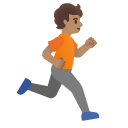
Appearance varies by platform and device. Google Noto, Twemoji, and OpenMoji are open-source.