🤷🏿
The Emoji
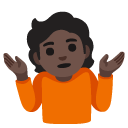
Person Shrugging: Dark Skin Tone
U+1F937 U+1F3FF · :person_shrugging_dark_skin_tone:
Trend 74
Meaning layers
- interpretation
- The ultimate 'idk and honestly I don't care' signal. Often used to convey unbothered energy, detachment from drama, or casual dismissal of something that's not worth the energy. Carries strong 'main character doesn't sweat the small stuff' vibes.
- tiktok usage
- Dropped in comments to respond to drama, callouts, or controversial takes without engaging. Also used in video captions to signal an unbothered reaction to life events.
- irony level
- 6 / 10
Platform meanings
- meaning
- Represents unbothered, carefree energy. Used in comment sections to dismiss drama or respond to criticism without engagement.
- trend usage
- Appears in 'POV: you don't care anymore' trend videos, in comments under drama exposés, and as a standalone reply to callout posts.
- hashtags
- #unbothered#idontcare#shrug#notmyproblem#vibes
- virality score
- 72 / 100
Cultural meanings
🇺🇸
Western / Gen-Z
Core to the 'unbothered' digital identity of Western Gen Z — used constantly to signal emotional detachment, ironic indifference, and low-maintenance personality branding across all platforms.
🇵🇰
Pakistan & India
Used widely in casual digital conversations to mean 'I don't know' or 'whatever you decide.' The dark skin tone variant has gained more active use as social conversations around representation increase, though lighter variants remain dominant in practice.
🌍
Middle East
Understood universally as an 'I don't know' gesture and used frequently in informal messaging. Skin tone variants are increasingly visible as younger Arab users consciously choose tones matching their own skin.
🌐
Global Neutral
Universally understood as uncertainty or indifference regardless of cultural background, making it one of the most cross-culturally consistent emojis in the Unicode library.
🇧🇩
Bangladesh
Used in youth digital culture primarily to express 'I don't know' or 'not my problem.' The dark skin tone resonates with users seeking representation, though the base or medium-tone variant is also common.
🇱🇰
Sri Lanka
Primarily interpreted as a neutral 'I don't know' gesture in casual messaging apps. The inclusion of a dark skin tone is appreciated by users who identify with it as more personally representative.
🇨🇳
China
Less commonly used due to Chinese digital platforms having their own rich emoji and sticker ecosystems. When used internationally by Chinese users, it typically means straightforward 'I don't know.'
🇯🇵
Japan
Shrug gestures are less culturally intuitive in Japan where physical expressiveness norms differ, so this emoji is understood more through its digital-global meaning than any native gestural parallel. Used primarily to mean 'no idea.'
🇰🇷
South Korea
Understood through global internet culture as indifference or uncertainty. K-pop fan communities use it in international spaces, and Korean youth on global platforms have adopted it naturally into their digital vocabulary.
🇹🇼
Taiwan
Used similarly to the global neutral interpretation — 'I don't know' or 'whatever.' Taiwanese internet culture readily borrows global emoji conventions, and the dark skin tone variant is used without particular stigma.
🇭🇰
Hong Kong
Used across Cantonese digital communication primarily to mean uncertainty or carefree dismissal. Code-switching Hong Kong users on English-language platforms use it with full awareness of its ironic and unbothered connotations.
🇵🇭
Philippines
Very commonly used in Filipino digital culture, which has enthusiastically adopted global emoji conventions. The dark skin tone resonates with many Filipinos and is used for everything from genuine uncertainty to sarcastic dismissal.
🇮🇩
Indonesia
Popular in Indonesian youth messaging culture to signal 'I don't know' or 'up to you.' The emphasis on group harmony makes the shrug a useful non-committal signal in social settings.
🇹🇭
Thailand
Used in casual Thai online communication to convey uncertainty. The rich Thai sticker culture means emojis often compete with custom stickers for expression, but this one holds its ground for quick responses.
🇻🇳
Vietnam
Appears in Vietnamese youth digital culture as a quick 'not sure' or 'doesn't matter' signal. Emoji culture in Vietnam is heavily influenced by global trends, and this emoji is well understood.
🇲🇾
Malaysia
Common in Malaysian multilingual digital chats as a cross-linguistic signal — works equally well in Malay, English, and Chinese-language conversations to express indifference or uncertainty.
🇸🇦
Saudi Arabia
Used in informal digital spaces, particularly among Saudi youth, to express carefree dismissal or uncertainty. The dark skin tone variant is used with awareness of its skin representation dimension in conversations about Arab identity online.
🇦🇪
UAE
In the UAE's diverse digital landscape, this emoji is used across expat and local communities. The dark skin tone variant is particularly relatable to South Asian and African expatriate communities who make up a significant portion of the population.
🇪🇬
Egypt
Used in Egyptian digital culture to signal 'malesh' (never mind) or 'maarafsh' (I don't know) vibes. Egyptian internet users are highly expressive and have adopted this into their casual online vocabulary.
🇹🇷
Turkey
Corresponds to a familiar shrug gesture in Turkish communication culture. Used to mean 'bilmiyorum' (I don't know) or express lighthearted indifference in messaging apps and social media.
🇮🇷
Iran
Used among Iranian youth on global and semi-restricted platforms to express nonchalance or uncertainty. The emoji carries a distinctly youthful, informal tone that aligns with how younger Iranians use digital expression to communicate across cultural constraints.
🇳🇬
Nigeria
Widely used and embraced by Nigerian digital culture, which has one of the most active and creative emoji cultures in Africa. The dark skin tone variant is particularly meaningful and commonly chosen by Nigerian users as a form of identity affirmation online.
🇿🇦
South Africa
Used across South Africa's diverse digital communities. The dark skin tone is notably embraced by Black South African users as an intentional representation choice, reflecting broader conversations about digital inclusivity in the region.
🇬🇧
UK & Ireland
Used with very similar connotations to American Gen Z culture — 'can't be bothered,' 'whatever,' or sarcastic indifference. British dry humor aligns well with the ironic applications of this emoji.
🇫🇷
France
French digital users associate the shrug with the classic Gallic 'bof' — a cultural gesture of dismissal or indifference. The emoji maps naturally to French communication habits around not making a fuss.
🇩🇪
Germany
Used straightforwardly to indicate not knowing something or leaving a decision to others. German digital communication tends toward directness, so ironic or layered uses are less common than in Anglophone cultures.
🇪🇸
Spain & Italy
Southern European digital users use this with expressive flair — often paired with other emojis to construct elaborate emotional sentences. The shrug fits naturally into the gestural richness of Mediterranean communication styles.
🇧🇷
Brazil
Very popular in Brazilian digital culture, which is highly emoji-expressive. The dark skin tone variant resonates strongly given Brazil's racially diverse population and active conversations about representation in media and digital spaces.
🇲🇽
Mexico
Used casually in Mexican digital communication to mean 'ni modo' (oh well) or 'quién sabe' (who knows). Mexican internet culture layers irony and humor into emoji use, aligning well with the emoji's sarcastic applications.
🌎
Latin America
Broadly understood across Latin American digital culture as an unbothered, indifferent response. The dark skin tone variant has meaningful resonance in Afro-Latino communities who are increasingly vocal about representation.
🇦🇺
Australia & NZ
Used identically to broader Anglophone internet culture — casual indifference, 'no idea mate,' or ironic dismissal. Australian slang culture of self-deprecation and dry humor pairs naturally with this emoji's tone.
How its meaning shifted
- 2010
Skin tone modifier variants didn't exist yet — the base shrug emoji wasn't standardized until 2016. In 2010, users typed the ASCII shrug ¯\_(ツ)_/¯ to express the same sentiment.
- 2015
Unicode was beginning to introduce skin tone modifiers (Emoji 1.0, 2015) but the shrug emoji with skin tones arrived in 2016. The concept was anticipated with users manually combining characters or using platform-specific equivalents.
- 2020
Fully established as a core emoji in digital communication. The dark skin tone variant had gained specific cultural traction in BIPOC digital communities and was widely used in the context of COVID-era 'nobody knows anything' sentiment.
- 2026
A staple emoji across all demographics with deeply layered meanings — from genuine uncertainty to ironic detachment to identity-affirming expression. The dark skin tone variant is actively chosen by users as both a practical and political representation statement.
See it on every platform
Adjacent emojis
- Often confused with
- person gesturing okraised handwaving hand
Share & embed
Frequently asked
01What does the 🤷🏿 Person Shrugging: Dark Skin Tone emoji mean?
A person with dark skin tone raising both hands to the sides with palms facing up and shoulders shrugged, indicating uncertainty, indifference, or lack of knowledge.
02What does 🤷🏿 mean on TikTok?
Represents unbothered, carefree energy. Used in comment sections to dismiss drama or respond to criticism without engagement.
03What does 🤷🏿 mean on WhatsApp?
Conveys 'I don't know' or 'whatever you decide' in group chats and one-on-one conversations. Very common for making plans when someone is indifferent to the outcome.
04What does 🤷🏿 mean in Gen-Z slang?
The ultimate 'idk and honestly I don't care' signal. Often used to convey unbothered energy, detachment from drama, or casual dismissal of something that's not worth the energy. Carries strong 'main character doesn't sweat the small stuff' vibes.
05Is the 🤷🏿 emoji safe to use?
A universally benign expression of uncertainty, indifference, or carefree dismissal. Carries no inherently harmful connotations in most contexts.
06What does 🤷🏿 mean in texting?
The shrug gesture universally signals a release of responsibility or certainty. The dark skin tone variant adds a layer of cultural identity affirmation. Psychologically, its use can range from healthy emotional detachment to passive avoidance of confrontation or accountability.
07What is the shortcode for 🤷🏿?
The shortcode for Person Shrugging: Dark Skin Tone is :person_shrugging_dark_skin_tone:
08What does 🤷🏿 mean in dating?
Used playfully to seem low-maintenance or mysterious — 'I'm chill, take it or leave it' energy. Can be flirtatious when paired with a suggestive message, creating ambiguity.
Safety & usage
- Safe meaning
- A universally benign expression of uncertainty, indifference, or carefree dismissal. Carries no inherently harmful connotations in most contexts.
- Caution
- Can be weaponized as a dismissive response to serious concerns, grief, or calls for accountability — communicating 'your problem doesn't matter to me' in a passive-aggressive way.
When used repeatedly in response to important or emotional messages, it can signal emotional unavailability or gaslighting behavior. In professional contexts, can appear flippant or unprofessional if used in serious discussions.
How it looks across platforms


Appearance varies by platform and device. Google Noto, Twemoji, and OpenMoji are open-source.