🚶🏽➡️
The Emoji
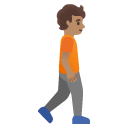
Person Walking Facing Right: Medium Skin Tone
U+1F6B6 U+1F3FD U+200D U+27A1 U+FE0F · :person_walking_facing_right_medium_skin_tone:
Trend 58
Meaning layers
- interpretation
- Used to signal leaving a situation, walking away from drama, or literally moving on. Often paired with door or exit imagery to dramatize an exit. Can also mean 'I'm just vibing and minding my own business.'
- tiktok usage
- Frequently appears in 'leaving toxic situations' or 'main character walking away' video captions. Used in POV videos where the creator is physically or metaphorically departing.
- irony level
- 4 / 10
Platform meanings
- meaning
- Represents a main character walking away from conflict, toxic energy, or a bad situation. Also used in motivational or 'glow-up' content.
- trend usage
- Appears heavily in 'walking away' transition trends, POV skits, and comment threads where users announce they're done engaging.
- hashtags
- #walkingaway#maincharacter#movingon#notmyproblem#glowupera
- virality score
- 62 / 100
Cultural meanings
🇺🇸
Western / Gen-Z
Primarily used ironically to signal leaving drama or toxic situations. The 'main character walking away' trope is deeply embedded in Gen Z's visual vocabulary.
🇵🇰
Pakistan & India
Used literally to indicate someone is going for a walk or heading out. In younger urban circles, the metaphorical 'leaving drama' usage is also adopted.
🌍
Middle East
Mostly used literally to mean 'going somewhere' or 'on my way.' In younger Gulf youth culture, the moving-on connotation is gaining traction.
🌐
Global Neutral
Broadly understood as indicating walking, movement, or departure. The skin tone variant signals personal identity connection to the gesture.
🇧🇩
Bangladesh
Primarily interpreted literally — someone heading out or taking a walk. The emotional subtext is less commonly applied.
🇱🇰
Sri Lanka
Used casually in chat to indicate physical movement or departure. Metaphorical usage is emerging among younger social media users.
🇨🇳
China
Walking emojis are used for literal movement indications. The rightward direction is seen as forward progress, which carries positive connotations in Chinese culture.
🇯🇵
Japan
Used politely to signal leaving or being on the move. Japan's culture of orderly movement and punctuality gives this emoji a respectful, purposeful undertone.
🇰🇷
South Korea
Popular in chats to say 'I'm heading out' or 'on my way.' In K-pop fan communities, used when fans metaphorically leave toxic fandoms.
🇹🇼
Taiwan
Used naturally in conversation to indicate transit or movement. In younger circles, influenced by K-pop and Western meme culture, the walking-away meaning is familiar.
🇭🇰
Hong Kong
Used in messaging to signal commuting or heading somewhere. Given Hong Kong's walking culture, it resonates authentically with daily life.
🇵🇭
Philippines
Frequently used in group chats to say 'I'm heading out' or 'BRB.' The metaphorical use has also been adopted from Western social media trends.
🇮🇩
Indonesia
Casually used to signal departure or being on a walk. Younger users influenced by TikTok trends use it in the 'leaving drama' context.
🇹🇭
Thailand
Used to signal movement or walking in everyday chats. Thai social media users have adopted the emoji's Western ironic usage in meme culture.
🇻🇳
Vietnam
Practical use dominates — it's a quick 'going somewhere' indicator. Meme usage has started appearing on Vietnamese TikTok and Facebook.
🇲🇾
Malaysia
Multilingual social media culture means this emoji is used both literally and ironically depending on the platform and generation.
🇸🇦
Saudi Arabia
Used mostly in the literal sense of walking or heading out. The 'walking away' irony is starting to appear among Saudi youth on Snapchat and TikTok.
🇦🇪
UAE
In the cosmopolitan UAE digital sphere, both literal and ironic uses are well-understood. Expat-heavy culture accelerates adoption of Western emoji meanings.
🇪🇬
Egypt
Used in everyday chats to signal movement. In Egyptian meme culture on Facebook and TikTok, the 'I'm out' usage has been localized with humor.
🇹🇷
Turkey
Used to indicate someone is going somewhere or walking away. Turkish social media communities use it in humorous exit scenarios.
🇮🇷
Iran
Literal usage dominates in Persian digital communication — signals physical movement. The metaphorical dimension is known among internationally connected youth.
🇳🇬
Nigeria
Used expressively to signal someone is done with a situation. Nigerian Twitter and TikTok culture has fully embraced the 'walking away unbothered' interpretation.
🇿🇦
South Africa
Adopted both literally and in its 'exiting drama' sense. South African meme culture blends local slang with this universal emoji meaning.
🇬🇧
UK & Ireland
The dry British humor context amplifies the 'not my problem' use. Often sent after a withering remark as a subtle mic-drop exit.
🇫🇷
France
Used with Gallic detachment — the 'I'm done engaging with this' interpretation fits French communication norms around dignity and selective engagement.
🇩🇪
Germany
Germans use it practically to indicate they are heading somewhere. The metaphorical layer is adopted by younger, social-media-savvy users.
🇪🇸
Spain & Italy
Used with expressive flair — often the emotional departure interpretation is exaggerated for comedic or dramatic effect in chats.
🇧🇷
Brazil
Brazilian social media users embrace the emoji's dramatic exit potential. It's used widely on TikTok and WhatsApp to signal leaving situations with style.
🇲🇽
Mexico
Popularly used in a humorous context — walking away from problems, bad takes, or awkward situations. WhatsApp groups use it heavily.
🌎
Latin America
Across Latin America, the emoji signals movement and departure both literally and emotionally. TikTok has unified the 'main character exit' usage regionally.
🇦🇺
Australia & NZ
Used casually to mean 'heading off' or 'I'm done here.' Australian dry humor pairs it perfectly with understated sarcastic exits in comment threads.
How its meaning shifted
- 2010
Emoji did not exist in this form in 2010. Basic walking emoji were not part of the Unicode standard yet, and skin tone modifiers were not yet introduced.
- 2015
Walking emojis began appearing with the introduction of skin tone modifiers in Unicode 8.0. Initial usage was predominantly literal — signaling physical movement.
- 2020
The rightward walking variant and the metaphorical 'walking away' usage exploded alongside TikTok's rise. The 'main character' trend cemented its ironic value.
- 2026
Fully established as both a literal movement emoji and a cultural shorthand for dignified exits, unbothered departures, and forward progress. Stable, versatile usage across all platforms.
See it on every platform
Adjacent emojis
- Often confused with
- person walkingperson in manual wheelchairperson hiking
- Can replace
- person walkingrunning shoewave hand
Share & embed
Frequently asked
01What does the 🚶🏽➡️ Person Walking Facing Right: Medium Skin Tone emoji mean?
A person walking and facing to the right, shown with a medium skin tone. The figure is depicted mid-stride in profile view heading rightward.
02What does 🚶🏽➡️ mean on TikTok?
Represents a main character walking away from conflict, toxic energy, or a bad situation. Also used in motivational or 'glow-up' content.
03What does 🚶🏽➡️ mean on WhatsApp?
Casually used to say 'I'm heading out' or 'on my way.' In dramatic contexts it means 'I'm done with this conversation.'
04What does 🚶🏽➡️ mean in Gen-Z slang?
Used to signal leaving a situation, walking away from drama, or literally moving on. Often paired with door or exit imagery to dramatize an exit. Can also mean 'I'm just vibing and minding my own business.'
05Is the 🚶🏽➡️ emoji safe to use?
Represents walking, movement, departure, or forward progress. Universally benign and widely used in wholesome contexts.
06What does 🚶🏽➡️ mean in texting?
Walking away is a psychologically loaded act — it can represent agency, self-preservation, or avoidance. The rightward direction culturally implies forward progress, making this emoji feel more purposeful than passive.
07What is the shortcode for 🚶🏽➡️?
The shortcode for Person Walking Facing Right: Medium Skin Tone is :person_walking_facing_right_medium_skin_tone:
08What does 🚶🏽➡️ mean in dating?
Rarely used for flirting directly. If sent after a long silence, it subtly signals 'I'm moving on' — a soft ghosting signal or a message that the sender is no longer waiting.
Safety & usage
- Safe meaning
- Represents walking, movement, departure, or forward progress. Universally benign and widely used in wholesome contexts.
- Caution
- Can be used as a passive-aggressive dismissal — sent to someone to imply they should leave or that the sender is done with them.
Minimal risk. In rare cases, when sent without context in a relationship or conflict situation, it may read as cold or dismissive. Not associated with harmful coded meanings.
How it looks across platforms
Appearance varies by platform and device. Google Noto, Twemoji, and OpenMoji are open-source.