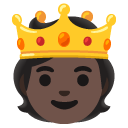
🫅🏿
The Emoji
Person With Crown: Dark Skin Tone
U+1FAC5 U+1F3FF · :person_with_crown_dark_skin_tone:
Trend 74
Meaning layers
- interpretation
- Self-affirmation that you are that person — unbothered, powerful, and deserving of respect. Used to hype yourself or someone else up as untouchable. 'Main character energy' personified.
- tiktok usage
- Appears in confidence POVs, 'I woke up like this' energy, and Black excellence content. Frequently used in captions celebrating identity, success, or unapologetic self-worth.
- irony level
- 2 / 10
Platform meanings
- meaning
- Symbol of self-confidence, Black excellence, and unapologetic identity. Appears in transformation videos, glow-up reveals, and affirmation content.
- trend usage
- Used in #BlackExcellence, melanin appreciation, 'soft life' aesthetic TikToks, and confidence soundtracks. Sometimes placed in captions after a viral moment.
- hashtags
- #BlackExcellence#CrownedUp#MelaninPoppin#SoftLife#RoyalVibes
- virality score
- 72 / 100
Cultural meanings
🇺🇸
Western / Gen-Z
A self-empowerment symbol deeply tied to Black excellence and Gen Z affirmation culture. Used to signal unbothered confidence and identity pride, especially in the context of racial representation.
🇵🇰
Pakistan & India
Less culturally common but understood as a royalty symbol. May be used in South Asian diaspora communities as a marker of pride or achievement, sometimes referencing Mughal-era royalty aesthetics.
🌍
Middle East
Interpreted through the lens of historical Arab and Persian royalty. In diaspora communities, may be used to celebrate heritage or cultural pride, though the dark skin tone adds a layer of specificity that resonates differently.
🌐
Global Neutral
Universally read as a symbol of royalty, leadership, and elevated status. The dark skin tone modifier signals representation and intentional cultural specificity.
🇧🇩
Bangladesh
Understood as a regal or prestigious symbol. Used in online spaces to celebrate achievements or compliment someone, though less common than in Western Gen Z contexts.
🇱🇰
Sri Lanka
Associated with royalty and prestige in general usage. Among younger Sri Lankans online, may be adopted from Western internet culture to signal confidence or celebrate a win.
🇨🇳
China
Interpreted as a symbol of nobility and imperial status, drawing loose parallels to Chinese historical royalty. The dark skin tone may be less specifically meaningful but the crown reads as prestige.
🇯🇵
Japan
Read primarily as a royalty or achievement symbol. Used by younger Japanese users familiar with Western internet culture to express confidence or celebrate someone's standout quality.
🇰🇷
South Korea
Common in K-culture fan spaces to crown their favorite idols as 'royalty.' The dark skin tone is sometimes specifically chosen to celebrate Black K-pop fans or artists.
🇹🇼
Taiwan
Used similarly to broader East Asian interpretations — royalty, prestige, and achievement. Younger Taiwanese users may adopt the Gen Z empowerment meaning from Western social media.
🇭🇰
Hong Kong
Carries connotations of leadership and standing out. In online communities, may be used to celebrate someone who speaks truth to power — carrying subtle resonance given the political context.
🇵🇭
Philippines
Often used to celebrate Filipino achievements and beauty, sometimes specifically chosen by Afro-Filipino communities to affirm identity. Broadly understood as a high compliment.
🇮🇩
Indonesia
Interpreted as a symbol of nobility and cultural pride. Used to celebrate someone's achievement or beauty, with the dark skin tone resonating in communities celebrating diverse Indonesian skin tones.
🇹🇭
Thailand
Associated with royalty — a culturally loaded concept in Thailand. Used carefully, more commonly to celebrate achievements than to invoke royal comparisons due to cultural reverence for monarchy.
🇻🇳
Vietnam
Read as a prestige and achievement symbol online. Younger Vietnamese users familiar with Western meme culture use it to hype up friends or celebrate personal wins.
🇲🇾
Malaysia
Used in diverse Malaysian online spaces to celebrate identity and achievement. Resonates particularly in Afro-Malaysian and darker-skinned Malay communities as a representation emoji.
🇸🇦
Saudi Arabia
Carries strong connotations of royalty given the Kingdom's monarchical culture. The dark skin tone adds nuance, sometimes used to celebrate the diversity within Arab identity.
🇦🇪
UAE
In the multicultural UAE context, this emoji resonates across many communities. Used to celebrate achievements and identity, particularly among the large South Asian and African expatriate communities.
🇪🇬
Egypt
Used to celebrate cultural pride and historical royalty — Egypt's pharaonic heritage gives crown symbolism deep cultural roots. The dark skin tone resonates with discussions of ancient Egyptian identity.
🇹🇷
Turkey
Interpreted as a prestige and nobility symbol. Used in celebratory contexts for achievements, with younger Turkish internet users adopting the confidence-flex meaning from global social media.
🇮🇷
Iran
Associated with Persian imperial heritage and nobility. Used in celebratory or complimentary contexts, with some users connecting it to pre-Islamic Persian royalty pride.
🇳🇬
Nigeria
Deeply resonant — Nigerian online culture embraces royalty aesthetics tied to Yoruba, Igbo, and Hausa royal traditions. The dark skin tone makes this a specifically celebratory and culturally affirming choice.
🇿🇦
South Africa
Powerfully used in South African digital spaces to celebrate Blackness, identity, and achievement. Connected to 'Black is King' cultural movements and post-apartheid pride.
🇬🇧
UK & Ireland
Used in British Black communities as part of the broader global Black excellence narrative. Also carries ironic British humor undertones when used sarcastically about someone acting posh.
🇫🇷
France
In French Black communities and among Afro-French youth, used to celebrate identity and push back against mainstream narratives. Carries empowerment energy in the context of French racial discourse.
🇩🇪
Germany
Used primarily in Black German and Afro-European communities to celebrate identity and representation. Broadly understood as a confidence and excellence symbol by German Gen Z.
🇪🇸
Spain & Italy
Used in Afro-Latino and Black Mediterranean communities as a pride symbol. Also carries general royalty and prestige connotations in broader Southern European social media contexts.
🇧🇷
Brazil
Deeply meaningful in Brazilian Black communities celebrating Afro-Brazilian identity and heritage. Connected to Candomblé royalty aesthetics, carnival, and the broader movimento negro.
🇲🇽
Mexico
Used in Afro-Mexican communities to celebrate the recognition of Afro-Mexican identity and heritage. Broadly understood as a prestige symbol in mainstream Mexican internet culture.
🌎
Latin America
Across Latin America, resonates in Afro-Latino communities as a celebration of Black Latin identity. The dark skin tone modifier makes it a deliberate representation statement.
🇦🇺
Australia & NZ
Used in First Nations, Pacific Islander, and Black Australian communities as a symbol of cultural pride and identity. Broadly interpreted as a confidence and excellence emoji in the wider Australian Gen Z internet space.
How its meaning shifted
- 2010
This emoji did not exist in 2010. Crown symbolism online was represented through text symbols like ♛ or described in words. Skin tone modifiers were not yet part of the emoji standard.
- 2015
The base person with crown emoji concept was emerging as part of Unicode's push for diverse representation. Early adoption was limited to tech-forward users exploring new emoji sets.
- 2020
Gained significant cultural momentum following the global Black Lives Matter movement and the release of Beyoncé's 'Black Is King.' The dark skin tone modifier became a deliberate act of representation and affirmation.
- 2026
Established as a core symbol of Black digital identity and Gen Z self-affirmation culture. Appears across all major platforms as both sincere empowerment expression and a versatile cultural shorthand for excellence.
See it on every platform
Adjacent emojis
Share & embed
Frequently asked
01What does the 🫅🏿 Person With Crown: Dark Skin Tone emoji mean?
A person wearing a crown with dark skin tone modifier, representing royalty, nobility, or a monarch figure. Introduced as a gender-neutral alternative to king and queen emojis.
02What does 🫅🏿 mean on TikTok?
Symbol of self-confidence, Black excellence, and unapologetic identity. Appears in transformation videos, glow-up reveals, and affirmation content.
03What does 🫅🏿 mean on WhatsApp?
Calling someone royalty, celebrating their win, or affirming their worth in a personal message. Common in friend group chats after someone does something impressive.
04What does 🫅🏿 mean in Gen-Z slang?
Self-affirmation that you are that person — unbothered, powerful, and deserving of respect. Used to hype yourself or someone else up as untouchable. 'Main character energy' personified.
05Is the 🫅🏿 emoji safe to use?
A positive symbol of empowerment, cultural pride, royalty, and self-affirmation. Used widely in celebratory and affirming contexts.
06What does 🫅🏿 mean in texting?
Tapping into self-actualization and identity affirmation, this emoji activates feelings of belonging and intrinsic worth. The dark skin tone modifier adds a layer of cultural specificity that can serve as representation and validation for darker-skinned users.
07What is the shortcode for 🫅🏿?
The shortcode for Person With Crown: Dark Skin Tone is :person_with_crown_dark_skin_tone:
08What does 🫅🏿 mean in dating?
Sent to someone to call them royalty — a high-tier compliment suggesting they're above the rest. 'You're a whole monarch and I see that.'
Safety & usage
- Safe meaning
- A positive symbol of empowerment, cultural pride, royalty, and self-affirmation. Used widely in celebratory and affirming contexts.
- Caution
- Rarely weaponized negatively, but can be used sarcastically to mock someone perceived as acting entitled, self-important, or above criticism.
The dark skin tone modifier is a deliberate choice that carries cultural weight — using it without awareness or in a mocking context can be seen as culturally insensitive. Generally a safe and positive emoji when used authentically.
How it looks across platforms


Appearance varies by platform and device. Google Noto, Twemoji, and OpenMoji are open-source.