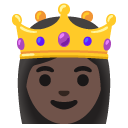
👸🏿
The Emoji
Princess: Dark Skin Tone
U+1F478 U+1F3FF · :princess_dark_skin_tone:
Trend 72
Meaning layers
- interpretation
- Used to assert confidence, self-worth, and unapologetic femininity. Often deployed as a self-affirmation symbol meaning 'I am that girl' or to celebrate Black excellence and royalty.
- tiktok usage
- Appears in videos celebrating natural hair, melanin beauty, Black girl magic content, glow-up transformations, and self-love narratives.
- irony level
- 3 / 10
Platform meanings
- meaning
- Symbol of Black feminine royalty, confidence, and self-love; used in empowerment content and melanin beauty trends.
- trend usage
- Paired with trending audios about self-worth, glow-ups, 'that girl' aesthetics, and Black excellence challenges.
- hashtags
- #BlackGirlMagic#MelaninQueen#BlackPrincess#ThatGirl#SelfLove
- virality score
- 78 / 100
Cultural meanings
🇺🇸
Western / Gen-Z
Deeply associated with Black girl magic, melanin pride, and the cultural celebration of dark-skinned Black women as royalty; a staple in empowerment content online.
🇵🇰
Pakistan & India
Used by South Asian users with darker skin tones as a self-affirmation tool, though the primary cultural resonance remains tied to Black communities; sometimes used generally to mean 'princess' in family or romantic contexts.
🌍
Middle East
Interpreted as a symbol of femininity and status; Arab women with darker complexions may use it for representation, though the crown imagery evokes traditional notions of royalty.
🌐
Global Neutral
Universally readable as a dark-skinned princess figure, often used simply to represent beauty, royalty, or feminine pride without deeper cultural specificity.
🇧🇩
Bangladesh
Used occasionally to compliment women or express self-affirmation; the cultural context of royalty resonates with local princess archetypes in folklore.
🇱🇰
Sri Lanka
Primarily used as a general compliment or self-expression tool for feminine confidence; less tied to specific cultural narratives than in Western contexts.
🇨🇳
China
Skin tone specificity is less emphasized in Chinese digital culture; used broadly as a princess symbol though the dark skin tone modifier carries less distinct meaning culturally.
🇯🇵
Japan
Used to denote princely or elegant femininity; the skin tone modifier is acknowledged but Japanese emoji culture tends to use the yellow default more frequently in casual settings.
🇰🇷
South Korea
In K-beauty dominated spaces, the dark skin tone can be an act of counter-cultural representation; used by afrocentric K-pop fans and darker-skinned Korean users for self-empowerment.
🇹🇼
Taiwan
Used similarly to Japan — primarily as a cute or elegant emoji; the dark skin tone modifier is seen as a diversity marker rather than carrying specific cultural weight.
🇭🇰
Hong Kong
Interpreted as a representation of diverse beauty; used in multicultural digital spaces and by South and Southeast Asian communities living in Hong Kong.
🇵🇭
Philippines
Embraced warmly given the diversity of Filipino skin tones; used as a self-love and beauty affirmation, pushing back against colorist beauty standards in Filipino culture.
🇮🇩
Indonesia
Used by darker-skinned Indonesian users as an empowerment symbol, especially among youth challenging colorist beauty norms; also used simply as a princess reference.
🇹🇭
Thailand
In a culture where lighter skin is often privileged in beauty standards, this emoji is used by progressive youth and darker-skinned Thais as a bold statement of self-worth.
🇻🇳
Vietnam
Used primarily as a general princess or royalty symbol; growing awareness of skin tone representation means younger users may adopt it for empowerment purposes.
🇲🇾
Malaysia
Embraced by Malaysia's diverse population, particularly Malay and Indian communities; used to celebrate dark-skinned feminine beauty and push back against colorism.
🇸🇦
Saudi Arabia
Used as a marker of femininity and royalty; darker skin tones are present across the Arabian Peninsula, so it resonates as representation while also carrying traditional princess connotations.
🇦🇪
UAE
In the UAE's multicultural environment, used by South Asian, African, and Arab women with darker skin tones as an empowerment and representation symbol.
🇪🇬
Egypt
Resonates with Egypt's mixed heritage — darker-skinned Egyptian and Nubian women use it as an identity affirmation and cultural pride marker.
🇹🇷
Turkey
Used primarily as a general femininity or royalty emoji; progressive Turkish youth may use it in conversations about diversity and representation.
🇮🇷
Iran
Interpreted as a symbol of elegance and feminine royalty; the skin tone dimension is less culturally loaded but understood as a diversity marker.
🇳🇬
Nigeria
Holds strong cultural resonance — Nigerian women embrace this emoji as a celebration of Black excellence, Nigerian royalty traditions, and Afrobeats-era cultural confidence.
🇿🇦
South Africa
Deeply meaningful in post-apartheid South Africa — used by Black South African women as a celebration of identity, heritage, and the ongoing reclamation of Black dignity.
🇬🇧
UK & Ireland
Used widely by Black British and Irish women as part of the broader Black girl magic movement; also appears in multicultural youth culture as an empowerment symbol.
🇫🇷
France
Used by Afro-French women to assert identity within a culture that sometimes resists ethnic identification; a quiet but powerful statement of Black feminine pride.
🇩🇪
Germany
Adopted by Afro-German communities and diaspora populations as a representation and empowerment tool, particularly in online spaces where Black German visibility is growing.
🇪🇸
Spain & Italy
Used by Afro-Latino and African diaspora women in Spain and Italy; carries empowerment meaning in communities pushing back against European beauty standards.
🇧🇷
Brazil
Brazil's large Afro-Brazilian population uses this emoji as a celebration of negritude, quilombola pride, and the broader Black consciousness movement.
🇲🇽
Mexico
Used by Afro-Mexican communities (Afro-Mexicans) and women of darker complexion to assert representation and push back against colorism in Mexican beauty culture.
🌎
Latin America
Across Latin America, used by Afro-Latinx women to celebrate their heritage and darker skin tones in cultures where European features have historically been privileged.
🇦🇺
Australia & NZ
Used by Aboriginal, Torres Strait Islander, Pacific Islander, and African diaspora women in Australia and New Zealand as a celebration of dark-skinned feminine beauty and cultural identity.
How its meaning shifted
- 2010
Skin tone modifiers did not yet exist in the Unicode standard; only a generic yellow-default princess emoji was available, with no racial representation options.
- 2015
Introduced with Unicode 8.0 skin tone modifiers — initial usage was exploratory, with users excited about representation but the emoji being relatively niche in mainstream digital culture.
- 2020
Surged in usage during the Black Lives Matter movement and broader conversations about representation; became a staple in Black women's empowerment content and identity expression online.
- 2026
A firmly established empowerment symbol in Black digital culture, used daily in self-love content, melanin beauty communities, and as a punctuation of feminine confidence across all major platforms.
See it on every platform
Adjacent emojis
Share & embed
Frequently asked
01What does the 👸🏿 Princess: Dark Skin Tone emoji mean?
A princess with dark skin tone, depicted as a young woman wearing a crown or tiara, representing royalty, nobility, and feminine power.
02What does 👸🏿 mean on TikTok?
Symbol of Black feminine royalty, confidence, and self-love; used in empowerment content and melanin beauty trends.
03What does 👸🏿 mean on WhatsApp?
Sent between close friends to hype each other up or celebrate a win; a digital crown of affirmation.
04What does 👸🏿 mean in Gen-Z slang?
Used to assert confidence, self-worth, and unapologetic femininity. Often deployed as a self-affirmation symbol meaning 'I am that girl' or to celebrate Black excellence and royalty.
05Is the 👸🏿 emoji safe to use?
A positive, empowering emoji celebrating dark-skinned feminine royalty, self-worth, and Black girl magic; widely used as a compliment and affirmation.
06What does 👸🏿 mean in texting?
Carries significant psychological weight as representation matters — seeing oneself reflected in emoji can foster identity validation, self-esteem, and cultural pride, particularly for dark-skinned Black women who have historically been underrepresented.
07What is the shortcode for 👸🏿?
The shortcode for Princess: Dark Skin Tone is :princess_dark_skin_tone:
08What does 👸🏿 mean in dating?
Sent by someone expressing they expect to be treated with high regard and respect, signaling they have standards and won't settle for less in a relationship.
Safety & usage
- Safe meaning
- A positive, empowering emoji celebrating dark-skinned feminine royalty, self-worth, and Black girl magic; widely used as a compliment and affirmation.
- Caution
- Rarely used toxically, but can appear sarcastically to mock someone for being demanding, spoiled, or delusional about their worth in negative contexts.
Could be used in a condescending or mocking way to dismiss a Black woman's confidence as 'acting like a princess'; context is key. Skin tone modifiers used by people of other ethnicities to mock or appropriate may be considered offensive.
How it looks across platforms


Appearance varies by platform and device. Google Noto, Twemoji, and OpenMoji are open-source.