🫄🏾
The Emoji
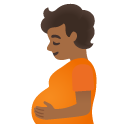
Pregnant Person: Medium-dark Skin Tone
U+1FAC4 U+1F3FE · :pregnant_person_mediumdark_skin_tone:
Trend 55
Meaning layers
- interpretation
- Used both sincerely to celebrate pregnancy and ironically to describe feeling bloated, overfull, or 'carrying too much' emotionally or physically. Also used in meme contexts about eating a big meal.
- tiktok usage
- Appears in food challenge videos after eating large amounts, in 'food baby' jokes, and in genuine pregnancy announcement content by inclusive creators.
- irony level
- 6 / 10
Platform meanings
- meaning
- Food baby jokes, genuine pregnancy content, body positivity, or gender-inclusive parenting TikToks
- trend usage
- Paired with mukbang videos, 'what I ate today' content, and inclusive pregnancy announcement trends
- hashtags
- #FoodBaby#PregnantPerson#InclusiveParenting#FoodComa#GenderNeutral
- virality score
- 58 / 100
Cultural meanings
🇺🇸
Western / Gen-Z
Widely understood in its dual meaning — sincere gender-inclusive pregnancy symbol and ironic 'food baby' joke — and embraced in inclusive digital communication.
🇵🇰
Pakistan & India
Primarily understood as a pregnancy symbol; the gender-neutral nuance is largely unrecognized, and it may be used simply to indicate someone is expecting a baby.
🌍
Middle East
Interpreted straightforwardly as a pregnancy emoji; the gender-inclusive framing is not commonly understood and may cause confusion or be ignored.
🌐
Global Neutral
Universally readable as related to pregnancy; the skin tone adds representation but the gender-neutral aspect is context-dependent globally.
🇧🇩
Bangladesh
Used simply to indicate pregnancy; gender-inclusive nuance is not widely culturally familiar in mainstream digital communication.
🇱🇰
Sri Lanka
Understood as a pregnancy-related emoji, often used to congratulate or signal an upcoming birth without awareness of gender-neutral intent.
🇨🇳
China
Rare in mainstream Chinese social media; when seen it is interpreted as pregnancy-related, with little awareness of the gender-inclusivity dimension.
🇯🇵
Japan
Occasionally used in pregnancy contexts; Japan's digital culture prefers specific kaomoji or platform-native emojis, making this less common but understood as pregnancy.
🇰🇷
South Korea
Used in pregnancy discussions on KakaoTalk and Instagram; the gender-neutral nuance aligns somewhat with growing conversations about gender identity in younger Korean communities.
🇹🇼
Taiwan
More receptive to the gender-inclusive framing due to Taiwan's progressive LGBTQ+ policies; used in inclusive parenting and queer family discussions.
🇭🇰
Hong Kong
Understood as pregnancy-related; the gender-neutral aspect is recognized in LGBTQ+-aware circles, especially among younger, English-fluent users.
🇵🇭
Philippines
Primarily used to indicate pregnancy in casual messaging; humor about food babies is also common given Filipino food culture.
🇮🇩
Indonesia
Interpreted as a pregnancy emoji; the gender-neutral framing is not widely recognized and may be seen as unusual in conservative communities.
🇹🇭
Thailand
Understood as pregnancy-related; Thailand's relatively visible transgender community means some users may appreciate the gender-neutral framing.
🇻🇳
Vietnam
Used simply to signal pregnancy; gender-inclusive connotations are not widely familiar in mainstream Vietnamese digital communication.
🇲🇾
Malaysia
Interpreted as pregnancy; in conservative Muslim communities the gender-neutral framing may be confusing or ignored, while younger urban users may appreciate the inclusivity.
🇸🇦
Saudi Arabia
Strictly interpreted as pregnancy; the gender-neutral dimension is not culturally resonant and may be considered inappropriate in conservative contexts.
🇦🇪
UAE
In cosmopolitan urban centers like Dubai, the emoji is understood in its inclusive context among expat and younger communities; more conservative locals interpret it as simply pregnancy.
🇪🇬
Egypt
Understood as pregnancy; the gender-neutral nuance is largely unrecognized and the emoji is used straightforwardly in family-related conversations.
🇹🇷
Turkey
Used in pregnancy contexts; younger, progressive Turkish users familiar with LGBTQ+ discussions may appreciate the inclusive framing.
🇮🇷
Iran
Interpreted as a pregnancy emoji; the gender-neutral context is not publicly discussed due to cultural and legal constraints around gender identity.
🇳🇬
Nigeria
Used to signal pregnancy or congratulate someone who is expecting; food baby humor is also present in Nigerian digital comedy culture.
🇿🇦
South Africa
Used in both sincere pregnancy contexts and humorous food-baby situations; South Africa's progressive constitution means some awareness of gender-neutral framing exists.
🇬🇧
UK & Ireland
Well understood in its dual sincere and ironic uses; the gender-inclusive nuance is recognized especially among younger, socially progressive users.
🇫🇷
France
Understood as pregnancy-related; France's complex relationship with gender-neutral language means the inclusive framing is debated but recognized in progressive circles.
🇩🇪
Germany
Appreciated in inclusive parenting and LGBTQ+ communities; Germany's growing gender-neutral language movement lends familiarity to the emoji's inclusive intent.
🇪🇸
Spain & Italy
Primarily used as a pregnancy emoji; the gender-neutral nuance is gaining recognition in progressive urban communities but is not mainstream.
🇧🇷
Brazil
Used in pregnancy announcements and food jokes; Brazil's vibrant LGBTQ+ community means the gender-inclusive framing resonates strongly with inclusive users.
🇲🇽
Mexico
Understood as pregnancy-related; the ironic food baby use is also popular in Mexican meme culture given the emphasis on food in daily life.
🌎
Latin America
Broadly interpreted as a pregnancy emoji across Latin America; ironic food uses are popular, and LGBTQ+-aware communities appreciate the inclusive design.
🇦🇺
Australia & NZ
Well understood in both sincere gender-inclusive pregnancy contexts and humorous food baby uses; progressive social climates in both countries support its inclusive framing.
How its meaning shifted
- 2010
This emoji did not exist in 2010; pregnancy was represented only by the pregnant woman emoji or text-based announcements.
- 2015
Still nonexistent; calls for gender-inclusive emoji representation were beginning but had not yet been addressed by Unicode.
- 2020
The emoji was in development following Unicode proposals; online conversations about gender-inclusive pregnancy representation were gaining momentum.
- 2026
Established as a standard tool in inclusive digital communication for pregnancy announcements, body humor, and LGBTQ+ parenting representation, with growing recognition across cultures.
See it on every platform
Adjacent emojis
- Opposite
- person runningempty nestno entry
- Often confused with
- pregnant womanperson in lotus positionstuffed flatbread
- Can replace
- pregnant womanbaby bottlesparkling heart
Share & embed
Frequently asked
01What does the 🫄🏾 Pregnant Person: Medium-dark Skin Tone emoji mean?
A gender-neutral person with a pregnant belly, shown with medium-dark skin tone. Introduced to represent pregnant individuals beyond the traditional 'pregnant woman' emoji.
02What does 🫄🏾 mean on TikTok?
Food baby jokes, genuine pregnancy content, body positivity, or gender-inclusive parenting TikToks
03What does 🫄🏾 mean on WhatsApp?
Casual indicator of being very full after a meal or a sincere pregnancy update in a group chat
04What does 🫄🏾 mean in Gen-Z slang?
Used both sincerely to celebrate pregnancy and ironically to describe feeling bloated, overfull, or 'carrying too much' emotionally or physically. Also used in meme contexts about eating a big meal.
05Is the 🫄🏾 emoji safe to use?
Represents gender-inclusive pregnancy, body positivity, new life, and humorous fullness after a meal.
06What does 🫄🏾 mean in texting?
In sincere use, this emoji carries deep emotional weight tied to life transitions and bodily autonomy. In ironic use, it serves as a lighthearted deflection of discomfort or fullness, showing how humor is used to process physical states.
07What is the shortcode for 🫄🏾?
The shortcode for Pregnant Person: Medium-dark Skin Tone is :pregnant_person_mediumdark_skin_tone:
08What does 🫄🏾 mean in dating?
Rarely used in flirting; when it appears it can signal someone is pregnant or joking about being so full from a dinner date they look pregnant.
Safety & usage
- Safe meaning
- Represents gender-inclusive pregnancy, body positivity, new life, and humorous fullness after a meal.
- Caution
- Could be used mockingly toward transgender or nonbinary people, or dismissively in anti-inclusive rhetoric about gender-neutral emoji.
May be weaponized in transphobic or anti-inclusive commentary; context should always be assessed. Not inherently harmful but sensitive in conservative or transphobic environments.
How it looks across platforms


Appearance varies by platform and device. Google Noto, Twemoji, and OpenMoji are open-source.