👸🏽
The Emoji
Princess: Medium Skin Tone
U+1F478 U+1F3FD · :princess_medium_skin_tone:
Trend 68
Meaning layers
- interpretation
- Used to express a self-assured, 'I deserve the best' attitude. Often deployed ironically or unironically to claim queen/princess energy, high standards, or being treated well. Also used to hype up friends.
- tiktok usage
- Appears in 'main character' energy videos, 'treat yourself' content, and self-love affirmations. Also used sarcastically for someone acting entitled or dramatic.
- irony level
- 5 / 10
Platform meanings
- meaning
- Represents main character energy, self-love, high standards, and royal treatment. Used in both sincere self-empowerment and ironic entitlement content.
- trend usage
- Paired with 'soft life' trends, 'I'm a princess not a servant' audio clips, and transformation videos showing glow-ups.
- hashtags
- #PrincessEnergy#SoftLife#MainCharacter#TreatMeRight#QueenVibes
- virality score
- 72 / 100
Cultural meanings
🇺🇸
Western / Gen-Z
Iconic symbol of 'treat yourself' and 'main character' culture; used both sincerely for self-empowerment and ironically to mock entitlement. The medium skin tone version is celebrated for representation.
🇵🇰
Pakistan & India
Used affectionately to call a girl or woman a princess, especially by family members or in romantic contexts. Also common in Bollywood-inspired content and festive social media posts celebrating women.
🌍
Middle East
Holds strong positive connotations tied to royalty and feminine grace; used to compliment women and girls in family settings. Also appears in luxury lifestyle content common across Gulf social media.
🌐
Global Neutral
Universally understood as a symbol of feminine royalty, high standards, and self-worth. The medium skin tone is broadly relatable and signals inclusivity.
🇧🇩
Bangladesh
Used similarly to South Asian neighbors — affectionately for young girls or women being celebrated. Popular in birthday and eid social media posts.
🇱🇰
Sri Lanka
Employed as a term of endearment in social media posts, especially for daughters or close female friends during celebrations and milestones.
🇨🇳
China
Used on platforms like WeChat and Weibo to express a 'little princess' (小公主) persona, often in the context of being pampered or spoiled affectionately. Associated with the 'princess disease' (公主病) trope both earnestly and critically.
🇯🇵
Japan
Connected to 'ojou-sama' (お嬢様) aesthetics and feminine elegance. Used in cute or kawaī contexts to express a desire to be treated delicately and with care.
🇰🇷
South Korea
Used in K-beauty and K-drama fan culture to describe a feminine, pampered, or 'princess line' aesthetic. Common in idol fan accounts hyping female idols.
🇹🇼
Taiwan
Associated with feminine beauty standards and popular among users who follow the 'soft' or delicate aesthetic trends on Instagram and Dcard.
🇭🇰
Hong Kong
Used in Cantonese social media to express 'princess mentality' (公主病) both self-deprecatingly and earnestly, often in lifestyle and fashion content.
🇵🇭
Philippines
Widely used as a term of endearment for daughters, girlfriends, and female friends. Common in birthday posts and 'Ate' (older sister) appreciation content.
🇮🇩
Indonesia
Popular in TikTok and Instagram content celebrating femininity and self-love. Used affectionately by family and in romantic contexts.
🇹🇭
Thailand
Associated with soft, feminine, and elegant aesthetics in Thai social media culture. Used in beauty, fashion, and self-care content on platforms like TikTok and Instagram.
🇻🇳
Vietnam
Used affectionately to call someone a princess or to signal a desire for gentle treatment. Common in couple and family content on Zalo and Facebook.
🇲🇾
Malaysia
Used across Malay, Chinese-Malaysian, and Indian-Malaysian communities to express affection for girls and women. Appears frequently in birthday and celebration posts.
🇸🇦
Saudi Arabia
Carries literal royal connotations given the Kingdom's monarchy; used to compliment women and also appears in luxury lifestyle content. Modest feminine empowerment messaging.
🇦🇪
UAE
Associated with luxury, royalty, and high living standards common in UAE social media culture. Used by influencers in Dubai to signal opulence and refined femininity.
🇪🇬
Egypt
Used as a warm compliment meaning 'you are a princess' in family and social contexts. Also appears in romantic messaging on platforms like Facebook and WhatsApp.
🇹🇷
Turkey
Used affectionately in family contexts and between friends to call someone a princess. The Ottoman royal heritage adds a culturally resonant layer to the symbol.
🇮🇷
Iran
Used to express affection and celebrate femininity in private social media spaces. Often appears in family birthday posts and WhatsApp messages as a compliment.
🇳🇬
Nigeria
Used to celebrate women and girls — 'she's royalty' energy. Common in Afrobeats fan culture and empowerment content, with the medium skin tone particularly valued for representation.
🇿🇦
South Africa
Embraced across cultural groups as a symbol of feminine empowerment and celebration. The medium skin tone resonates strongly in a diverse national context.
🇬🇧
UK & Ireland
Used playfully and often ironically in British humor — calling someone a 'princess' can mean they're being a diva. Also used sincerely to hype up friends.
🇫🇷
France
Used in fashion-forward and feminine aesthetic content. French social media culture uses it to invoke elegance and a certain je ne sais quoi femininity.
🇩🇪
Germany
Less common in German social media culture but used sincerely to compliment women or girls on birthdays and achievements. Occasionally used ironically.
🇪🇸
Spain & Italy
Used warmly in family and romantic contexts to express affection. Mediterranean cultures use 'principessa' and 'princesa' endearments that this emoji visually represents.
🇧🇷
Brazil
Very popular in Brazilian social media — used to call someone a princess affectionately or to signal high-maintenance energy in a funny way. Common in funk and pagode culture content.
🇲🇽
Mexico
Used affectionately, especially from parents to daughters. Also appears in 'princess treatment' content in Mexican pop culture and influencer spaces.
🌎
Latin America
Broadly used across Latin American platforms to express feminine pride, affection, and self-worth. Associated with telenovela princess archetypes in a nostalgic, ironic, or sincere way.
🇦🇺
Australia & NZ
Used casually to hype friends or mock entitlement with dry humor. The medium skin tone version is appreciated in multicultural communities for its representational value.
How its meaning shifted
- 2010
Emoji did not yet exist with skin tone modifiers. Base princess emoji was used purely as a literal fairy-tale or royal symbol in early smartphone texting culture.
- 2015
Skin tone modifiers introduced with Unicode 8.0. The medium skin tone variant became available, initially used mainly for representation and literal princess references in children's content.
- 2020
Adopted into self-love, 'boss babe,' and female empowerment social media culture. Ironic use expanded with meme culture. Began appearing in 'soft life' and 'main character' content.
- 2026
Embedded in 'royalcore,' 'dark feminine,' and 'soft life' aesthetic communities. Used fluidly between sincere empowerment and ironic commentary on entitlement. The medium skin tone variant widely used in diverse representation conversations.
See it on every platform
Adjacent emojis
- Often confused with
- fairywoman magebride with veil
- Can replace
- crownsparkleswoman dancing
Share & embed
Frequently asked
01What does the 👸🏽 Princess: Medium Skin Tone emoji mean?
A princess with medium skin tone, depicted as a young royal woman wearing a crown or tiara. The medium skin tone modifier (🏽) applies the Fitzpatrick scale type IV complexion.
02What does 👸🏽 mean on TikTok?
Represents main character energy, self-love, high standards, and royal treatment. Used in both sincere self-empowerment and ironic entitlement content.
03What does 👸🏽 mean on WhatsApp?
Sent to a friend to hype them up or call them royalty. Also used when someone is being a diva in a playful way.
04What does 👸🏽 mean in Gen-Z slang?
Used to express a self-assured, 'I deserve the best' attitude. Often deployed ironically or unironically to claim queen/princess energy, high standards, or being treated well. Also used to hype up friends.
05Is the 👸🏽 emoji safe to use?
Symbol of feminine royalty, self-worth, empowerment, and affectionate complimenting. Generally positive and celebratory in most contexts.
06What does 👸🏽 mean in texting?
Activates feelings of self-affirmation and social recognition. The princess archetype taps into aspirational identity and childhood fantasy. When used ironically, it can signal healthy self-awareness about entitlement tropes.
07What is the shortcode for 👸🏽?
The shortcode for Princess: Medium Skin Tone is :princess_medium_skin_tone:
08What does 👸🏽 mean in dating?
Sent to compliment someone as royalty, often meaning 'you deserve everything' or 'treat her like a princess.' Can be used flirtatiously to acknowledge someone's high standards.
Safety & usage
- Safe meaning
- Symbol of feminine royalty, self-worth, empowerment, and affectionate complimenting. Generally positive and celebratory in most contexts.
- Caution
- Can be used to mock or gaslight someone as 'acting like a princess' meaning entitled, difficult, or unreasonably demanding.
Occasionally weaponized in dismissive contexts to trivialize women's legitimate needs or standards. The 'princess mentality' trope it references can carry misogynistic undertones when used critically.
How it looks across platforms
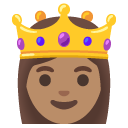


Appearance varies by platform and device. Google Noto, Twemoji, and OpenMoji are open-source.