🦸🏾
The Emoji
Superhero: Medium-dark Skin Tone
U+1F9B8 U+1F3FE · :superhero_mediumdark_skin_tone:
Trend 74
Meaning layers
- interpretation
- Used to hype someone up as a badass, celebrate personal wins, or acknowledge someone who shows up for others consistently. Also used ironically to call someone 'the main character.'
- tiktok usage
- Appears in comment sections when someone shares an impressive story or skill, or when praising a creator who speaks truth. Also used in 'main character' energy videos.
- irony level
- 4 / 10
Platform meanings
- meaning
- Hype emoji for calling out someone's impressive moment, or self-labeling during a 'main character' or 'that girl' era video.
- trend usage
- Appears in comment floods when a creator does something inspiring or unexpected. Also used in transformation and glow-up videos.
- hashtags
- #superhero#maincharacter#heroera#blackgirlmagic#notallheroeswearcapes
- virality score
- 72 / 100
Cultural meanings
🇺🇸
Western / Gen-Z
Widely used to celebrate personal wins, hype friends, and acknowledge representation in pop culture — especially after Black superhero film releases. Carries both sincere and ironic layers.
🇵🇰
Pakistan & India
Used to celebrate real-life heroes like doctors, teachers, or cricket players, and increasingly in youth culture to reference Bollywood action heroes or social media influencers who inspire communities.
🌍
Middle East
Used to praise individuals who demonstrate strength and community leadership. The skin tone may draw commentary on representation, used more literally than ironically in these contexts.
🌐
Global Neutral
Universally read as a symbol of heroism, strength, and admiration. The skin tone modifier signals diversity and is broadly understood in digital communication globally.
🇧🇩
Bangladesh
Used primarily to celebrate local heroes — teachers, flood rescue workers, or community figures. Youth also use it in gaming and sports fan contexts.
🇱🇰
Sri Lanka
Applied to praise community leaders, athletes, or local celebrities. Skin tone representation resonates positively among younger, globally connected users.
🇨🇳
China
Used in gaming and pop culture contexts to signal a powerful or skilled player. The skin tone is less culturally significant in Chinese emoji interpretation, but the heroism meaning is broadly understood.
🇯🇵
Japan
Interpreted through the lens of manga/anime hero archetypes. Used in gaming, cosplay, and fan communities. The darker skin tone may prompt curiosity or discussion about diversity in hero representation.
🇰🇷
South Korea
Often used in K-pop and gaming fan communities to hype performers or players. The darker skin tone is increasingly acknowledged in conversations about global diversity in Korean pop culture.
🇹🇼
Taiwan
Used in online gaming, comics fandom, and social media to signal admiration for someone's skills or courage. Carries positive connotations of strength and uniqueness.
🇭🇰
Hong Kong
Used to celebrate activists, brave individuals, or community figures. In post-2019 contexts, heroism emojis carry politically charged undertones for some users.
🇵🇭
Philippines
Widely used to praise OFW (Overseas Filipino Workers) as modern-day heroes, or to celebrate athletes like Manny Pacquiao. The emoji resonates strongly with the cultural narrative of everyday heroism.
🇮🇩
Indonesia
Used in youth culture to hype friends on social media, celebrate local athletes, and reference gaming achievements. Skin tone diversity is increasingly embraced in Indonesian online communities.
🇹🇭
Thailand
Applied in entertainment fan communities and gaming contexts. The emoji represents strength and admiration, often used for celebrities or esports players.
🇻🇳
Vietnam
Used in gaming and youth social media to signal admiration or hype. The hero archetype aligns with cultural storytelling traditions of brave, community-serving figures.
🇲🇾
Malaysia
Used to celebrate multicultural community figures and athletes. In Malaysia's diverse social context, the skin tone carries representation significance across communities.
🇸🇦
Saudi Arabia
Used to praise strong, community-serving individuals — often athletes, military figures, or national heroes. Youth culture also uses it in gaming and social media hype contexts.
🇦🇪
UAE
Applied in cosmopolitan digital communication to praise standout individuals across nationalities. The skin tone diversity is well-received in the UAE's multicultural urban context.
🇪🇬
Egypt
Used to celebrate national heroes, athletes, and public figures. In youth culture, it's applied in gaming and social media to hype talented individuals.
🇹🇷
Turkey
Used in gaming communities, sports fandom, and social media to celebrate impressive feats. Carries straightforward admiration and heroism meanings with minimal ironic usage.
🇮🇷
Iran
Used carefully in digital communication — primarily to celebrate athletes, scientists, or artists. Youth culture uses it in gaming and fan communities to signal admiration.
🇳🇬
Nigeria
Strongly resonates as a celebration of Black excellence and heroism. Widely used in Afrobeats culture, activism spaces, and community celebrations. The skin tone is a source of pride and cultural identity.
🇿🇦
South Africa
Used to celebrate community heroes, activists, and athletes. The medium-dark skin tone carries cultural resonance in post-apartheid identity conversations and Ubuntu-themed digital communication.
🇬🇧
UK & Ireland
Used to hype friends, celebrate NHS workers and community heroes, and engage in superhero pop culture discourse. Carries both sincere and ironic usage across generations.
🇫🇷
France
Applied in social media to celebrate athletes, activists, and cultural figures. French Gen Z uses it with both sincerity and light irony in hype contexts.
🇩🇪
Germany
Used straightforwardly to celebrate impressive individuals or community contributions. Less ironic in German digital culture, more literal in its admiration function.
🇪🇸
Spain & Italy
Used in social media to hype footballers, local heroes, and friends. In Southern European digital culture, it carries warm, enthusiastic admiration with low irony.
🇧🇷
Brazil
Used to celebrate community heroes, athletes (especially footballers), and Afro-Brazilian cultural icons. The skin tone resonates with Black Brazilian identity pride and representation movements.
🇲🇽
Mexico
Applied to praise local heroes, activists, and athletes. Youth culture uses it in gaming and social media hype. The emoji aligns with cultural narratives of everyday courage and community service.
🌎
Latin America
Broadly used across Latin America to celebrate community figures, athletes, and friends who show exceptional courage or kindness. The skin tone adds representation value in diverse regional contexts.
🇦🇺
Australia & NZ
Used in casual digital communication to hype friends and celebrate community figures. Indigenous and Pacific Islander communities may find the skin tone representation particularly meaningful.
How its meaning shifted
- 2010
The emoji did not exist yet. Superhero concepts were expressed through text, ASCII art, or basic emoticons. No skin tone modifier capability existed.
- 2015
Still predates this emoji's introduction. Generic star or muscle emojis served similar hype functions. Diversity in emoji representation was a growing cultural conversation.
- 2020
Following the Unicode 11.0 introduction and amid the Black Lives Matter movement surge, this emoji gained significant cultural resonance as a symbol of Black strength, heroism, and representation. Usage spiked dramatically.
- 2026
Firmly embedded in digital vocabulary for empowerment, representation, and hype culture. Used across age groups with nuanced layers — sincere in activism and community spaces, ironic in meme culture, and celebratory in pop culture discourse.
See it on every platform
Compare with
Adjacent emojis
Share & embed
Frequently asked
01What does the 🦸🏾 Superhero: Medium-dark Skin Tone emoji mean?
A superhero figure with medium-dark skin tone, representing a powerful, costumed hero with cape or heroic elements. Part of the superhero emoji set introduced in Unicode 11.0.
02What does 🦸🏾 mean on TikTok?
Hype emoji for calling out someone's impressive moment, or self-labeling during a 'main character' or 'that girl' era video.
03What does 🦸🏾 mean on WhatsApp?
Sent to praise a friend who helped out or did something impressive. Often used in group chats to single someone out for doing something great.
04What does 🦸🏾 mean in Gen-Z slang?
Used to hype someone up as a badass, celebrate personal wins, or acknowledge someone who shows up for others consistently. Also used ironically to call someone 'the main character.'
05Is the 🦸🏾 emoji safe to use?
A universally positive emoji representing heroism, strength, empowerment, and admiration. Widely used in celebratory, supportive, and representational contexts.
06What does 🦸🏾 mean in texting?
This emoji activates feelings of aspiration and validation. The darker skin tone specifically carries added cultural significance — it represents visibility and representation, which psychologically reinforces identity pride and belonging for underrepresented communities.
07What is the shortcode for 🦸🏾?
The shortcode for Superhero: Medium-dark Skin Tone is :superhero_mediumdark_skin_tone:
08What does 🦸🏾 mean in dating?
Sent to someone to say 'you're my hero' or to flirtatiously call them strong and dependable. Can also mean 'you saved me' after someone does something sweet.
Safety & usage
- Safe meaning
- A universally positive emoji representing heroism, strength, empowerment, and admiration. Widely used in celebratory, supportive, and representational contexts.
- Caution
- Rarely weaponized, but can be used sarcastically to mock someone acting self-important or taking undue credit for minimal effort.
Virtually no toxic usage patterns. The skin tone modifier has been occasionally the subject of cultural debate around emoji diversity, but the emoji itself is benign. Safe for all audiences.
How it looks across platforms
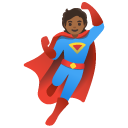


Appearance varies by platform and device. Google Noto, Twemoji, and OpenMoji are open-source.