🧛🏿
The Emoji
Vampire: Dark Skin Tone
U+1F9DB U+1F3FF · :vampire_dark_skin_tone:
Trend 68
Meaning layers
- interpretation
- Used to express being obsessed with someone or something in a dramatic, consuming way — 'I want to drain your energy (in a good way).' Also signals dark, moody, or gothic aesthetic energy, or staying up all night.
- tiktok usage
- Appears in dark academia, goth, and alt aesthetics. Used in 'I only come alive at night' energy content, night owl culture, and thirst-trap captions with dramatic flair.
- irony level
- 6 / 10
Platform meanings
- meaning
- Represents dark, mysterious, night-owl energy. Used in alt and goth aesthetic videos, Halloween content, and as shorthand for intense obsession or thirst.
- trend usage
- Appears under dark academia, goth aesthetic, and vampire romance trends. Heavy use during October. Used in audio trends about night culture and forbidden desire.
- hashtags
- #vampirecheck#darkaesthetic#gothvibes#nightowl#altgirl
- virality score
- 72 / 100
Cultural meanings
🇺🇸
Western / Gen-Z
Heavily used in alt, goth, and dark aesthetic subcultures. Also widely used ironically to signal obsessive thirst, night-owl behavior, and emotional vampire humor. Very popular during Halloween season.
🇵🇰
Pakistan & India
Primarily understood as a Halloween or horror character. Limited local vampire mythology means usage is mostly imported Western pop culture context — Twilight, Dracula references. Used by urban youth in English-language social media.
🌍
Middle East
Understood through Western horror media. May carry additional sensitivity in conservative contexts due to demonic/supernatural connotations. Urban youth in Gulf states use it in Halloween party contexts despite the holiday being culturally contested.
🌐
Global Neutral
Universally recognizable as a vampire figure through Dracula and Western horror tradition. Safe for Halloween and horror contexts globally. Skin tone modifier adds representation dimension recognized internationally.
🇧🇩
Bangladesh
Interpreted through Bollywood horror and Western vampire media. Primarily a Halloween/horror symbol for urban social media users. Limited local folkloric vampire connection means context is mostly pop culture.
🇱🇰
Sri Lanka
Understood as a Western horror character. Used in Halloween-adjacent social media content by younger urban populations. Local spirit mythology (yakku) is distinct but the vampire archetype is recognized through global media.
🇨🇳
China
Known primarily through Western vampire films and the Jiangshi (Chinese hopping vampire) tradition creating a dual reference point. Used by younger generations on Weibo and Bilibili for dark aesthetic content and Western pop culture references.
🇯🇵
Japan
Strong local connection through anime/manga vampire tradition (Vampire Knight, Hellsing, Blood+). Enthusiastically used in gothic Lolita aesthetics, dark anime fandoms, and Halloween content. High cultural resonance with 'kakkoi' (cool) dark aesthetics.
🇰🇷
South Korea
Popular in gothic K-pop aesthetic discourse and dark concept album discussions. Used during Halloween content by idols and fans. Connected to the growing alt and goth subculture within K-pop fandom.
🇹🇼
Taiwan
Used in Halloween and Western horror contexts. Active in gaming communities referencing vampire games. Taiwanese alt subculture uses it similarly to Western goth aesthetics for dark romantic expression.
🇭🇰
Hong Kong
Used in Halloween celebrations (more normalized there than mainland China) and Western pop culture contexts. Young people use it in dark aesthetic content influenced by both Western and Japanese vampire traditions.
🇵🇭
Philippines
Strong Halloween culture means this sees heavy October use. Local folklore (aswang) creates a complex double-reading. Filipino youth use it playfully in English-language social media for flirty, dramatic, and night-owl content.
🇮🇩
Indonesia
Used in Halloween social media content and Western horror fan communities. Local supernatural (pocong, kuntilanak) culture differs but vampire as Western concept is understood. Muslim-majority context means Halloween use is more urban and youth-specific.
🇹🇭
Thailand
Used in Halloween and dark aesthetic content. Thailand's strong horror film tradition gives the spooky meaning additional local resonance. Thai K-pop and anime fan communities adopt Japanese vampire aesthetics through this emoji.
🇻🇳
Vietnam
Primarily used in Western Halloween and horror media contexts. Vietnamese gaming and anime communities use it in vampire character references. Limited local vampire folklore means the meaning is largely imported.
🇲🇾
Malaysia
Used in Halloween contexts, primarily among non-Muslim demographics. Urban Malay youth also use it in English-language social media for dark humor and night-owl culture. Cultural sensitivity around supernatural imagery applies in conservative contexts.
🇸🇦
Saudi Arabia
Limited Halloween cultural context but younger urban Saudis use it for dark aesthetic social media content influenced by Western platforms. Vampire imagery may carry stronger negative supernatural connotations in religious contexts.
🇦🇪
UAE
Dubai and Abu Dhabi's cosmopolitan culture means Halloween is widely celebrated, making this actively used in October content. Expat communities and young Emiratis use it for horror, night-out, and dark aesthetic content.
🇪🇬
Egypt
Primarily Western pop culture reference. Used by young Egyptians on TikTok and Instagram for Halloween and dark humor content. Ancient Egyptian mythology (with its own death/undead symbolism) occasionally creates ironic crossover in memes.
🇹🇷
Turkey
Used in Halloween-adjacent content and Western horror fan circles. Turkey's own rich folkloric tradition around the undead (Vampir itself is a word of Slavic/Balkan origin with historical regional roots) gives this slightly more local resonance than in some other Middle Eastern contexts.
🇮🇷
Iran
Limited public Halloween use given cultural restrictions, but private social media and youth culture uses it for dark aesthetic content on Instagram and Telegram. Western horror media is widely consumed privately.
🇳🇬
Nigeria
Used in Halloween content, Western horror fan communities, and increasingly in Afro-goth and alt aesthetics gaining momentum on Nigerian social media. Nollywood horror tradition creates local spooky context that gives this additional weight.
🇿🇦
South Africa
Halloween is increasingly celebrated, especially in urban areas. Used actively for Halloween content, dark aesthetic posts, and night-out culture. South African alt and goth scenes are growing, adding subcultural usage.
🇬🇧
UK & Ireland
Strong Halloween and horror culture usage. British Gothic literary tradition (Dracula was written by Irish author Bram Stoker) gives this cultural depth. Used in dark humor, thirst contexts, and dramatic expression on all platforms.
🇫🇷
France
Used in Halloween content (growing holiday in France) and as part of dark romantic aesthetic. French gothic literary tradition provides cultural resonance. Also used in 'nuit blanche' (all-night) culture references.
🇩🇪
Germany
Strong usage given Germany's rich gothic and dark subculture scene. Goth music scenes (from Neue Deutsche Welle roots) give this genuine subcultural meaning beyond Halloween. Used in darkwave, EBM, and gothic communities actively.
🇪🇸
Spain & Italy
Halloween culture growing, especially in Spain. Used for October festivities and dark aesthetic content. Spain's rich horror film tradition (Spanish horror is internationally acclaimed) gives the scary interpretation extra weight. Italy's vampire mythology and horror cinema history also add local flavor.
🇧🇷
Brazil
Halloween adoption among Brazilian youth is strong, particularly online. Used in dark aesthetic content, thirst expressions, and dramatic emotional declarations common in Brazilian Portuguese digital communication style.
🇲🇽
Mexico
Interesting dual-use around Halloween (Oct 31) and Día de los Muertos (Nov 1-2). Used for horror/spooky content but culturally distinct from the ancestral celebration. Urban youth use it for dark aesthetic and thirst content year-round.
🌎
Latin America
Growing Halloween adoption across Latin America means seasonal heavy use. Colombian, Argentine, and Chilean alt scenes use it for dark aesthetic content. Spanish-language 'eres un vampiro' (you're a vampire) emotional drain expression maps directly onto the emoji.
🇦🇺
Australia & NZ
Used in Halloween content (growing in both countries despite being in spring), dark aesthetic communities, and night-owl culture. Australian goth and alt scenes are active. Also used in 'vampire hours' gaming and streaming content given time zone differences for global content.
How its meaning shifted
- 2010
Vampire emoji didn't exist yet. Vampire cultural moment was peak Twilight (2008-2012) — the concept was expressed through text 'vampire' or 🦇. Skin tone modifiers were years away from Unicode.
- 2015
Still pre-vampire emoji. Text-based vampire references were common in early Halloween social media. What We Do in the Shadows (2014) brought ironic vampire content to online culture. Dark aesthetic communities used bat and moon emojis as proxies.
- 2020
Vampire emoji (introduced 2017) now well established. Skin tone variant used for representation. Heavy use in pandemic night-owl culture ('I've become a vampire, I only exist at night'). What We Do in the Shadows TV series boosted ironic usage. Dark academia TikTok trend drove aesthetic usage.
- 2026
Dominant use in Gen Z emotional expression for obsession, thirst, and night-owl identity. Dark romance reading trend (#booktok vampires) drives literary usage. Skin tone variant specifically celebrated for representation in fantasy/horror spaces. 'Vampire girlfriend/boyfriend' as relationship archetype is well-established internet language.
See it on every platform
Compare with
Adjacent emojis
- Often confused with
- zombiezombie dark skin toneskull
Share & embed
Frequently asked
01What does the 🧛🏿 Vampire: Dark Skin Tone emoji mean?
A vampire with dark skin tone, depicted as a classic blood-sucking creature of the night with fangs, pale clothing, and sometimes a cape. The dark skin tone modifier (🏿) applies the Fitzpatrick scale Type VI coloring.
02What does 🧛🏿 mean on TikTok?
Represents dark, mysterious, night-owl energy. Used in alt and goth aesthetic videos, Halloween content, and as shorthand for intense obsession or thirst.
03What does 🧛🏿 mean on WhatsApp?
Playfully used to say 'I'm obsessed with you' or 'I'll drain your energy tonight.' Also used when staying up all night or feeling dramatically tired.
04What does 🧛🏿 mean in Gen-Z slang?
Used to express being obsessed with someone or something in a dramatic, consuming way — 'I want to drain your energy (in a good way).' Also signals dark, moody, or gothic aesthetic energy, or staying up all night.
05Is the 🧛🏿 emoji safe to use?
Halloween costume, horror media fan, dark aesthetic expression, playful thirst/obsession, night-owl identity, gothic subculture representation.
06What does 🧛🏿 mean in texting?
Invokes Jungian shadow archetypes — the vampire as the seductive, forbidden, and consuming side of desire. Often used when someone wants to project mystery, intensity, or a consuming passion without vulnerability.
07What is the shortcode for 🧛🏿?
The shortcode for Vampire: Dark Skin Tone is :vampire_dark_skin_tone:
08What does 🧛🏿 mean in dating?
Sent to someone you find irresistibly attractive — 'I could stay up all night with you' or 'you have that effect on me.' Signals intense, consuming attraction with a theatrical dramatic edge.
Safety & usage
- Safe meaning
- Halloween costume, horror media fan, dark aesthetic expression, playful thirst/obsession, night-owl identity, gothic subculture representation.
- Caution
- Can be used to describe someone as an 'emotional vampire' in a targeted harassment context. In rare cases used in threatening 'I'm coming for you' framings, though this is uncommon.
Generally safe. The skin tone modifier (dark) is specifically meaningful for representation — avoid stripping the skin tone modifier in contexts where inclusive representation matters. No significant NSFW associations though flirty thirst uses are common.
How it looks across platforms
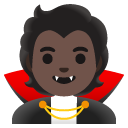


Appearance varies by platform and device. Google Noto, Twemoji, and OpenMoji are open-source.