🚴🏾♀️
The Emoji
Woman Biking: Medium-dark Skin Tone
U+1F6B4 U+1F3FE U+200D U+2640 U+FE0F · :woman_biking_mediumdark_skin_tone:
Trend 58
Meaning layers
- interpretation
- Used to signal an active, independent, unbothered lifestyle — often shorthand for 'I'm on my grind and not stopping for anyone.' Also used to represent moving past drama or leaving something behind.
- tiktok usage
- Appears in fitness motivation videos, 'that girl' aesthetic content, and 'moving on' montages. Often placed at the end of captions to signal forward momentum or self-improvement energy.
- irony level
- 3 / 10
Platform meanings
- meaning
- Signals active lifestyle content, 'that girl' era motivation, or metaphorical 'moving forward' energy in captions and videos.
- trend usage
- Featured in morning routine videos, cycling vlogs, fitness challenges, and empowerment montages. Used with trending audio about glow-ups and self-improvement.
- hashtags
- #ThatGirl#ActiveLifestyle#CyclingGirls#EmpoweredWomen#MoveInColor
- virality score
- 62 / 100
Cultural meanings
🇺🇸
Western / Gen-Z
Widely embraced as a symbol of the 'that girl' aesthetic and active, unbothered femininity. Celebrated for its skin tone diversity and used freely in fitness and empowerment content.
🇵🇰
Pakistan & India
Primarily interpreted literally as cycling or outdoor exercise. Gaining relevance as women's cycling and fitness culture grows, though the skin tone specificity may be less culturally noted.
🌍
Middle East
Interpreted as a symbol of physical activity and healthy living. In more conservative contexts, a woman cycling publicly may carry subtle social commentary, but the emoji itself is used neutrally in fitness spaces.
🌐
Global Neutral
Universally understood as representing a woman cycling, physical fitness, and active transportation. The skin tone adds a layer of representation appreciated globally.
🇧🇩
Bangladesh
Seen as a modern symbol of active womanhood. Cycling by women is increasingly common in urban areas, giving this emoji growing relevance in fitness and empowerment conversations.
🇱🇰
Sri Lanka
Associated with recreation and physical fitness. Urban cycling culture is developing, so the emoji is used mostly in fitness and lifestyle contexts rather than everyday transport.
🇨🇳
China
Linked strongly to cycling culture given China's history with bicycles. Used in fitness, outdoor recreation, and urban mobility content, though gender-specific emojis are often used more generally.
🇯🇵
Japan
Cycling is deeply embedded in daily Japanese life, so this emoji resonates naturally. The female-specific version is used in fitness, commuting, and lifestyle content without significant cultural friction.
🇰🇷
South Korea
Associated with the growing cycling and outdoor fitness culture among Korean women. Used in health content, Han River cycling lifestyle posts, and empowerment messaging.
🇹🇼
Taiwan
Cycling is popular in Taiwan, and this emoji is used in outdoor adventure, fitness, and eco-friendly transportation contexts. The diversity representation is increasingly appreciated.
🇭🇰
Hong Kong
Used in urban fitness and cycling advocacy content. Hong Kong's cycling infrastructure growth makes this emoji relevant in both sport and sustainable commuting conversations.
🇵🇭
Philippines
Associated with fitness and recreation. Cycling culture is growing post-pandemic, and the emoji is used in health and wellness content, often by younger Filipinas embracing active lifestyles.
🇮🇩
Indonesia
Linked to the booming cycling trend that emerged during the pandemic. Used by Indonesian women in fitness communities and cycling clubs, celebrating active outdoor lifestyles.
🇹🇭
Thailand
Used in fitness and outdoor recreation contexts. Thailand's growing cycling community uses this emoji in group content, and it carries a positive, health-forward connotation.
🇻🇳
Vietnam
Cycling is historically significant in Vietnam, though motorized transport dominates today. The emoji is used in fitness and eco-commuting contexts, with growing appreciation for its representational aspect.
🇲🇾
Malaysia
Associated with outdoor fitness and cycling events. Malaysia's multicultural context means the skin tone diversity of this emoji is generally appreciated in inclusive fitness communities.
🇸🇦
Saudi Arabia
Carries subtle cultural significance given the history around women's rights to drive and move freely. Used positively in women's fitness and empowerment spaces, reflecting recent social liberalization.
🇦🇪
UAE
Used in fitness and wellness content popular among the UAE's diverse, cosmopolitan population. Associated with the active lifestyle culture promoted in Dubai and Abu Dhabi.
🇪🇬
Egypt
Associated with fitness and outdoor activity. Women cycling in public spaces is a growing but still somewhat notable act, giving the emoji a mild undertone of modern female independence.
🇹🇷
Turkey
Used in fitness and cycling culture content. Turkey has a growing urban cycling community, and the emoji is used positively in health, sport, and eco-transport contexts.
🇮🇷
Iran
Given restrictions on women in public sports spaces, this emoji can carry a layer of aspirational or even activist meaning in Iranian digital spaces, representing freedom and movement.
🇳🇬
Nigeria
Embraced as a symbol of Black women's empowerment and physical fitness. The medium-dark skin tone makes it particularly resonant and widely used in Nigerian fitness and lifestyle content.
🇿🇦
South Africa
Strongly positive connotation — cycling culture is vibrant and the medium-dark skin tone representation is meaningful and celebrated in South African wellness and outdoor communities.
🇬🇧
UK & Ireland
Used in fitness, sustainable commuting, and outdoor lifestyle content. Appreciated for its diversity representation in a culturally progressive digital landscape.
🇫🇷
France
Associated with cycling culture — France being home to the Tour de France — and used in fitness, eco-mobility, and women's sport empowerment content.
🇩🇪
Germany
Germany's strong cycling infrastructure gives this emoji everyday relevance. Used in commuting, fitness, and environmental sustainability contexts, with appreciation for its inclusive representation.
🇪🇸
Spain & Italy
Cycling has strong cultural roots in both countries. Used in sport, fitness, and leisurely outdoor lifestyle content. The diversity representation is increasingly acknowledged positively.
🇧🇷
Brazil
Used in fitness and outdoor recreation content, reflecting Brazil's active culture. The medium-dark skin tone is especially resonant given Brazil's diverse population and representation conversations.
🇲🇽
Mexico
Associated with active lifestyle and fitness culture. Cycling is growing as both sport and transport in Mexican cities, and the emoji is used in health, empowerment, and eco-mobility content.
🌎
Latin America
Broadly appreciated as a symbol of active, independent womanhood. The skin tone diversity is meaningful in Latin America's ongoing representation and colorism conversations.
🇦🇺
Australia & NZ
Used in outdoor fitness, cycling, and active lifestyle content. Australia and New Zealand's strong outdoor culture makes this emoji very natural and frequently used in wellness spaces.
How its meaning shifted
- 2010
Emoji with skin tone variants and gender modifiers did not yet exist in this form. Basic cycling emojis were not yet part of Unicode standard.
- 2015
Skin tone modifiers were introduced via Unicode 8.0 in 2015, and gender variants emerged. Usage was primarily literal — representing cycling or physical activity, with minimal cultural layering.
- 2020
Gained significant cultural weight during the pandemic cycling boom. Used in fitness motivation content, representation conversations, and women of color in sport discussions.
- 2026
Firmly embedded in 'that girl' and empowerment aesthetics. Used across fitness, eco-transport, and representation discourse. Carries both literal and metaphorical 'moving forward' meaning in digital culture.
See it on every platform
Adjacent emojis
- Often confused with
- woman mountain bikingperson bikingwoman running
- Can replace
- bicyclewoman runningwoman mountain biking
Share & embed
Frequently asked
01What does the 🚴🏾♀️ Woman Biking: Medium-dark Skin Tone emoji mean?
A woman riding a bicycle with medium-dark skin tone, representing cycling, physical fitness, outdoor activity, and sustainable transportation.
02What does 🚴🏾♀️ mean on TikTok?
Signals active lifestyle content, 'that girl' era motivation, or metaphorical 'moving forward' energy in captions and videos.
03What does 🚴🏾♀️ mean on WhatsApp?
Signals that someone is heading out, exercising, or simply on the move. Casual shorthand for 'I'm out' or 'going for a ride.'
04What does 🚴🏾♀️ mean in Gen-Z slang?
Used to signal an active, independent, unbothered lifestyle — often shorthand for 'I'm on my grind and not stopping for anyone.' Also used to represent moving past drama or leaving something behind.
05Is the 🚴🏾♀️ emoji safe to use?
Represents cycling, fitness, outdoor activity, sustainable transportation, and female empowerment. Completely safe and positive in virtually all contexts.
06What does 🚴🏾♀️ mean in texting?
Cycling emojis psychologically evoke a sense of forward motion and autonomy. With the female and medium-dark skin tone variant, it carries additional weight of representation, self-sufficiency, and breaking stereotypes around who gets to be athletic or outdoorsy.
07What is the shortcode for 🚴🏾♀️?
The shortcode for Woman Biking: Medium-dark Skin Tone is :woman_biking_mediumdark_skin_tone:
08What does 🚴🏾♀️ mean in dating?
Rarely used as a direct flirt tool, but may appear in a dating profile or DM to signal an active, adventurous lifestyle — subtly saying 'I'm fit, independent, and have a life outside of you.'
Safety & usage
- Safe meaning
- Represents cycling, fitness, outdoor activity, sustainable transportation, and female empowerment. Completely safe and positive in virtually all contexts.
- Caution
- Extremely rare, but could theoretically be used dismissively to tell someone to 'ride away' or 'get lost' in an argument.
No significant misuse patterns documented. This emoji is considered safe, inclusive, and empowering. No NSFW connotations.
How it looks across platforms
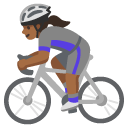
Appearance varies by platform and device. Google Noto, Twemoji, and OpenMoji are open-source.