⛹️♀️
The Emoji
Woman Bouncing Ball
U+26F9 U+FE0F U+200D U+2640 U+FE0F · :woman_bouncing_ball:
Trend 48
Meaning layers
- interpretation
- Used to signal being active, sporty, or 'that girl' energy. Also used ironically when someone is being evasive or 'bouncing' out of situations.
- tiktok usage
- Appears in workout motivation content, 'that girl' aesthetic videos, and ironically when someone is dodging a question or responsibility.
- irony level
- 4 / 10
Platform meanings
- meaning
- Represents athletic hustle, 'that girl' morning routines, or bouncing back from adversity in motivational content.
- trend usage
- Used in workout transformation videos, sports tryout success clips, and female empowerment trend sounds.
- hashtags
- #thatgirl#womenwholift#basketballgirls#athleisure#girlswhoball
- virality score
- 52 / 100
Cultural meanings
🇺🇸
Western / Gen-Z
Widely used as a symbol of female empowerment, athletic identity, and the 'that girl' lifestyle trend on social media.
🇵🇰
Pakistan & India
Used by urban, sports-active women to signal participation in basketball or fitness; relatively niche but growing with rising women's sports culture.
🌍
Middle East
Less commonly used but appears in contexts of women's sports achievements, especially post-Vision 2030 in Saudi Arabia where female athletics are increasingly visible.
🌐
Global Neutral
Universally understood as representing a woman playing basketball or engaging in athletic activity.
🇧🇩
Bangladesh
Rarely used; when it appears, it's typically by younger, digitally active women who follow international sports or fitness trends.
🇱🇰
Sri Lanka
Niche usage among sports-active youth; more likely to appear in cricket-heavy sports contexts but used by basketball-playing women in urban areas.
🇨🇳
China
Used by female sports enthusiasts and WNBA fans; also appears in content around Chinese women's basketball team coverage.
🇯🇵
Japan
Associated with school sports club culture and female athletes; used by girls in basketball clubs (bukatsu) on social posts.
🇰🇷
South Korea
Popular among female K-pop fans who follow idol basketball competitions and among women who participate in sports as part of 'healthy idol' culture.
🇹🇼
Taiwan
Used casually by sporty young women; appears in fitness and lifestyle content among Taiwanese female youth.
🇭🇰
Hong Kong
Found in urban fitness and lifestyle content; used by cosmopolitan women who follow international sports trends.
🇵🇭
Philippines
Growing usage with the rise of women's basketball in the Philippines; used by fans of the WNBL and female athletes.
🇮🇩
Indonesia
Used among young women in fitness communities; often seen in Muslim women's sports content especially as female athletic spaces expand.
🇹🇭
Thailand
Appears in Thai women's fitness content and sports communities; used by gym-going women and sports enthusiasts.
🇻🇳
Vietnam
Niche but growing usage among young Vietnamese women in urban fitness and sports communities.
🇲🇾
Malaysia
Used by sporty Malaysian women, including those in modest sportswear communities, to signal active lifestyles.
🇸🇦
Saudi Arabia
Increasingly relevant post-2018 when women were allowed to attend sports events; symbolizes new freedoms in female athletic participation.
🇦🇪
UAE
Used in the cosmopolitan UAE fitness scene; reflects the active lifestyle culture popular among expatriate and local women alike.
🇪🇬
Egypt
Used by young Egyptian women in sports and fitness communities, particularly those participating in basketball or following international women's sports.
🇹🇷
Turkey
Common among sporty Turkish women and fans of women's basketball; Turkey has a strong women's basketball league culture.
🇮🇷
Iran
Rarely seen publicly due to social restrictions on women's sports; when used, it often carries a subtle tone of defiance or aspiration for female athletic freedom.
🇳🇬
Nigeria
Used by Nigerian women in basketball communities; Nigeria has a strong women's basketball tradition and the emoji resonates with female hoops culture.
🇿🇦
South Africa
Appears in women's sports content; used by active South African women though basketball is less dominant than rugby or soccer.
🇬🇧
UK & Ireland
Used by sporty women and netball/basketball players; also appears in feminist sports empowerment content.
🇫🇷
France
Used in women's sports contexts; France has a strong women's basketball tradition so the emoji has genuine athletic resonance.
🇩🇪
Germany
Straightforwardly used in sports and fitness contexts; German social media users tend to use it literally rather than ironically.
🇪🇸
Spain & Italy
Used in women's sports content and fitness communities; occasionally appears in content about female empowerment in traditionally male-dominated sports.
🇧🇷
Brazil
Used in female sports and fitness content; while basketball is less dominant than soccer, the emoji appears in empowerment and athletic contexts.
🇲🇽
Mexico
Growing usage among sporty Mexican women; appears in content around female athletics and the rising popularity of basketball in Mexico.
🌎
Latin America
Used broadly across Latin America in women's fitness and sports content; carries a general tone of female athletic empowerment.
🇦🇺
Australia & NZ
Used by sporty women in a culture that values athletic participation; appears in content around women's basketball, netball, and general fitness.
How its meaning shifted
- 2010
Did not exist yet — the ZWJ (Zero Width Joiner) gendered sports emoji sequences were not introduced until later Unicode versions.
- 2015
Introduced around this period as part of Unicode 7.0/Emoji 1.0 expansions; used primarily literally to indicate a woman playing basketball.
- 2020
Adopted more broadly in fitness content, 'girl boss' culture posts, and early 'that girl' aesthetic content on TikTok and Instagram.
- 2026
Widely embedded in female athletic empowerment culture, WNBA fan content, and 'that girl' lifestyle branding; also used ironically in bounce-back and evasion memes.
See it on every platform
Compare with
Adjacent emojis
- Often confused with
- volleyballperson bouncing ballwoman playing handball
- Can replace
- basketballwoman runningflexed biceps
Share & embed
Frequently asked
01What does the ⛹️♀️ Woman Bouncing Ball emoji mean?
A woman bouncing or dribbling a basketball, representing female athleticism, sports participation, and basketball specifically.
02What does ⛹️♀️ mean on TikTok?
Represents athletic hustle, 'that girl' morning routines, or bouncing back from adversity in motivational content.
03What does ⛹️♀️ mean on WhatsApp?
Signals that someone is active, sporty, or literally going to play basketball.
04What does ⛹️♀️ mean in Gen-Z slang?
Used to signal being active, sporty, or 'that girl' energy. Also used ironically when someone is being evasive or 'bouncing' out of situations.
05Is the ⛹️♀️ emoji safe to use?
Represents female athleticism and sports participation; completely safe and positive in standard usage.
06What does ⛹️♀️ mean in texting?
Evokes a sense of physical agency and confidence in one's body. Often associated with discipline, self-improvement motivation, and competitive drive.
07What is the shortcode for ⛹️♀️?
The shortcode for Woman Bouncing Ball is :woman_bouncing_ball:
08What does ⛹️♀️ mean in dating?
Rarely used as a flirt; sometimes sent to signal an active lifestyle or invite someone to play sports together as a casual date idea.
Safety & usage
- Safe meaning
- Represents female athleticism and sports participation; completely safe and positive in standard usage.
- Caution
- Extremely rarely misused; could theoretically be used condescendingly in 'stay in your lane' type comments toward female athletes.
No significant misuse patterns detected. One of the safer sports emoji with minimal potential for harmful appropriation.
How it looks across platforms
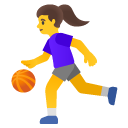
Appearance varies by platform and device. Google Noto, Twemoji, and OpenMoji are open-source.