🤸🏽♀️
The Emoji
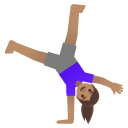
Woman Cartwheeling: Medium Skin Tone
U+1F938 U+1F3FD U+200D U+2640 U+FE0F · :woman_cartwheeling_medium_skin_tone:
Trend 61
Meaning layers
- interpretation
- Used to express unbothered energy, carefree vibes, or 'living your best life' without a care in the world. Often signals confidence, spontaneity, or playful excitement.
- tiktok usage
- Appears in transition videos, fitness content, 'main character' aesthetic posts, and used sarcastically when someone is doing the absolute most or completely ignoring drama.
- irony level
- 5 / 10
Platform meanings
- meaning
- Signals carefree energy, gymnastic content, or ironic unbothered attitude during chaotic situations.
- trend usage
- Used in POV videos, fitness transformations, 'living my best life' content, and ironic self-aware humor about ignoring problems.
- hashtags
- #maincharacter#unbothered#gymgirl#gymnastics#cartwheelchallenge
- virality score
- 62 / 100
Cultural meanings
🇺🇸
Western / Gen-Z
Iconic symbol of the 'unbothered' and 'main character energy' aesthetic — used both sincerely for athletic pride and ironically to signal chaotic optimism.
🇵🇰
Pakistan & India
Primarily interpreted literally as a gymnastics or fitness emoji; used by young urban women in fitness communities and by parents sharing kids' activity posts.
🌍
Middle East
Used cautiously in fitness contexts, particularly by women in urban areas who embrace active lifestyles; skin tone representation can feel meaningful and inclusive.
🌐
Global Neutral
Universally understood as representing physical activity, gymnastics, and energetic joy — a safe, positive emoji with few negative connotations globally.
🇧🇩
Bangladesh
Mostly used in youth fitness and sports communities; associated with school sports days and children's gymnastics activities.
🇱🇰
Sri Lanka
Used in fitness and active lifestyle content by younger generations; also appears in school and sports club social media pages.
🇨🇳
China
Popular on fitness-forward platforms like Keep and WeChat sports groups; associated with youthful energy, flexibility training, and girl-power aesthetics.
🇯🇵
Japan
Associated with rhythmic gymnastics culture which is popular in Japan; used in school sports content and cheerful social media posts by young women.
🇰🇷
South Korea
Tied to the 'active girl' aesthetic popular in Korean wellness culture; used by influencers promoting fitness routines and carefree energy.
🇹🇼
Taiwan
Used in fitness and outdoor activity content; resonates with the growing Taiwanese wellness and body-positive movement.
🇭🇰
Hong Kong
Appears in gym, dance, and sports community posts; associated with youthful, carefree Cantonese pop culture energy.
🇵🇭
Philippines
Popular in cheerleading and dance content — the Philippines has a strong cheerleading culture, making this emoji feel highly relevant and celebratory.
🇮🇩
Indonesia
Used in fitness content and youth culture posts; younger Indonesian women use it to signal carefree, active lifestyle aspirations.
🇹🇭
Thailand
Associated with cheerleading, Muay Thai fitness culture, and energetic youth content; used to signal playful, active energy.
🇻🇳
Vietnam
Used by younger Vietnamese social media users in fitness and dance content, often tied to aspirational active lifestyle aesthetics.
🇲🇾
Malaysia
Common in sports and fitness communities; also used by multicultural Malaysian youth to signal carefree, energetic vibes.
🇸🇦
Saudi Arabia
Increasingly used by Saudi women in fitness contexts following social liberalization; represents the growing female athletic movement in the country.
🇦🇪
UAE
Used in Dubai and Abu Dhabi fitness communities and by expatriate populations; associated with active lifestyle branding and wellness influencers.
🇪🇬
Egypt
Used in youth fitness communities and by women celebrating physical achievements; associated with Egyptian gymnastic tradition and school sports.
🇹🇷
Turkey
Popular in gymnastics and fitness content among young Turkish women; also used to express carefree, optimistic energy in everyday conversations.
🇮🇷
Iran
Used carefully in private digital spaces to represent athletic pride and free-spirited energy; associated with women's empowerment in an era of growing online activism.
🇳🇬
Nigeria
Used in fitness and dance content; Nigerians sometimes use it alongside Afrobeats and energetic dance culture references to signal joy and movement.
🇿🇦
South Africa
Appears in fitness, gymnastics, and outdoor activity content; associated with South Africa's sports culture and the 'good vibes only' social media aesthetic.
🇬🇧
UK & Ireland
Used similarly to broader Western Gen Z culture — both genuinely for gymnastics and fitness, and ironically for unbothered chaos energy in British dry humor contexts.
🇫🇷
France
Associated with joie de vivre and physical freedom; used in sports and lifestyle content and occasionally in fashion-meets-fitness aesthetics.
🇩🇪
Germany
Used in sports and fitness communities where Germany has a strong gymnastics tradition; generally interpreted more literally than ironically.
🇪🇸
Spain & Italy
Embraced in expressive Mediterranean social media culture for high-energy, joyful posts; used in summer content and celebratory moments.
🇧🇷
Brazil
Highly popular given Brazil's gymnastics and dance culture — used in capoeira, cheerleading, and general high-energy life celebrations.
🇲🇽
Mexico
Used in cheerleading and gymnastics communities; also adopted by younger Mexicans to signal carefree, adventurous energy in everyday content.
🌎
Latin America
Broadly popular across Latin America in dance, fitness, and celebration contexts; resonates with the region's love of physical expression and joyful energy.
🇦🇺
Australia & NZ
Used in beach, outdoor fitness, and surf culture content; also adopted in ironic 'she'll be right' Australian humor when brushing off problems carefreely.
How its meaning shifted
- 2010
This emoji did not yet exist — gymnastics and physical activity were represented by more generic sports emojis or plain text descriptions.
- 2015
Still pre-release; early Unicode discussions about adding gymnastics emojis were underway as part of broader emoji diversity pushes.
- 2020
Gaining traction in fitness communities, TikTok workout culture, and beginning to develop its ironic 'unbothered' secondary meaning as meme culture expanded.
- 2026
Firmly established as both a fitness/gymnastics symbol and a core piece of ironic internet vocabulary — the 'I'm fine, everything is chaos' emoji for Gen Z and Millennials.
See it on every platform
Adjacent emojis
- Often confused with
- woman dancingperson doing cartwheelwoman climbing
- Can replace
- woman dancingflexed bicepssparkles
Share & embed
Frequently asked
01What does the 🤸🏽♀️ Woman Cartwheeling: Medium Skin Tone emoji mean?
A woman performing a cartwheel, shown with medium skin tone, representing gymnastics, acrobatics, physical fitness, and energetic movement.
02What does 🤸🏽♀️ mean on TikTok?
Signals carefree energy, gymnastic content, or ironic unbothered attitude during chaotic situations.
03What does 🤸🏽♀️ mean on WhatsApp?
Expresses excitement, playful energy, or that someone is in a great, carefree mood.
04What does 🤸🏽♀️ mean in Gen-Z slang?
Used to express unbothered energy, carefree vibes, or 'living your best life' without a care in the world. Often signals confidence, spontaneity, or playful excitement.
05Is the 🤸🏽♀️ emoji safe to use?
Physical activity, gymnastics, fitness, carefree joy, freedom, playful energy — entirely positive and inclusive representation.
06What does 🤸🏽♀️ mean in texting?
The cartwheel motion symbolizes childlike freedom and physical liberation — psychologically associated with shedding inhibitions, celebrating one's body, and expressing uninhibited happiness.
07What is the shortcode for 🤸🏽♀️?
The shortcode for Woman Cartwheeling: Medium Skin Tone is :woman_cartwheeling_medium_skin_tone:
08What does 🤸🏽♀️ mean in dating?
Used playfully to signal that someone is fun, adventurous, and full of energy — a subtle 'I'm a good time' signal in early flirting stages.
Safety & usage
- Safe meaning
- Physical activity, gymnastics, fitness, carefree joy, freedom, playful energy — entirely positive and inclusive representation.
- Caution
- Extremely rarely used in toxic contexts; could theoretically be used mockingly toward someone's physical abilities but this is not a documented pattern.
No significant warning notes. This is one of the safest emojis in common use with virtually no established toxic or harmful usage patterns.
How it looks across platforms
Appearance varies by platform and device. Google Noto, Twemoji, and OpenMoji are open-source.