🧗♀️
The Emoji
Woman Climbing
U+1F9D7 U+200D U+2640 U+FE0F · :woman_climbing:
Trend 68
Meaning layers
- interpretation
- Used to signify 'grinding through obstacles,' personal growth, hustle culture, or literally escaping a bad situation. Often used metaphorically for leveling up or refusing to stay stuck.
- tiktok usage
- Appears in 'main character energy' videos, gym content, and motivational clips. Used in captions like 'me climbing out of my situationship 🧗♀️' or 'me getting out of bed today 🧗♀️'.
- irony level
- 7 / 10
Platform meanings
- meaning
- Represents grinding, escaping something, leveling up, or literal outdoor/gym content. A go-to emoji for hustle and perseverance narratives.
- trend usage
- Used in POV videos, 'day in my life' gym content, and motivational montages. Extremely popular in text overlays during transition clips.
- hashtags
- #climbingout#levelup#grindmode#girlswhoclimb#maincharacter
- virality score
- 72 / 100
Cultural meanings
🇺🇸
Western / Gen-Z
Widely used ironically and literally — a staple of hustle culture memes and genuine fitness content. Very high recognition as both a motivational and sarcastic symbol.
🇵🇰
Pakistan & India
Used primarily in fitness and outdoor adventure contexts, increasingly popular among urban young women to signal ambition and independence. May carry aspirational connotations of breaking traditional norms.
🌍
Middle East
Used in fitness and sports contexts by younger demographics and active women. Carries a strong sense of empowerment given cultural conversations around women's participation in public sports.
🌐
Global Neutral
Universally understood as representing a woman engaged in physical climbing. Cross-culturally signals determination, athleticism, and resilience.
🇧🇩
Bangladesh
Emerging in urban youth fitness culture, used among gym-going and trekking communities. Symbolizes ambition and the modern active woman.
🇱🇰
Sri Lanka
Used in outdoor and travel content, particularly among hiking communities. Signals adventure and physical capability in a straightforward, positive way.
🇨🇳
China
Popular among fitness influencers on Weibo and Xiaohongshu (Little Red Book) to signal self-improvement and 'involution' hustle culture. Sometimes used sarcastically about competitive grind.
🇯🇵
Japan
Appears in fitness and outdoor content, often linked to the growing bouldering gym culture in Tokyo. Symbolizes focus, discipline, and the quiet determination valued in Japanese culture.
🇰🇷
South Korea
Used heavily in fitness and self-improvement content. Tied to the 'grit culture' narrative popular among Korean youth and the growing indoor climbing trend.
🇹🇼
Taiwan
Common in outdoor adventure and lifestyle content. Used to represent independent, capable women — resonates with Taiwan's relatively progressive gender norms.
🇭🇰
Hong Kong
Used in urban fitness and bouldering content. The metaphor of 'climbing out' resonates strongly given cultural conversations about resilience and perseverance.
🇵🇭
Philippines
Popular in fitness and inspirational social media content. Filipinos use it to cheer on friends and signal personal ambition, often combined with faith-based captions.
🇮🇩
Indonesia
Used in outdoor adventure, hiking, and fitness contexts. Increasingly adopted by young women to signal modernity, independence, and physical strength.
🇹🇭
Thailand
Found in travel, outdoor adventure, and fitness posts. Thai users often pair it with nature and mountain photography to signal an active, free-spirited lifestyle.
🇻🇳
Vietnam
Used among the urban youth fitness community, especially as bouldering gyms grow in Hanoi and Ho Chi Minh City. Signals modernity and self-determination.
🇲🇾
Malaysia
Common in fitness and outdoor content, resonates with a multicultural audience across Malay, Chinese, and Indian communities as a straightforward sign of activity and ambition.
🇸🇦
Saudi Arabia
Growing in use since women's sports access expanded post-2018 reforms. Carries notable cultural weight as a symbol of women's newfound freedom in sports and public life.
🇦🇪
UAE
Common among the active, cosmopolitan Dubai lifestyle community. Used to signal fitness, luxury adventure, and empowerment in a context where women's athletics are celebrated.
🇪🇬
Egypt
Used in fitness and inspirational content by younger urban women. Carries a spirit of defiance and ambition against social expectations.
🇹🇷
Turkey
Popular in outdoor adventure and feminist empowerment content. Used by young Turkish women to signal independence and strength amidst ongoing gender discourse.
🇮🇷
Iran
Used carefully in fitness and personal growth contexts, often on Instagram. Carries meaningful weight as a symbol of women's resilience and quiet defiance.
🇳🇬
Nigeria
Used in hustle culture content and women's empowerment posts. Resonates strongly with the 'slay queen' and 'boss babe' archetypes popular in Nigerian social media.
🇿🇦
South Africa
Common in outdoor, fitness, and women's empowerment content. South African users appreciate both the literal climbing meaning and the metaphor of rising against adversity.
🇬🇧
UK & Ireland
Used humorously and genuinely. British users often apply dry wit — 'me climbing out of my overdraft 🧗♀️' — while also appearing in genuine fitness and adventure content.
🇫🇷
France
Used in outdoor, feminist, and fitness contexts. French users favor it in content about female athleticism and the romanticism of mountain climbing.
🇩🇪
Germany
Practical usage dominates — used in literal climbing sport content and fitness communities. Less ironic usage than Anglophone countries, more straightforward performance signaling.
🇪🇸
Spain & Italy
Popular in outdoor adventure and travel content. Mediterranean users frequently pair it with scenic cliffside or mountain imagery and use it to signal a love of la dolce vita active lifestyle.
🇧🇷
Brazil
Used in fitness, outdoor, and empowerment content. Brazilian users embrace the emoji's dual ironic and literal meaning, frequently using it in sarcastic memes about daily struggles.
🇲🇽
Mexico
Common in motivational and fitness content. Mexican users use it to signal perseverance — 'échale ganas' energy — and it appears in both genuine and ironic contexts.
🌎
Latin America
Broadly used across Latin America to signal female empowerment, hustle, and ambition. The 'climbing out' metaphor resonates deeply in contexts of social and economic mobility.
🇦🇺
Australia & NZ
Popular in outdoor adventure, bouldering, and fitness communities. Aussies and Kiwis also deploy it humorously — 'me climbing out of bed for a 6am surf 🧗♀️.'
How its meaning shifted
- 2010
This emoji did not exist in 2010. The climbing emoji was introduced later as part of Unicode 10.0 (2017), so usage before that date is nonexistent.
- 2015
Still non-existent as the emoji had not been released. The concept of gendered sport emojis was being debated as part of Unicode's diversity initiative.
- 2020
Gained significant traction during the COVID-19 pandemic era as people embraced at-home workouts and bouldering gym culture. Adopted into motivational and hustle culture language online.
- 2026
Firmly established in internet culture as both a literal fitness emoji and a metaphorical symbol of resilience. Ironic 'me climbing out of ___' usage is peak-memed. Widely used across all demographics in empowerment contexts.
See it on every platform
Compare with
Adjacent emojis
- Often confused with
- person climbingman climbingwoman hiking
- Can replace
- flexed bicepsmountainwoman running
Share & embed
Frequently asked
01What does the 🧗♀️ Woman Climbing emoji mean?
A woman depicted in the act of rock climbing or bouldering, typically shown gripping a wall or rock face. Part of the ZWJ sequence combining 🧗 (person climbing) with ♀️ (female sign).
02What does 🧗♀️ mean on TikTok?
Represents grinding, escaping something, leveling up, or literal outdoor/gym content. A go-to emoji for hustle and perseverance narratives.
03What does 🧗♀️ mean on WhatsApp?
Signals that someone is pushing through difficulty or literally going climbing. Used in group chats to say 'I'm working hard' or 'don't disturb me, I'm hustling.'
04What does 🧗♀️ mean in Gen-Z slang?
Used to signify 'grinding through obstacles,' personal growth, hustle culture, or literally escaping a bad situation. Often used metaphorically for leveling up or refusing to stay stuck.
05Is the 🧗♀️ emoji safe to use?
A positive, empowering emoji representing physical activity, sport, ambition, and resilience. Widely appropriate for all audiences.
06What does 🧗♀️ mean in texting?
Activates associations with perseverance and overcoming adversity. The upward motion of climbing is psychologically tied to progress and self-efficacy, making this emoji a strong symbol for personal growth narratives.
07What is the shortcode for 🧗♀️?
The shortcode for Woman Climbing is :woman_climbing:
08What does 🧗♀️ mean in dating?
Rarely used as a direct flirt tool, but can signal 'I'm adventurous and active' on dating profiles. Occasionally used as 'I'm climbing my way into your heart.'
Safety & usage
- Safe meaning
- A positive, empowering emoji representing physical activity, sport, ambition, and resilience. Widely appropriate for all audiences.
- Caution
- Rarely weaponized, but can be used sarcastically to mock someone for 'trying too hard' or 'climbing over others' in a competitive toxic workplace context.
No significant toxic usage patterns documented. Extremely low risk emoji. The ironic meme usage is generally harmless and relatable rather than harmful.
How it looks across platforms
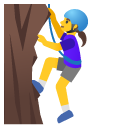
Appearance varies by platform and device. Google Noto, Twemoji, and OpenMoji are open-source.