💃🏽
The Emoji
Woman Dancing: Medium Skin Tone
U+1F483 U+1F3FD · :woman_dancing_medium_skin_tone:
Trend 80
Meaning layers
- interpretation
- Used to signal confidence, hype, celebration, or that someone is in their main-character era. Often signals 'I'm that girl' energy or unbothered vibes.
- tiktok usage
- Appears in captions about going out, glow-up moments, or thriving after a breakup. Frequently used in 'girl dinner' or 'hot girl walk' content.
- irony level
- 3 / 10
Platform meanings
- meaning
- Signals hype, celebration, going out energy, or main-character confidence. Used in POV content and night-out transitions.
- trend usage
- Common in 'get ready with me' videos, 'hot girl summer' content, and post-breakup glow-up narratives. Used to punctuate empowerment captions.
- hashtags
- #girlsnight#dancingqueen#hotgirlsummer#maincharacter#livingmybestlife
- virality score
- 82 / 100
Cultural meanings
🇺🇸
Western / Gen-Z
A quintessential 'that girl' or main-character emoji representing unbothered confidence, going out energy, and feminine empowerment. Heavily used in ironic and sincere contexts equally.
🇵🇰
Pakistan & India
Used to express excitement about celebrations, weddings, and festive occasions like Diwali or Eid parties. Also seen in Bollywood fan content and dance reel captions.
🌍
Middle East
Generally used to convey celebration and joy at family gatherings or weddings, though it may be used more privately by younger women on social media due to cultural conservatism around public dancing.
🌐
Global Neutral
Universally understood as expressing joy, celebration, and a carefree attitude. Widely accepted across cultures as a positive, festive symbol.
🇧🇩
Bangladesh
Used in festive and celebratory contexts, particularly around cultural events, Eid celebrations, and family milestones. Younger users adopt it for social media hype similar to Indian trends.
🇱🇰
Sri Lanka
Associated with celebration, cultural dance performances, and festive occasions. Used in captions for Kandyan dance content and party photos.
🇨🇳
China
Used to convey fun and liveliness, often in the context of KTV nights, group outings, or holiday celebrations. Younger users on Weibo and Douyin use it similarly to Western Gen Z.
🇯🇵
Japan
Interpreted as a symbol of festivity and fun. Used in izakaya night-out captions or when celebrating good news, though Japanese users may also use platform-specific kaomoji alongside it.
🇰🇷
South Korea
Popular in K-pop fan communities to celebrate idol achievements or dance performances. Also used in nightlife and 'han river picnic' type social content.
🇹🇼
Taiwan
Used similarly to broader East Asian trends — signaling fun nights out, KTV sessions, or celebratory moments among friend groups.
🇭🇰
Hong Kong
Used in social captions for nights out in Lan Kwai Fong or celebrating milestones, carrying a cosmopolitan, celebratory connotation.
🇵🇭
Philippines
Widely used in festive contexts, particularly around fiestas, karaoke nights, and group celebrations. Signals a fun-loving, social personality.
🇮🇩
Indonesia
Used to convey excitement about social events, concerts, and celebrations. Common in caption content around nightlife and girls' nights among younger urban users.
🇹🇭
Thailand
Associated with nightlife culture, festivals like Songkran, and social outings. Used by younger Thai users to signal a fun, carefree social life.
🇻🇳
Vietnam
Used in captions for social events, birthday parties, and empowerment content among younger Vietnamese women on TikTok and Instagram.
🇲🇾
Malaysia
Used to signal celebration and social fun, especially during festivals and holidays. Urban Malay, Chinese-Malaysian, and Indian-Malaysian youth use it in similar going-out contexts.
🇸🇦
Saudi Arabia
Used predominantly in private or online spaces by younger women to express freedom and joy, particularly following social reforms allowing women greater public participation. Symbolizes a changing cultural landscape.
🇦🇪
UAE
Common among the diverse expat and cosmopolitan youth population to signal nightlife, events, and social celebrations in Dubai and Abu Dhabi.
🇪🇬
Egypt
Used in social celebrations, engagement parties, and weddings. Younger Egyptian users on TikTok use it similarly to global Gen Z trends.
🇹🇷
Turkey
Associated with celebration, nightlife in Istanbul, and girls' night out culture. Common in meyhane or rooftop bar captions among young urban Turks.
🇮🇷
Iran
Used primarily by younger Iranians on Instagram and Telegram in private or diaspora contexts to express joy, freedom, and festivity — often carrying symbolic weight around personal freedom.
🇳🇬
Nigeria
Widely used to signal Afrobeats culture, owambe parties, and celebrations. A high-energy emoji deeply resonant with Nigerian party and social culture.
🇿🇦
South Africa
Used in social content around braai celebrations, music events, and girls' nights. Resonates strongly with urban youth culture and social media lifestyle content.
🇬🇧
UK & Ireland
Used to signal a night out on the town, pub culture, or pre-drinks excitement. Common in girls' group chats before weekends and in social media posts.
🇫🇷
France
Carries a chic, carefree connotation. Used in captions for soirée content, café outings, and spontaneous social plans — aligned with French joie de vivre.
🇩🇪
Germany
Used in social contexts to signal going out, club culture (especially Berlin nightlife), and celebrating milestones. Straightforward in meaning with less irony than in Anglophone contexts.
🇪🇸
Spain & Italy
Deeply resonant given the cultural proximity to flamenco and Mediterranean dance traditions. Used enthusiastically for fiestas, aperitivo culture, and summer nightlife content.
🇧🇷
Brazil
Strongly associated with samba, carnaval, and Brazilian party culture. One of the most culturally resonant dance emojis in Brazilian social media contexts.
🇲🇽
Mexico
Tied to salsa, cumbia, and quinceañera culture. Used heavily in festive and celebratory social media content with deep cultural resonance.
🌎
Latin America
Broadly used across Latin America to signal dance, celebration, and vibrant social life. Resonates with cumbia, salsa, reggaeton, and folk dance traditions region-wide.
🇦🇺
Australia & NZ
Used to signal going out, festival culture, and girls' nights. Common in summer social media content given the outdoor and beach-party-heavy lifestyle.
How its meaning shifted
- 2010
Rarely used; emoji was relatively new and skin tone modifiers did not yet exist. Dancing woman emoji was used straightforwardly to indicate literal dancing or a party.
- 2015
Skin tone modifiers introduced (Unicode 8.0, 2015). Usage expanded to include diverse representation. Still largely used in literal contexts for dance, celebrations, and parties.
- 2020
Became a staple of 'living my best life' and self-care culture on TikTok and Instagram. Adopted heavily in feminist empowerment content and ironic 'main character' meme formats.
- 2026
A deeply embedded cultural shorthand for confidence, feminine energy, and carefree attitude. Used sincerely and ironically with equal frequency across platforms, especially prominent in Gen Z and Gen Alpha communication styles.
See it on every platform
Adjacent emojis
- Often confused with
- woman cartwheelingperson gesturing oknail polish
- Can replace
- party poppersparklesstar struck
Share & embed
Frequently asked
01What does the 💃🏽 Woman Dancing: Medium Skin Tone emoji mean?
A woman with medium skin tone depicted in a red dress dancing, typically in a flamenco or salsa style pose with one arm raised.
02What does 💃🏽 mean on TikTok?
Signals hype, celebration, going out energy, or main-character confidence. Used in POV content and night-out transitions.
03What does 💃🏽 mean on WhatsApp?
Sent to express excitement about going out, celebrating good news, or hyping up a friend's plans.
04What does 💃🏽 mean in Gen-Z slang?
Used to signal confidence, hype, celebration, or that someone is in their main-character era. Often signals 'I'm that girl' energy or unbothered vibes.
05Is the 💃🏽 emoji safe to use?
Expresses joy, celebration, confidence, going out, dancing, and feminine empowerment. Universally positive in mainstream usage.
06What does 💃🏽 mean in texting?
Dancing is psychologically linked to emotional release and self-expression. This emoji taps into feelings of autonomy, social euphoria, and uninhibited happiness — often used when words feel insufficient to convey excitement.
07What is the shortcode for 💃🏽?
The shortcode for Woman Dancing: Medium Skin Tone is :woman_dancing_medium_skin_tone:
08What does 💃🏽 mean in dating?
Used by someone signaling they're fun, spontaneous, and carefree — often dropped in DMs to suggest a night out or express playful attraction.
Safety & usage
- Safe meaning
- Expresses joy, celebration, confidence, going out, dancing, and feminine empowerment. Universally positive in mainstream usage.
- Caution
- In rare cases, used condescendingly to mock someone's enthusiasm or sarcastically imply someone is naive or unaware of a bad situation.
In certain conservative cultural contexts, the depiction of a woman dancing publicly may be considered inappropriate or provocative. Generally safe across most digital platforms.
How it looks across platforms
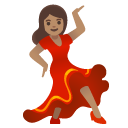


Appearance varies by platform and device. Google Noto, Twemoji, and OpenMoji are open-source.