👩🦼
The Emoji
Woman In Motorized Wheelchair
U+1F469 U+200D U+1F9BC · :woman_in_motorized_wheelchair:
Trend 42
Meaning layers
- interpretation
- Used to signal exhaustion, burnout, or the desire to be wheeled around without effort — 'I am so done walking through life right now.' Also used genuinely for disability representation and advocacy.
- tiktok usage
- Appears in disability awareness content, accessibility advocacy videos, and humorously in 'I'm so tired I need one of these' energy posts. Used in chronic illness and spoonie communities extensively.
- irony level
- 3 / 10
Platform meanings
- meaning
- Represents disability identity, chronic illness, accessibility advocacy, and ironically, extreme exhaustion or laziness in humorous content.
- trend usage
- Used in #DisabilityTok and #SpoonieLife communities. Also appears in 'I'm so tired' trending audio videos and accessibility challenge content.
- hashtags
- #DisabilityTok#SpoonieLife#AccessibilityMatters#ChronicIllness#DisabilityPride
- virality score
- 52 / 100
Cultural meanings
🇺🇸
Western / Gen-Z
Widely used both for genuine disability representation and ironically to express extreme tiredness or unwillingness to exert energy, especially in meme and TikTok contexts. Highly recognized as a disability pride symbol.
🇵🇰
Pakistan & India
Primarily used in its literal sense to represent physical disability or mobility impairment. May appear in social welfare content, disability awareness campaigns, and healthcare discussions. Less common in casual chat.
🌍
Middle East
Used in contexts of disability awareness and healthcare, sometimes in charitable or religious contexts (helping those with disabilities is highly valued). Less common in casual or ironic usage.
🌐
Global Neutral
Universally understood as representing a woman using a motorized wheelchair, indicating physical disability and mobility assistance. Broadly used in accessibility and inclusion conversations worldwide.
🇧🇩
Bangladesh
Primarily used in literal contexts relating to disability, healthcare posts, and social welfare campaigns. Disability awareness content featuring this emoji is growing in NGO and government spaces.
🇱🇰
Sri Lanka
Used in disability support and welfare contexts, healthcare discussions, and awareness campaigns. Rarely used in casual or ironic messaging.
🇨🇳
China
Used in disability representation contexts, particularly in accessibility advocacy and healthcare content. Ironic or humorous usage is uncommon due to cultural sensitivities around disability.
🇯🇵
Japan
Used respectfully in disability awareness, accessibility promotion, and healthcare contexts. Japanese culture tends to treat disability-related emojis with seriousness and avoids ironic usage.
🇰🇷
South Korea
Appears in disability awareness content and accessibility advocacy. K-culture's growing focus on inclusion has made this emoji more visible in social campaigns, though ironic usage remains rare.
🇹🇼
Taiwan
Used in accessibility and disability awareness content. Taiwan's progressive disability rights movement has embraced such emojis in digital advocacy spaces.
🇭🇰
Hong Kong
Used in disability and healthcare contexts, occasionally in social commentary about Hong Kong's accessibility infrastructure. Mostly literal in usage.
🇵🇭
Philippines
Used in disability awareness and welfare posts. The strong community values around caring for disabled family members gives this emoji a compassionate connotation.
🇮🇩
Indonesia
Primarily literal in use — representing disability or mobility impairment. Appears in social welfare, healthcare, and Islamic charity contexts where care for disabled individuals is emphasized.
🇹🇭
Thailand
Used in disability awareness and healthcare content. Thailand's Buddhist cultural context frames disability with compassion and karma, giving this emoji a dignified meaning.
🇻🇳
Vietnam
Used in disability support and healthcare discussions. Growing disability rights movements in Vietnam are bringing this emoji into advocacy spaces more frequently.
🇲🇾
Malaysia
Used in disability welfare and healthcare posts, often in multilingual digital spaces. Community care values give it a compassionate interpretation.
🇸🇦
Saudi Arabia
Used in healthcare and disability awareness contexts. Islamic values around caring for the disabled give this emoji a respectful, charitable connotation in digital spaces.
🇦🇪
UAE
Appears in accessibility and disability inclusion content, especially as UAE positions itself as a leader in inclusive infrastructure and Smart City initiatives.
🇪🇬
Egypt
Used in disability awareness and charitable contexts. Religious values around caring for the disabled shape its compassionate interpretation.
🇹🇷
Turkey
Used in disability rights advocacy and healthcare discussions. Turkey's growing accessibility movement gives this emoji increasing visibility in social content.
🇮🇷
Iran
Primarily used in healthcare and disability support contexts. Cultural and religious emphasis on caring for the disabled lends it a respectful, dignified meaning.
🇳🇬
Nigeria
Used in disability awareness and healthcare posts, with growing usage in disability rights advocacy. Also appears in social welfare and NGO content across Nigeria.
🇿🇦
South Africa
Used in disability representation and accessibility advocacy, particularly prominent given South Africa's constitutional commitment to disability rights. Also appears in healthcare and social welfare content.
🇬🇧
UK & Ireland
Used in both genuine disability representation and mildly ironic 'I'm exhausted' humor, reflecting UK internet culture. Strong presence in disability rights advocacy spaces online.
🇫🇷
France
Used primarily in disability awareness and accessibility discussions. French disability rights movements use it in digital advocacy; ironic usage exists but is less common than in Anglo cultures.
🇩🇪
Germany
Used in accessibility advocacy and disability rights content. German digital culture tends toward literal interpretation, with ironic usage being uncommon.
🇪🇸
Spain & Italy
Used in disability awareness and healthcare contexts. Southern European cultural emphasis on family care for disabled members gives it a warm, supportive connotation.
🇧🇷
Brazil
Used in disability rights advocacy and healthcare content. Brazil's active disability community uses it frequently in social media campaigns; some ironic usage among younger Brazilians.
🇲🇽
Mexico
Used in disability awareness and welfare content. Family-centered cultural values give it a compassionate interpretation, though younger generations use it ironically occasionally.
🌎
Latin America
Broadly used across Latin America in disability awareness, healthcare, and social welfare content. Growing disability rights movements in the region are increasing its digital presence.
🇦🇺
Australia & NZ
Used in disability representation, accessibility advocacy, and, like UK/US cultures, occasionally in ironic 'too tired to walk' humor. NDIS and disability rights conversations frequently feature it.
How its meaning shifted
- 2010
This emoji did not exist in 2010. Motorized wheelchair representation was entirely absent from standard emoji sets, a gap widely criticized by disability advocates.
- 2015
Still non-existent in standard emoji sets. Disability advocates were actively lobbying Unicode for better representation of physical disabilities beyond generic wheelchair symbols.
- 2020
Introduced with Unicode 12.0 in 2019 and gaining traction by 2020. Primarily used in disability pride and awareness contexts. Early adoption by chronic illness communities and disability advocates on social media.
- 2026
Established as a core disability representation emoji across platforms. Dual-use as both genuine disability identity symbol and ironic exhaustion/burnout expression in Gen Z digital culture. Widely used in accessibility advocacy, adaptive sports, and inclusive design spaces.
See it on every platform
Compare with
Adjacent emojis
Share & embed
Frequently asked
01What does the 👩🦼 Woman In Motorized Wheelchair emoji mean?
A woman using a motorized (electric-powered) wheelchair, representing mobility assistance, disability, and accessibility. Introduced as part of Unicode 12.0 in 2019.
02What does 👩🦼 mean on TikTok?
Represents disability identity, chronic illness, accessibility advocacy, and ironically, extreme exhaustion or laziness in humorous content.
03What does 👩🦼 mean on WhatsApp?
Used to indicate someone is physically unable to do something, either genuinely (mobility issues) or humorously (too tired to walk).
04What does 👩🦼 mean in Gen-Z slang?
Used to signal exhaustion, burnout, or the desire to be wheeled around without effort — 'I am so done walking through life right now.' Also used genuinely for disability representation and advocacy.
05Is the 👩🦼 emoji safe to use?
Representation of a woman using a motorized wheelchair, used for disability identity, accessibility advocacy, and solidarity with disabled communities.
06What does 👩🦼 mean in texting?
Evokes a sense of independence despite physical limitation, representing the human capacity to adapt and persevere. When used ironically, it reflects modern burnout culture and the tendency to frame extreme fatigue as a disability.
07What is the shortcode for 👩🦼?
The shortcode for Woman In Motorized Wheelchair is :woman_in_motorized_wheelchair:
08What does 👩🦼 mean in dating?
Rarely used in flirting contexts. Occasionally used in self-deprecating humor like 'carry me' energy on a date — signaling playfulness.
Safety & usage
- Safe meaning
- Representation of a woman using a motorized wheelchair, used for disability identity, accessibility advocacy, and solidarity with disabled communities.
- Caution
- Can be used ableistically to mock someone's mobility, used in harassment targeting disabled individuals, or deployed condescendingly in contexts that infantilize disability.
Context matters greatly — ironic usage (e.g., 'me after a long day') can be seen as trivializing disability by some communities. Always consider whether usage might be perceived as mocking or appropriating disability experience.
How it looks across platforms
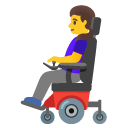


Appearance varies by platform and device. Google Noto, Twemoji, and OpenMoji are open-source.