👩🏿🦼
The Emoji
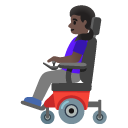
Woman In Motorized Wheelchair: Dark Skin Tone
U+1F469 U+1F3FF U+200D U+1F9BC · :woman_in_motorized_wheelchair_dark_skin_tone:
Trend 38
Meaning layers
- interpretation
- Used to represent disability pride, accessibility advocacy, or simply to describe someone using a power wheelchair. Also adopted in self-deprecating humor about being too tired or lazy to walk.
- tiktok usage
- Appears in disability TikTok (#DisabilityTok) content, chronic illness communities, and occasionally in ironic posts about 'needing a wheelchair' after an exhausting event.
- irony level
- 4 / 10
Platform meanings
- meaning
- Represents disability pride content, chronic illness community, and ironically signals extreme exhaustion or 'my body gave up' moments.
- trend usage
- Common in #DisabilityTok, #ChronicIllness, and #AccessibilityMatters videos. Also appears in 'day in my life' content by wheelchair users.
- hashtags
- #DisabilityTok#ChronicIllness#WheelchairLife#DisabilityPride#AccessibilityMatters
- virality score
- 42 / 100
Cultural meanings
🇺🇸
Western / Gen-Z
Widely recognized as a disability pride symbol and used both sincerely in advocacy and ironically in exhaustion memes; part of the broader disability visibility movement online.
🇵🇰
Pakistan & India
Primarily interpreted literally as representing a disabled woman; disability carries social stigma in some communities, so the emoji may be used cautiously or in progressive advocacy spaces.
🌍
Middle East
Generally understood as a disability representation emoji; used in accessibility awareness content, though disability topics can be sensitive in some regional social contexts.
🌐
Global Neutral
Universally understood as representing a woman in a motorized wheelchair; used for disability representation, accessibility discussions, and inclusion advocacy worldwide.
🇧🇩
Bangladesh
Interpreted literally as a symbol of disability; used in health and social welfare discussions, with growing use in disability rights advocacy digital spaces.
🇱🇰
Sri Lanka
Used in disability awareness contexts and health-related posts; disability representation in emoji form is still gaining traction in mainstream digital communication.
🇨🇳
China
Interpreted as representing a disabled person; used in accessibility and social welfare content, though emoji representation of disability is less culturally embedded compared to Western contexts.
🇯🇵
Japan
Understood as disability representation; Japan's strong accessibility infrastructure gives this emoji relevance in public service and social welfare discussions.
🇰🇷
South Korea
Used in disability rights and accessibility content; K-pop and mainstream digital culture rarely features it, but disability advocacy communities use it actively.
🇹🇼
Taiwan
Recognized as a disability representation emoji; used in social welfare, accessibility, and inclusive design discussions in Taiwanese digital spaces.
🇭🇰
Hong Kong
Used primarily in disability advocacy and social welfare contexts; accessibility awareness campaigns in Hong Kong incorporate this emoji.
🇵🇭
Philippines
Interpreted as representing a disabled woman; used in disability support communities and health advocacy posts, with increasing visibility in OFW and social welfare discussions.
🇮🇩
Indonesia
Understood as disability representation; used in social welfare and healthcare discussions, with the dark skin tone making it more relatable for diverse Indonesian users.
🇹🇭
Thailand
Used in disability awareness and healthcare contexts; Thai digital culture is gradually embracing disability representation emojis in mainstream communication.
🇻🇳
Vietnam
Primarily literal in interpretation, used in health and disability welfare posts; disability emoji usage is growing in Vietnamese progressive online communities.
🇲🇾
Malaysia
Recognized as disability representation; used in accessibility discussions and inclusive education content in Malaysian social media.
🇸🇦
Saudi Arabia
Used in disability awareness and healthcare contexts; the emoji represents inclusion efforts in Saudi digital spaces, aligned with Vision 2030 accessibility goals.
🇦🇪
UAE
Common in accessibility awareness and inclusive society content; the UAE's focus on smart cities and accessibility makes this emoji relevant in civic discourse.
🇪🇬
Egypt
Used in disability support and social welfare discussions; disability representation in digital communication is growing in Egyptian online communities.
🇹🇷
Turkey
Recognized as disability representation; used in healthcare, social welfare, and disability rights discussions in Turkish digital spaces.
🇮🇷
Iran
Interpreted literally as representing a disabled woman; used in health and welfare contexts, with disability advocacy communities using it for awareness campaigns.
🇳🇬
Nigeria
Used in disability advocacy and healthcare content; the dark skin tone increases cultural resonance and representation for Nigerian users.
🇿🇦
South Africa
The dark skin tone is particularly meaningful, making this emoji widely adopted in disability pride and representation content in South African communities.
🇬🇧
UK & Ireland
Used actively in disability rights discussions, accessibility advocacy, and chronic illness communities; the UK's strong disability rights movement gives it significant social weight.
🇫🇷
France
Used in disability inclusion and accessibility discussions; French disability advocacy organizations and communities use it in awareness campaigns.
🇩🇪
Germany
Recognized in disability representation and accessibility contexts; Germany's strong social welfare system makes this emoji relevant in civic and healthcare discussions.
🇪🇸
Spain & Italy
Used in disability awareness and inclusion content; growing disability pride movements in Spain and Italy are increasing the emoji's visibility in advocacy spaces.
🇧🇷
Brazil
Used in disability rights and accessibility content; the dark skin tone resonates strongly with Brazil's diverse population and Afro-Brazilian communities.
🇲🇽
Mexico
Recognized as disability representation; used in healthcare and social welfare discussions, with disability advocacy communities growing in Mexican digital spaces.
🌎
Latin America
Broadly interpreted as disability representation across Latin America; used in healthcare, advocacy, and inclusive community content throughout the region.
🇦🇺
Australia & NZ
Actively used in disability rights, chronic illness communities, and accessibility advocacy; Australia and NZ's progressive disability rights frameworks give it strong cultural relevance.
How its meaning shifted
- 2010
This emoji did not exist in 2010; motorized wheelchair emojis were not part of the Unicode standard, leaving disability representation largely absent from emoji keyboards.
- 2015
Still not yet introduced; disability representation in emojis remained minimal, limited to the basic wheelchair symbol in some contexts.
- 2020
Newly introduced (added in Unicode 12.1 / 2019-2020 rollout); used primarily in disability advocacy, inclusion discussions, and early #DisabilityTok content with growing awareness.
- 2026
Established as a key symbol in disability pride digital culture; used across advocacy, chronic illness communities, ironic exhaustion memes, and inclusive representation content with widespread recognition.
See it on every platform
Adjacent emojis
Share & embed
Frequently asked
01What does the 👩🏿🦼 Woman In Motorized Wheelchair: Dark Skin Tone emoji mean?
A woman using a motorized (electric) wheelchair, depicted with dark skin tone. Represents disability, mobility aid use, and physical accessibility.
02What does 👩🏿🦼 mean on TikTok?
Represents disability pride content, chronic illness community, and ironically signals extreme exhaustion or 'my body gave up' moments.
03What does 👩🏿🦼 mean on WhatsApp?
Directly references wheelchair use or disability; may also be sent humorously after describing extreme tiredness.
04What does 👩🏿🦼 mean in Gen-Z slang?
Used to represent disability pride, accessibility advocacy, or simply to describe someone using a power wheelchair. Also adopted in self-deprecating humor about being too tired or lazy to walk.
05Is the 👩🏿🦼 emoji safe to use?
Represents disability visibility, mobility aid use, and inclusion — a positive and empowering symbol for disability communities.
06What does 👩🏿🦼 mean in texting?
Carrying strong connotations of disability identity and pride movements, this emoji can evoke empathy, solidarity, or self-identification among disabled communities. For non-disabled users, it can signal allyship or ironic exhaustion.
07What is the shortcode for 👩🏿🦼?
The shortcode for Woman In Motorized Wheelchair: Dark Skin Tone is :woman_in_motorized_wheelchair_dark_skin_tone:
08What does 👩🏿🦼 mean in dating?
Rarely used in flirting contexts; occasionally used humorously to say 'you sweep me off my feet so hard I need a wheelchair' but this can be tone-deaf.
Safety & usage
- Safe meaning
- Represents disability visibility, mobility aid use, and inclusion — a positive and empowering symbol for disability communities.
- Caution
- Can be misused in mocking disabled people, ableist humor, or trivializing real disabilities through overuse in 'fake exhaustion' meme contexts.
Non-disabled users should be mindful of using this emoji in ironic or mocking contexts as it can trivialize real mobility disabilities. Ableist misuse should be avoided.
How it looks across platforms


Appearance varies by platform and device. Google Noto, Twemoji, and OpenMoji are open-source.