👩🏻🦼➡️
The Emoji
Woman In Motorized Wheelchair Facing Right: Light Skin Tone
U+1F469 U+1F3FB U+200D U+1F9BC U+200D U+27A1 U+FE0F · :woman_in_motorized_wheelchair_facing_right_light_skin_tone:
Trend 22
Meaning layers
- interpretation
- Used to signal moving forward, powering through life, or asserting independence. Sometimes used humorously to say 'I'm out of here' or 'rolling away from drama.' Can also be used in serious disability representation and advocacy contexts.
- tiktok usage
- Appears in videos about disability visibility, accessibility advocacy, and occasionally in comedic 'escaping a situation' montages or transition effects.
- irony level
- 3 / 10
Platform meanings
- meaning
- Represents disability visibility, moving forward, or making a dramatic exit from a situation. Used in accessibility advocacy TikToks and comedic skits.
- trend usage
- Appears in duets and stitches about accessibility fails, or in empowerment content tagged with disability pride hashtags. Also used in 'rolling away from my problems' trend videos.
- hashtags
- #DisabilityTikTok#WheelchairLife#AccessibilityMatters#DisabilityPride#RollingThrough
- virality score
- 28 / 100
Cultural meanings
🇺🇸
Western / Gen-Z
Embraced as a disability representation and empowerment symbol; used seriously in advocacy and humorously in 'speeding away from problems' memes. Gen Z sees it as part of inclusive emoji culture.
🇵🇰
Pakistan & India
Primarily used in literal contexts to represent wheelchair users or disability. Growing use in urban disability awareness campaigns and NGO social media content.
🌍
Middle East
Used mostly in medical or disability support contexts. Disability advocacy is growing in the region and this emoji appears in related awareness content, though cultural sensitivity around visible disability varies.
🌐
Global Neutral
Universally understood as representing a woman using a motorized wheelchair. Accepted as an inclusive representation symbol across most international contexts.
🇧🇩
Bangladesh
Used in disability awareness social media posts and NGO communications. Relatively rare in casual messaging but recognized in formal advocacy contexts.
🇱🇰
Sri Lanka
Appears in disability rights advocacy content and healthcare-related social posts. Limited everyday use but growing recognition through international disability awareness campaigns.
🇨🇳
China
Used in accessibility and disability representation discussions on platforms like Weibo or WeChat. The directional variant is less commonly used than the base emoji; generally understood as a mobility symbol.
🇯🇵
Japan
Japan has a strong culture of accessibility symbology. This emoji aligns with existing disability-related iconography and is used respectfully in awareness content. The rightward direction may be noted for its symbolic forward-progress connotation.
🇰🇷
South Korea
Used in disability advocacy and healthcare content. Korean social media communities focused on inclusion and accessibility use this emoji to normalize disability representation.
🇹🇼
Taiwan
Used in accessibility and disability rights content. Taiwan's progressive social policies mean disability representation emojis are generally well-received in awareness and advocacy contexts.
🇭🇰
Hong Kong
Appears in disability support community posts and accessibility advocacy. Recognized as an inclusive representation symbol, especially in international-facing content.
🇵🇭
Philippines
Used in disability awareness campaigns and social welfare content. Growing presence in OFW and caregiving communities where disability-related discussions are common.
🇮🇩
Indonesia
Primarily seen in disability advocacy NGO content and government accessibility announcements. Casual usage is limited but growing among younger, urban social media users.
🇹🇭
Thailand
Used in medical and disability support contexts. Thailand's growing disability rights movement uses this emoji in awareness campaigns and community building on social media.
🇻🇳
Vietnam
Appears in disability welfare and healthcare social media content. Growing use in urban youth communities engaged with international social media trends around inclusion.
🇲🇾
Malaysia
Used in disability representation posts and accessibility advocacy. Malaysia's multicultural social media landscape means this emoji is recognized across communities in inclusive contexts.
🇸🇦
Saudi Arabia
Used in disability awareness content, often tied to government Vision 2030 accessibility initiatives. Cultural sensitivity around depicting women in public roles adds nuance to interpretations.
🇦🇪
UAE
Used in progressive inclusion and accessibility content, especially connected to Dubai and Abu Dhabi's smart city accessibility programs. Generally received positively in advocacy contexts.
🇪🇬
Egypt
Used in disability support and awareness content. Egyptian disability rights organizations incorporate this emoji into their social media communications and advocacy materials.
🇹🇷
Turkey
Appears in disability rights advocacy and social welfare content. Turkish social media users in healthcare and social work fields use it to signal accessibility awareness.
🇮🇷
Iran
Used in medical and disability support contexts. Disability representation is present but navigates cultural norms; this emoji is mostly confined to healthcare and formal advocacy usage.
🇳🇬
Nigeria
Growing use in disability advocacy and NGO communications. Nigerian disability rights organizations use this emoji in awareness campaigns, though casual usage remains limited.
🇿🇦
South Africa
Used in disability rights and inclusion content. South Africa's active social justice social media culture means this emoji appears in broader equity and accessibility conversations.
🇬🇧
UK & Ireland
Used in disability advocacy, NHS-related content, and social commentary about accessibility. The UK's active disability rights culture means it appears in both serious advocacy and light-hearted representation contexts.
🇫🇷
France
Used in disability rights advocacy and accessible design conversations. France's strong civic culture around disability rights (reflected in legislation) lends this emoji a policy-adjacent significance.
🇩🇪
Germany
Appears in accessibility, healthcare, and inclusion content. Germany's robust disability rights legal framework means this emoji resonates in policy and advocacy discussions.
🇪🇸
Spain & Italy
Used in disability awareness and inclusion campaigns. Mediterranean cultures are increasingly engaging with disability representation, and this emoji appears in NGO and healthcare social media content.
🇧🇷
Brazil
Used in disability advocacy and social welfare content. Brazilian disability rights organizations and social media influencers in the inclusion space use this emoji to signal representation.
🇲🇽
Mexico
Appears in disability awareness and social inclusion content. Mexican NGOs and advocacy groups use it in campaigns, and it occasionally appears in humor content about navigating life's obstacles.
🌎
Latin America
Across Latin America, used primarily in disability representation and advocacy contexts. Growing use among younger generations engaging with international inclusion discourse.
🇦🇺
Australia & NZ
Used in disability advocacy, accessibility awareness, and NDIS (Australia) related content. Both countries have active disability rights communities that use this emoji in social media campaigns and personal identity expression.
How its meaning shifted
- 2010
This specific emoji sequence did not exist in 2010. Motorized wheelchair emojis were not yet part of Unicode; disability representation in emoji was extremely limited.
- 2015
Still not available. Emoji diversity was expanding (skin tones added in 2015) but disability-specific emojis like wheelchair users were not yet introduced.
- 2020
The base motorized wheelchair emoji was introduced around 2019-2020. Usage was primarily literal and representational, with disability advocates celebrating the addition as a long-awaited inclusion milestone.
- 2026
The directional variant with skin tone is now used in nuanced ways: disability pride expression, accessibility advocacy, empowerment messaging, and light comedic 'making an exit' contexts. It is part of a broader emoji inclusion vocabulary that Gen Z and disability communities use fluidly.
See it on every platform
Adjacent emojis
Share & embed
Frequently asked
01What does the 👩🏻🦼➡️ Woman In Motorized Wheelchair Facing Right: Light Skin Tone emoji mean?
A woman using a motorized (electric) wheelchair, facing right, with light skin tone. The combination includes the woman emoji, motorized wheelchair emoji, and directional arrow indicating rightward movement.
02What does 👩🏻🦼➡️ mean on TikTok?
Represents disability visibility, moving forward, or making a dramatic exit from a situation. Used in accessibility advocacy TikToks and comedic skits.
03What does 👩🏻🦼➡️ mean on WhatsApp?
Used to represent a wheelchair-using woman or to say 'I'm moving on / out of here.' May be used to indicate accessibility needs in group planning.
04What does 👩🏻🦼➡️ mean in Gen-Z slang?
Used to signal moving forward, powering through life, or asserting independence. Sometimes used humorously to say 'I'm out of here' or 'rolling away from drama.' Can also be used in serious disability representation and advocacy contexts.
05Is the 👩🏻🦼➡️ emoji safe to use?
Represents disability inclusion, mobility aid use, independence, and forward movement. A fundamentally positive and representational emoji when used respectfully.
06What does 👩🏻🦼➡️ mean in texting?
This emoji carries strong emotional weight around themes of independence and self-determination. For individuals with disabilities, it can evoke pride and representation; for others, it may evoke empathy or allyship. The directional element adds a sense of agency and forward momentum.
07What is the shortcode for 👩🏻🦼➡️?
The shortcode for Woman In Motorized Wheelchair Facing Right: Light Skin Tone is :woman_in_motorized_wheelchair_facing_right_light_skin_tone:
08What does 👩🏻🦼➡️ mean in dating?
Rarely used in flirting contexts. If used, it might signal someone saying they're independent and self-sufficient, or humorously 'rolling away' from a bad date.
Safety & usage
- Safe meaning
- Represents disability inclusion, mobility aid use, independence, and forward movement. A fundamentally positive and representational emoji when used respectfully.
- Caution
- Could be used mockingly in ableist harassment contexts, though this is uncommon. May be weaponized in toxic online spaces to demean or ridicule disabled individuals.
Use with respect and awareness. Avoid using this emoji as a punchline in ways that reduce disability to a joke or stereotype. When used by non-disabled people in comedic contexts, consider whether the humor risks being ableist.
How it looks across platforms
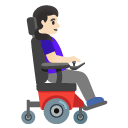
Appearance varies by platform and device. Google Noto, Twemoji, and OpenMoji are open-source.