👩🏼🦼➡️
The Emoji
Woman In Motorized Wheelchair Facing Right: Medium-light Skin Tone
U+1F469 U+1F3FC U+200D U+1F9BC U+200D U+27A1 U+FE0F · :woman_in_motorized_wheelchair_facing_right_mediumlight_skin_tone:
Trend 22
Meaning layers
- interpretation
- Used to represent accessibility, disability pride, forward movement, or independence. Also used metaphorically as 'rolling forward' or 'moving on' — someone who doesn't stop for anything. Gen Z uses it to signal disability advocacy or as a symbol of unstoppable momentum.
- tiktok usage
- Appears in disability awareness content, accessibility rant videos, and occasionally in 'nothing stops me' energy montages. Used by disabled creators to represent themselves or to highlight ableism in society.
- irony level
- 2 / 10
Platform meanings
- meaning
- Represents disability identity, mobility, forward movement, and unstoppable energy. Used by disabled TikTokers as a self-identifier or by allies in advocacy content.
- trend usage
- Appears in #DisabilityTikTok, accessibility call-out videos, 'day in my life' content from wheelchair users, and empowerment montages.
- hashtags
- #DisabilityTikTok#WheelchairLife#AccessibilityMatters#DisabilityPride#NothingAboutUsWithoutUs
- virality score
- 28 / 100
Cultural meanings
🇺🇸
Western / Gen-Z
Recognized as a disability pride symbol and representation emoji. Gen Z in the West actively uses it in disability advocacy content and self-identification, appreciating the intersectionality of gender, skin tone, and disability representation.
🇵🇰
Pakistan & India
Primarily used in literal contexts — representing disabled family members or in healthcare/charity discussions. Disability stigma in some communities may limit casual use, but younger urban users are increasingly adopting it for awareness campaigns.
🌍
Middle East
Used mainly in charitable or medical contexts, such as disability support fundraisers or hospital-related discussions. Growing use among younger progressive users for accessibility advocacy, though cultural attitudes toward disability vary significantly.
🌐
Global Neutral
Universally understood as representing a woman using a motorized wheelchair. Serves as a neutral symbol for disability, mobility, and accessibility across language barriers.
🇧🇩
Bangladesh
Used primarily in medical and charitable contexts. Disability awareness is growing but the emoji remains mostly literal in usage, appearing in NGO communications and healthcare discussions.
🇱🇰
Sri Lanka
Primarily literal usage in medical, social welfare, and charitable contexts. Growing awareness of disability rights is slowly increasing its use in advocacy spaces among younger users.
🇨🇳
China
Used in accessible infrastructure discussions, disability charity content, and Paralympic celebrations. China's growing Paralympic presence has increased positive associations with mobility-related emojis.
🇯🇵
Japan
Used in accessible tourism content, barrier-free facility discussions, and disability welfare contexts. Japan's strong universal design culture gives this emoji positive connotations of thoughtful inclusion.
🇰🇷
South Korea
Used in disability rights discussions, accessible facility reviews, and K-content about inclusive storytelling. Growing disability representation in Korean media has increased the emoji's positive cultural resonance.
🇹🇼
Taiwan
Used in accessibility advocacy, disability rights movements, and inclusive design discussions. Taiwan's progressive stance on disability rights gives this emoji a positive, forward-thinking connotation.
🇭🇰
Hong Kong
Used in accessibility discussions, disability community content, and social welfare contexts. Also appears in content critiquing public infrastructure accessibility in the city.
🇵🇭
Philippines
Used in disability awareness campaigns, medical contexts, and NGO communications. Growing disability pride movements among Filipino youth are expanding its use in identity-affirming contexts.
🇮🇩
Indonesia
Primarily used in charitable and medical contexts. Islamic values of caring for the disabled community give it a compassionate connotation, while disability rights activism is gradually expanding its use.
🇹🇭
Thailand
Used in accessibility tourism content, disability welfare discussions, and healthcare contexts. Thailand's large medical tourism sector gives mobility-related emojis practical usage in health communications.
🇻🇳
Vietnam
Used mainly in medical, charity, and social welfare contexts. Vietnam's growing disability rights movement is beginning to shift usage toward empowerment and advocacy among younger users.
🇲🇾
Malaysia
Used in disability awareness campaigns, accessible facility reviews, and NGO communications. Multicultural Malaysian society sees it used across communities in both charitable and advocacy contexts.
🇸🇦
Saudi Arabia
Used in disability charity contexts, accessible mosque/facility discussions, and medical communications. Growing Vision 2030 accessibility initiatives are increasing positive associations with disability inclusion content.
🇦🇪
UAE
Used in accessibility content related to smart city initiatives, disability-inclusive events, and healthcare. Dubai's accessibility push and Paralympic participation have made mobility emojis increasingly visible in positive contexts.
🇪🇬
Egypt
Primarily used in medical, charitable, and social welfare contexts. Disability advocacy is growing among Egyptian youth, with the emoji appearing more in rights-based discussions on social media.
🇹🇷
Turkey
Used in disability rights discussions, accessible Istanbul content, and healthcare communications. Turkey's active disability sport culture gives mobility emojis positive connotations in sports contexts.
🇮🇷
Iran
Used primarily in medical and charitable contexts. Disability support organizations use it in communications, and younger Iranians use it in growing online disability awareness spaces.
🇳🇬
Nigeria
Used in disability awareness campaigns, NGO communications, and accessibility advocacy. Nigeria's vibrant online activism culture means the emoji appears in both serious disability rights content and supportive community posts.
🇿🇦
South Africa
Used in disability rights discussions, accessible design advocacy, and healthcare content. South Africa's strong disability rights framework (post-apartheid constitutionally protected) gives this emoji a rights-affirming connotation.
🇬🇧
UK & Ireland
Widely used in disability advocacy, accessibility criticism, and representation discussions. Strong disability rights culture in the UK means this emoji is recognized and used frequently in both serious and humorous contexts.
🇫🇷
France
Used in disability rights content, accessibility criticism of public infrastructure, and inclusive design discussions. French disability advocacy is robust, giving the emoji strong rights-based connotations.
🇩🇪
Germany
Used in accessibility discussions, inclusive design advocacy, and disability rights content. Germany's strong social welfare culture means the emoji is recognized as a symbol of supported independence and inclusion.
🇪🇸
Spain & Italy
Used in disability awareness campaigns, accessible tourism content, and healthcare discussions. Mediterranean cultures with strong family values often use it in contexts of care and community support.
🇧🇷
Brazil
Used in disability rights advocacy, accessible city discussions, and Paralympic celebration content. Brazil's large and active disability community and strong Paralympic culture give this emoji vibrant, empowering connotations.
🇲🇽
Mexico
Used in disability awareness campaigns, social welfare discussions, and accessibility advocacy. Growing disability rights movement in Mexico is shifting usage from purely charitable to empowerment-focused contexts.
🌎
Latin America
Broadly used in disability advocacy, accessible infrastructure discussions, and charitable contexts across Latin America. Increasing disability rights movements throughout the region are expanding its use in identity and empowerment content.
🇦🇺
Australia & NZ
Widely recognized and positively used in disability advocacy, accessible design discussions, and inclusive community content. Both countries' strong disability rights frameworks and NDIS discourse in Australia make this emoji frequently visible in policy and personal empowerment contexts.
How its meaning shifted
- 2010
This specific emoji did not exist in 2010. Disability representation in emoji was virtually absent, with no wheelchair or disability-related emojis available in standard sets.
- 2015
Still not available. Basic wheelchair emoji discussion was beginning as part of broader emoji diversity conversations, but motorized wheelchair emojis with directional facing and skin tones were years away.
- 2020
Motorized wheelchair emojis began appearing following Unicode 12.0 (2019) additions. Early usage was primarily by disability advocates, disabled individuals for self-identification, and accessibility organizations raising awareness.
- 2026
Established symbol in disability pride and accessibility advocacy spaces. Used regularly by disabled creators across all major platforms, appears in mainstream DEI content, and has developed secondary meanings around forward momentum and unstoppable determination in broader internet culture.
See it on every platform
Adjacent emojis
Share & embed
Frequently asked
01What does the 👩🏼🦼➡️ Woman In Motorized Wheelchair Facing Right: Medium-light Skin Tone emoji mean?
A woman with medium-light skin tone using a motorized wheelchair, facing right. This is a ZWJ (Zero Width Joiner) sequence combining the woman emoji, medium-light skin tone modifier, motorized wheelchair emoji, and a rightward arrow.
02What does 👩🏼🦼➡️ mean on TikTok?
Represents disability identity, mobility, forward movement, and unstoppable energy. Used by disabled TikTokers as a self-identifier or by allies in advocacy content.
03What does 👩🏼🦼➡️ mean on WhatsApp?
Used to represent someone in a motorized wheelchair, often as self-identification or when discussing a family member/friend with a disability. Also used in accessibility-related group chats.
04What does 👩🏼🦼➡️ mean in Gen-Z slang?
Used to represent accessibility, disability pride, forward movement, or independence. Also used metaphorically as 'rolling forward' or 'moving on' — someone who doesn't stop for anything. Gen Z uses it to signal disability advocacy or as a symbol of unstoppable momentum.
05Is the 👩🏼🦼➡️ emoji safe to use?
Representation of a woman using a motorized wheelchair, used for disability identity expression, accessibility advocacy, and inclusive representation in digital communication.
06What does 👩🏼🦼➡️ mean in texting?
This emoji carries strong connotations of agency and forward momentum. For disabled users it can be deeply affirming — a rare instance of seeing oneself represented in digital language. It can also evoke empathy and allyship in non-disabled users.
07What is the shortcode for 👩🏼🦼➡️?
The shortcode for Woman In Motorized Wheelchair Facing Right: Medium-light Skin Tone is :woman_in_motorized_wheelchair_facing_right_mediumlight_skin_tone:
08What does 👩🏼🦼➡️ mean in dating?
Rarely used in flirting contexts. If used, it may indicate someone is openly sharing their disability identity early in communication, which is a form of radical honesty and self-confidence.
Safety & usage
- Safe meaning
- Representation of a woman using a motorized wheelchair, used for disability identity expression, accessibility advocacy, and inclusive representation in digital communication.
- Caution
- Could potentially be used mockingly in ableist harassment, though this is uncommon. May be misused to demean or stereotype disabled individuals in toxic online spaces.
Generally a safe and positive emoji. Minimal risk of misuse, though as with any identity-based emoji, context matters. Use respectfully and avoid deploying it as a punchline unless you are part of the disability community reclaiming its own representation.
How it looks across platforms
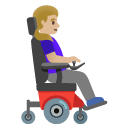
Appearance varies by platform and device. Google Noto, Twemoji, and OpenMoji are open-source.