🚵🏽♀️
The Emoji
Woman Mountain Biking: Medium Skin Tone
U+1F6B5 U+1F3FD U+200D U+2640 U+FE0F · :woman_mountain_biking_medium_skin_tone:
Trend 52
Meaning layers
- interpretation
- Used to signal an active, outdoorsy, independent lifestyle. Often symbolizes 'that girl' energy — fitness-focused, nature-loving, doing her own thing without caring what others think.
- tiktok usage
- Appears in fitness transformation videos, trail running crossovers, outdoor adventure content, and 'soft life meets hard sport' aesthetics.
- irony level
- 2 / 10
Platform meanings
- meaning
- Represents the outdoorsy, athletic woman aesthetic. Popular in trail content, morning routine videos, and 'main character in nature' narratives.
- trend usage
- Appears in 'that girl' challenge videos, mountain biking POV content, and fitness accountability series.
- hashtags
- #mountainbiking#thatgirl#outdoorwomen#traillife#cyclingwomen
- virality score
- 55 / 100
Cultural meanings
🇺🇸
Western / Gen-Z
Symbolizes the 'that girl' athletic ideal — a woman thriving physically and emotionally through outdoor sport. Widely used without much irony as a lifestyle identifier.
🇵🇰
Pakistan & India
Relatively niche usage; associated with urban fitness culture and women reclaiming outdoor spaces. Occasionally used by progressive communities to celebrate active women.
🌍
Middle East
Used primarily among younger, urban, fitness-oriented communities. Represents a modern, active woman and is increasingly seen in Gulf fitness culture content.
🌐
Global Neutral
Universally understood as a woman participating in mountain biking or outdoor sports. Carries positive, empowering connotations across most cultures.
🇧🇩
Bangladesh
Rarely used in mainstream communication; primarily appears in fitness and health-focused social media content among urban youth.
🇱🇰
Sri Lanka
Niche usage mostly among fitness enthusiasts and urban cyclists. Seen as a symbol of modernity and active health culture.
🇨🇳
China
Used in sports and outdoor lifestyle content, particularly among younger women participating in the growing cycling trend in Chinese cities.
🇯🇵
Japan
Associated with outdoor sports culture (アウトドア) and the growing women's cycling community. Carries wholesome, healthy-lifestyle connotations.
🇰🇷
South Korea
Fits into the '건강미인' (healthy beauty) ideal. Used by women in fitness content and increasingly popular as cycling gains traction in Korean youth culture.
🇹🇼
Taiwan
Used in outdoor sports and cycling communities, which are quite popular in Taiwan. Represents freedom and an active, nature-connected lifestyle.
🇭🇰
Hong Kong
Associated with trail biking communities in the New Territories. Used by fitness-oriented HK users to signal an active weekend lifestyle.
🇵🇭
Philippines
Primarily used among urban fitness communities. Cycling has grown in popularity post-pandemic, making this emoji increasingly relevant.
🇮🇩
Indonesia
Used in fitness and outdoor adventure communities. Represents a modern, active lifestyle increasingly embraced by Indonesian youth.
🇹🇭
Thailand
Found in cycling and outdoor sports communities. Thailand's growing bike culture makes this emoji relevant among fitness-oriented users.
🇻🇳
Vietnam
Cycling is culturally significant in Vietnam; this emoji is used by sporty women to represent modern athletic identity and outdoor activity.
🇲🇾
Malaysia
Used in outdoor sports and fitness communities. Represents an active, health-conscious lifestyle among urban Malaysian women.
🇸🇦
Saudi Arabia
Increasingly relevant as women in Saudi Arabia gain more freedom to participate in outdoor sports. Used by progressive, fitness-forward communities.
🇦🇪
UAE
Used among the fitness-obsessed expat and local communities in Dubai and Abu Dhabi. Represents the thriving outdoor sports culture in the Gulf.
🇪🇬
Egypt
Niche usage among urban fitness communities and cycling clubs. Represents a modern, active woman navigating public outdoor spaces.
🇹🇷
Turkey
Used among young, urban Turkish women who participate in outdoor sports. Cycling culture is growing in cities like Istanbul and Ankara.
🇮🇷
Iran
Used cautiously in private or semi-public contexts; among younger Iranians it represents freedom, athleticism, and resistance through active lifestyle.
🇳🇬
Nigeria
Used in fitness and lifestyle communities in Lagos and other urban centers. Represents a modern, health-conscious woman embracing active living.
🇿🇦
South Africa
Mountain biking is a significant sport in South Africa, especially in the Cape. This emoji is used authentically by trail-riding communities and fitness women.
🇬🇧
UK & Ireland
Used by cycling enthusiasts and general fitness communities. The UK's strong cycling culture gives this emoji genuine everyday relevance.
🇫🇷
France
France's rich cycling culture (Tour de France, etc.) gives this emoji cultural resonance. Used by female cyclists and outdoor sports communities.
🇩🇪
Germany
Used in outdoor sports and fitness contexts. Germany's strong cycling infrastructure means this emoji carries authentic practical meaning.
🇪🇸
Spain & Italy
Associated with Mediterranean active lifestyle culture. Used in cycling communities and by women embracing outdoor adventure aesthetics.
🇧🇷
Brazil
Used in fitness and outdoor sports communities. Brazil's love for active lifestyles and nature makes this emoji a natural fit for adventurous women.
🇲🇽
Mexico
Used in urban cycling communities and fitness culture. Represents a modern, independent woman embracing outdoor sport.
🌎
Latin America
Broadly used across Latin American fitness communities to represent active, empowered women. Cycling culture varies but the emoji's athletic meaning translates well.
🇦🇺
Australia & NZ
Strong mountain biking communities in both countries give this emoji genuine cultural use. Represents the classic Aussie/Kiwi outdoorsy identity for women.
How its meaning shifted
- 2010
Emoji did not exist yet; mountain biking and female athlete representation in emoji was entirely absent.
- 2015
Basic mountain biker emoji existed but lacked gender and skin tone modifiers. Female athletes were largely invisible in emoji language.
- 2020
Widely adopted following Unicode's gender and skin tone modifier expansions. Used authentically in fitness content and pandemic-era outdoor activity boom.
- 2026
Fully normalized as part of the outdoor/fitness lifestyle emoji vocabulary. Used across platforms to signal empowerment, active identity, and the 'that girl' aesthetic.
See it on every platform
Compare with
Adjacent emojis
- Often confused with
- woman bikingperson mountain bikingwoman cartwheeling
- Can replace
- person mountain bikingbicyclewoman running
Share & embed
Frequently asked
01What does the 🚵🏽♀️ Woman Mountain Biking: Medium Skin Tone emoji mean?
A woman riding a mountain bike, depicted with medium skin tone. Represents outdoor cycling, mountain biking as a sport, and active female athleticism.
02What does 🚵🏽♀️ mean on TikTok?
Represents the outdoorsy, athletic woman aesthetic. Popular in trail content, morning routine videos, and 'main character in nature' narratives.
03What does 🚵🏽♀️ mean on WhatsApp?
Telling friends about a biking trip or workout session. Also used as shorthand for 'I'm out doing my thing, don't wait up.'
04What does 🚵🏽♀️ mean in Gen-Z slang?
Used to signal an active, outdoorsy, independent lifestyle. Often symbolizes 'that girl' energy — fitness-focused, nature-loving, doing her own thing without caring what others think.
05Is the 🚵🏽♀️ emoji safe to use?
A woman engaging in mountain biking sport. Positive, empowering, and universally safe for general audiences.
06What does 🚵🏽♀️ mean in texting?
Evokes a sense of liberation and physical capability. Women using this emoji often signal self-sufficiency and a rejection of passive roles, associating identity with movement and endurance.
07What is the shortcode for 🚵🏽♀️?
The shortcode for Woman Mountain Biking: Medium Skin Tone is :woman_mountain_biking_medium_skin_tone:
08What does 🚵🏽♀️ mean in dating?
Sent to signal an active, adventurous personality — an implicit invitation to 'keep up with me' energy. Can be used as a subtle flex on dating apps.
Safety & usage
- Safe meaning
- A woman engaging in mountain biking sport. Positive, empowering, and universally safe for general audiences.
- Caution
- Extremely rare misuse; occasionally used in dismissive contexts to mock women in traditionally male-dominated sports spaces.
No significant toxic usage patterns detected. Safe for all platforms and audiences. Skin tone modifier promotes healthy representation.
How it looks across platforms
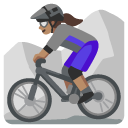
Appearance varies by platform and device. Google Noto, Twemoji, and OpenMoji are open-source.