🤽♀️
The Emoji
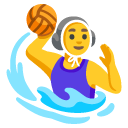
Woman Playing Water Polo
U+1F93D U+200D U+2640 U+FE0F · :woman_playing_water_polo:
Trend 22
Meaning layers
- interpretation
- Used to flex athletic identity, signal that someone is sporty or outdoorsy, or humorously claim they are 'in their athlete era.' Sometimes used ironically when doing the bare minimum of physical activity.
- tiktok usage
- Appears in sport POV videos, athlete lifestyle content, and ironically in 'I did one lap in the pool' type humor videos.
- irony level
- 4 / 10
Platform meanings
- meaning
- Signals athletic lifestyle content, swim training POVs, or is used ironically in relatable sports humor.
- trend usage
- Used in 'athlete aesthetic' videos, summer pool content, and sport girl day-in-my-life style TikToks.
- hashtags
- #WaterPolo#AthleteTok#SwimLife#SportGirl#PoolSeason
- virality score
- 38 / 100
Cultural meanings
🇺🇸
Western / Gen-Z
Widely understood as a sports emoji representing female athletes, frequently used ironically in fitness humor or earnestly by actual water polo players and swimmers.
🇵🇰
Pakistan & India
Rarely used in everyday conversation due to limited water polo culture; may appear in sports journalism or Olympic coverage contexts but holds little casual cultural resonance.
🌍
Middle East
Infrequently used in most contexts due to cultural norms around women in public swimming; may appear in international sports news discussions or among youth following global athletics.
🌐
Global Neutral
Universally understood as representing a woman playing water polo, used without cultural controversy in neutral or international sporting contexts.
🇧🇩
Bangladesh
Extremely rare in everyday use; water polo is largely unknown as a mainstream sport, so the emoji would primarily appear in Olympic or international sports discussions.
🇱🇰
Sri Lanka
Limited use in daily communication; may appear occasionally in Olympic season content or among sports enthusiasts following international aquatic competitions.
🇨🇳
China
Has some relevance during Olympic seasons when China's national water polo team competes; used in sports news and fan community discussions on platforms like Weibo.
🇯🇵
Japan
Used in sports contexts, particularly around Olympic events; Japanese audiences are familiar with water polo as an Olympic sport and may use it in athletic community posts.
🇰🇷
South Korea
Appears in sports community discussions and Olympic coverage; Koreans engaged with international sports media may use this emoji during major aquatic sporting events.
🇹🇼
Taiwan
Used occasionally in sports media contexts and during Olympic coverage; aligns with broader Taiwanese engagement with international athletic competitions.
🇭🇰
Hong Kong
Has some casual use among sports enthusiasts and may appear in discussions about international competitions or community pool activities.
🇵🇭
Philippines
Rarely used in everyday conversation; the emoji may surface in Olympic discussions or when Filipino athletes participate in international aquatic events.
🇮🇩
Indonesia
Infrequent use in daily life; water polo is not widely practiced, so the emoji appears mainly in international sports news or Olympic discussion contexts.
🇹🇭
Thailand
Occasionally used in sports media coverage, particularly during Olympic seasons; generally understood as a sports representation without strong cultural specificity.
🇻🇳
Vietnam
Limited everyday use; recognized as a sports emoji in Olympic contexts but not deeply embedded in local sporting culture or casual digital communication.
🇲🇾
Malaysia
Rarely used in casual conversation; may appear in sports journalism or Olympic coverage, particularly among younger audiences following international athletics.
🇸🇦
Saudi Arabia
Very limited use due to cultural restrictions around women in public sports contexts; more likely to appear in international sports news consumption than casual messaging.
🇦🇪
UAE
More exposure due to international community and cosmopolitan sports culture; may be used among expat communities or youth engaged with global sports media.
🇪🇬
Egypt
Infrequent casual use; may appear during Olympic seasons in sports discussions, though water polo is not a mainstream sport in everyday Egyptian culture.
🇹🇷
Turkey
Has moderate use in sports discussion communities; Turkey has some water polo heritage and the emoji may appear in athletic community chats or sports media posts.
🇮🇷
Iran
Very limited use due to cultural norms around women in sports; primarily surfaces in international sports news contexts or among diaspora communities online.
🇳🇬
Nigeria
Rarely used in everyday messaging; water polo is not a prominent sport in Nigeria, so the emoji primarily appears in international sports or Olympic coverage contexts.
🇿🇦
South Africa
Occasionally used in sports contexts, particularly among communities involved in aquatic sports; South Africa has some swimming culture that makes the emoji more recognizable.
🇬🇧
UK & Ireland
Used in sports discussions, particularly around Olympics or international water polo tournaments; British and Irish audiences recognize it as a straightforward sports emoji.
🇫🇷
France
Has moderate cultural resonance given France's strong Olympic sports culture and history with water polo; used in sports media, fan communities, and athletic lifestyle content.
🇩🇪
Germany
Used in sports contexts by athletics communities and during Olympic coverage; Germans engage with water polo as an Olympic discipline, giving the emoji moderate relevance.
🇪🇸
Spain & Italy
More culturally resonant than in many regions due to strong Mediterranean water polo traditions, particularly in Italy and Spain, where the sport has devoted fan communities.
🇧🇷
Brazil
Has some use in sports contexts, especially during Olympics; Brazilians are passionate about sports broadly, though water polo is less prominent than football or swimming.
🇲🇽
Mexico
Limited use in everyday messaging; may appear in Olympic discussions or among youth engaged with international sports media during major aquatic competition events.
🌎
Latin America
Generally limited to sports journalism and Olympic coverage contexts across Latin America; water polo is not a widely practiced grassroots sport in the region.
🇦🇺
Australia & NZ
More culturally relevant given strong aquatic sports traditions; Australians and New Zealanders may use this emoji in pool culture, sports community chats, and athletic lifestyle content.
How its meaning shifted
- 2010
The emoji did not exist in this period; water polo representation was absent from emoji keyboards, and sports emoji were extremely limited in gender diversity.
- 2015
Gender-inclusive sports emoji were beginning to be discussed in Unicode proposals; water polo representation was still absent or very newly introduced without widespread adoption.
- 2020
Gaining traction with the broader embrace of gender-inclusive emoji; used by sports communities, athletes on social media, and in Olympic content during the Tokyo Olympics anticipation period.
- 2026
Primarily used by actual athletes and sports enthusiasts, with occasional ironic use in Gen Z fitness humor; stable niche emoji with spikes during Olympic water polo events and summer seasons.
See it on every platform
Compare with
Adjacent emojis
- Often confused with
- person swimmingwoman surfingwoman rowing boat
- Can replace
- person swimmingblue heartwater wave
Share & embed
Frequently asked
01What does the 🤽♀️ Woman Playing Water Polo emoji mean?
A woman playing water polo, depicted as a female figure in water reaching up to throw or block a ball, representing the sport of water polo played by women.
02What does 🤽♀️ mean on TikTok?
Signals athletic lifestyle content, swim training POVs, or is used ironically in relatable sports humor.
03What does 🤽♀️ mean on WhatsApp?
Sent to indicate swimming or water sport activity, tell friends about a water polo match, or represent general athletic effort.
04What does 🤽♀️ mean in Gen-Z slang?
Used to flex athletic identity, signal that someone is sporty or outdoorsy, or humorously claim they are 'in their athlete era.' Sometimes used ironically when doing the bare minimum of physical activity.
05Is the 🤽♀️ emoji safe to use?
A sports and athletics emoji representing women playing water polo; safe for all audiences and contexts related to sports, fitness, and aquatic activities.
06What does 🤽♀️ mean in texting?
Evokes a sense of physical agency and competitive drive; psychologically linked to self-efficacy and pride in athletic identity, particularly resonant for women reclaiming space in traditionally male-dominated sports.
07What is the shortcode for 🤽♀️?
The shortcode for Woman Playing Water Polo is :woman_playing_water_polo:
08What does 🤽♀️ mean in dating?
Rarely used for direct flirting; may be sent to signal an active, sporty personality to a potential partner, suggesting confidence and physicality.
Safety & usage
- Safe meaning
- A sports and athletics emoji representing women playing water polo; safe for all audiences and contexts related to sports, fitness, and aquatic activities.
- Caution
- No known toxic or harmful usage patterns; occasionally appears in mocking content about women in sports, though this is rare and not inherent to the emoji itself.
No significant warnings; in certain culturally conservative contexts, depictions of women in athletic swimwear may be considered inappropriate, but this is highly contextual.
How it looks across platforms
Appearance varies by platform and device. Google Noto, Twemoji, and OpenMoji are open-source.