🏃♀️➡️
The Emoji
Woman Running Facing Right
U+1F3C3 U+200D U+2640 U+FE0F U+200D U+27A1 U+FE0F · :woman_running_facing_right:
Trend 58
Meaning layers
- interpretation
- Used to signal leaving a situation, escaping drama, or moving on from something toxic — the directional emphasis adds comedic urgency to the act of running away.
- tiktok usage
- Appears in 'I'm out of here' energy videos, POV escape content, and motivational workout montages where direction reinforces the narrative of forward progress.
- irony level
- 6 / 10
Platform meanings
- meaning
- Signals escaping, progressing forward, or intense workout energy; often bookends transformation or 'glow-up' videos.
- trend usage
- Used in fitness challenges, 'running from my problems' audio trends, and POV videos where the creator dramatically exits a scenario.
- hashtags
- #RunningFromProblems#GirlsWhoRun#EscapeMode#ForwardMotion#RunGirlRun
- virality score
- 62 / 100
Cultural meanings
🇺🇸
Western / Gen-Z
Primarily used as a meme symbol for escaping drama, toxic situations, or responsibilities, with the rightward direction emphasizing intentional, no-look-back departure.
🇵🇰
Pakistan & India
Used in fitness and wellness contexts by urban youth; also adopted humorously in social media posts about avoiding family pressure or running from rishta situations.
🌍
Middle East
Increasingly used among younger demographics in fitness contexts; in conservative settings may be seen as unusual for a woman depicted running, but largely neutral in digital spaces.
🌐
Global Neutral
Universally understood as a woman running forward, applicable to fitness, urgency, or general forward motion regardless of cultural background.
🇧🇩
Bangladesh
Used primarily in fitness and motivational contexts by younger, urban social media users; the directional specificity is largely overlooked in favor of the general running meaning.
🇱🇰
Sri Lanka
Seen in fitness communities and lighthearted social media content; occasionally used humorously to signal escaping difficult conversations or family obligations.
🇨🇳
China
Used in fitness and health-focused content popular on WeChat and Weibo; the directional emoji may be interpreted as goal-oriented progress, aligning with cultural values of striving forward.
🇯🇵
Japan
Fits within the kawaii and clean aesthetic of Japanese social media; used in fitness contexts and also as a polite way to indicate one is busy or rushing.
🇰🇷
South Korea
Popular in health and wellness communities influenced by idol fitness culture; also used in humorous contexts about escaping stress or studying pressure.
🇹🇼
Taiwan
Used in workout posts, morning run content, and humorously in contexts about avoiding awkward social situations or escaping work stress.
🇭🇰
Hong Kong
Appears in fast-paced city lifestyle content where running is metaphorically tied to the busy Hong Kong work culture; also used in fitness communities.
🇵🇭
Philippines
Widely used in humorous OFW and relatable content about fleeing problems; the female figure resonates strongly with Filipina identity representation in emoji.
🇮🇩
Indonesia
Used in fitness content and motivational posts by young Indonesian women; also used humorously in group chats to signal leaving or being done with a conversation.
🇹🇭
Thailand
Common in health and fitness content; also adopted in playful social media contexts to express 'I'm out of this situation' with a lighthearted, non-confrontational tone.
🇻🇳
Vietnam
Seen in fitness and wellness posts among younger Vietnamese social media users; used humorously to indicate leaving or avoiding something inconvenient.
🇲🇾
Malaysia
Used in multi-ethnic digital communication for fitness content and also humorously in relatable meme culture about escaping family or work stress.
🇸🇦
Saudi Arabia
Primarily used in fitness and sports contexts, particularly as attitudes toward women in sports become more positive; may carry empowerment connotations in the context of Vision 2030 social reforms.
🇦🇪
UAE
Common in cosmopolitan fitness and wellness content; used by expat communities and younger Emiratis in both literal workout and metaphorical escape contexts.
🇪🇬
Egypt
Used in fitness contexts and increasingly in youth social media humor about running away from life's pressures or difficult situations.
🇹🇷
Turkey
Appears in running and fitness content popular among urban youth; also used as a humorous way to signal disengagement or exit from a conversation.
🇮🇷
Iran
Used cautiously in fitness content among young Iranian women who are active on social media; carries subtle empowerment meaning given social restrictions on women in public spaces.
🇳🇬
Nigeria
Popular in relatable meme content about escaping hustle culture stress; also used in motivational posts by Nigerian women in fitness and entrepreneurship spaces.
🇿🇦
South Africa
Used in running communities (South Africa has a strong running culture) and also humorously in social media about fleeing difficult situations in daily life.
🇬🇧
UK & Ireland
Used in dry humor contexts about escaping awkward British social situations or rainy weather; also genuine in running and athletics communities with a strong culture of marathons.
🇫🇷
France
Applied in fitness and jogging content — running is culturally popular in France — and used with characteristically French dry wit to signal disengagement from tedious situations.
🇩🇪
Germany
Taken somewhat literally in fitness and efficiency-oriented posts; Germans may use it to signal being productive, punctual, or dedicated to a running routine.
🇪🇸
Spain & Italy
Used expressively in fitness content and also dramatically in social media to signal 'I'm absolutely leaving this situation' with Mediterranean flair.
🇧🇷
Brazil
Widely used in humorous content about running from problems, financial stress, or life chaos, resonating strongly with Brazilian internet humor; also genuine in fitness communities.
🇲🇽
Mexico
Common in relatable meme culture about escaping family obligations or work stress; also used sincerely in growing fitness and wellness content among Mexican women.
🌎
Latin America
Broadly used across Latin American social media in both humorous escape contexts and genuine fitness motivation, with strong female community representation.
🇦🇺
Australia & NZ
Common in outdoor fitness culture given Australasia's active lifestyle culture; also used with laid-back humor about fleeing uncomfortable situations or just 'doing a runner'.
How its meaning shifted
- 2010
This specific ZWJ sequence did not exist; the basic running person emoji was used generically without gender or direction specification.
- 2015
The woman running emoji existed but lacked directional variation; used primarily for fitness and sports contexts without the nuanced escape or directional meaning.
- 2020
Directional running emojis emerged in Unicode proposals; the running woman was widely used in COVID-era content about escaping lockdown stress and returning to outdoor fitness.
- 2026
The rightward-facing woman running emoji is now a recognized symbol of intentional forward movement, escape from toxic situations, and female empowerment in fitness, used fluidly across meme, motivational, and literal fitness contexts.
See it on every platform
Compare with
Adjacent emojis
- Often confused with
- woman runningperson running facing rightwoman cartwheeling
- Can replace
- woman runningperson runningdash symbol
Share & embed
Frequently asked
01What does the 🏃♀️➡️ Woman Running Facing Right emoji mean?
A woman running while facing to the right, indicating forward motion, speed, or physical exercise.
02What does 🏃♀️➡️ mean on TikTok?
Signals escaping, progressing forward, or intense workout energy; often bookends transformation or 'glow-up' videos.
03What does 🏃♀️➡️ mean on WhatsApp?
Signals leaving a conversation, rushing somewhere, or being in a hurry — often sent when ending a chat abruptly.
04What does 🏃♀️➡️ mean in Gen-Z slang?
Used to signal leaving a situation, escaping drama, or moving on from something toxic — the directional emphasis adds comedic urgency to the act of running away.
05Is the 🏃♀️➡️ emoji safe to use?
A woman running to the right, symbolizing exercise, urgency, forward progress, or humorous escape from a situation.
06What does 🏃♀️➡️ mean in texting?
The rightward direction psychologically signals progress and forward-thinking, tapping into Western cultural conventions where right equals future/positive movement, amplifying the sense of intentional action.
07What is the shortcode for 🏃♀️➡️?
The shortcode for Woman Running Facing Right is :woman_running_facing_right:
08What does 🏃♀️➡️ mean in dating?
Rarely used flirtatiously; may signal playful unavailability or that someone is 'running away' from feelings — a teasing way to say 'catch me if you can'.
Safety & usage
- Safe meaning
- A woman running to the right, symbolizing exercise, urgency, forward progress, or humorous escape from a situation.
- Caution
- Rarely used in toxic contexts; could theoretically be used to mock someone for 'running away' from a confrontation or responsibility.
Generally very safe emoji with no known toxic, NSFW, or coded harmful usage. No significant misuse patterns identified.
How it looks across platforms
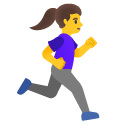
Appearance varies by platform and device. Google Noto, Twemoji, and OpenMoji are open-source.