👩🏻🎤
The Emoji
Woman Singer: Light Skin Tone
U+1F469 U+1F3FB U+200D U+1F3A4 · :woman_singer_light_skin_tone:
Trend 58
Meaning layers
- interpretation
- Used to signal main character energy, performing arts identity, or that someone is feeling themselves and ready to put on a show — literal or metaphorical.
- tiktok usage
- Dropped in comments on vocal covers, karaoke clips, or dramatic lip-sync videos. Also used ironically when someone is being extra or theatrical.
- irony level
- 4 / 10
Platform meanings
- meaning
- Represents singing talent, music performance, or theatrical personal energy; used in duets and covers.
- trend usage
- Frequently used in singing challenge videos, musical POV content, and audition reaction clips.
- hashtags
- #SingerLife#VocalCover#MusicTok#MainCharacterEnergy#PerformingArts
- virality score
- 62 / 100
Cultural meanings
🇺🇸
Western / Gen-Z
Primarily signals artistic identity, main character energy, or ironic theatricality; widely used among young women who identify with music culture or performance arts.
🇵🇰
Pakistan & India
Used to celebrate female singing talent, especially in the context of Bollywood or classical music; can also represent aspiration toward a music career in communities where it is less traditional for women.
🌍
Middle East
Used cautiously in contexts celebrating women in arts; more common among younger, urban users who follow international pop culture and support female musicians.
🌐
Global Neutral
Universally understood as representing a female singer or performer; used to denote music, performance, and artistic expression across most cultures.
🇧🇩
Bangladesh
Emerging usage among youth music communities; associated with aspiring female singers and pop culture fans who follow both local and international music.
🇱🇰
Sri Lanka
Used in the context of local music events, school performances, and cultural celebrations; associated with female performers in both traditional and modern music.
🇨🇳
China
Popular among fans of female C-pop and idol culture; used to represent girl group members, talent show contestants, and aspiring female singers on platforms like Weibo.
🇯🇵
Japan
Strongly associated with idol culture and J-pop; used by fans of female idol groups and solo artists, and by young people aspiring to performance careers.
🇰🇷
South Korea
Deeply tied to K-pop culture; used to represent female idols, trainees, and singers, and widely used in fan communities supporting girl groups.
🇹🇼
Taiwan
Used in music fan communities and among young people who follow Mandopop and K-pop; represents female performing artists and entertainment industry aspirations.
🇭🇰
Hong Kong
Associated with Cantopop and entertainment culture; used to celebrate local and international female singers and performers.
🇵🇭
Philippines
Widely used in a culture that values singing highly; represents local singing competition contestants, OPM artists, and music enthusiasts.
🇮🇩
Indonesia
Used in music fan communities and among young people who aspire to entertainment careers; associated with local pop and dangdut female performers.
🇹🇭
Thailand
Used to represent female pop artists, lakorn (drama) stars who sing, and participants in singing competitions popular in Thai youth culture.
🇻🇳
Vietnam
Associated with V-pop female artists and singing competition culture; used by fans and aspiring musicians on social media.
🇲🇾
Malaysia
Used to celebrate female singers in both local pop and international contexts; common in music fan communities and among creative youth.
🇸🇦
Saudi Arabia
Used more privately or in online spaces where entertainment culture is discussed; represents a shifting cultural conversation around women's participation in public performance.
🇦🇪
UAE
Used freely among the diverse, cosmopolitan population; represents both local and international female artists in a culturally mixed environment.
🇪🇬
Egypt
Associated with the strong tradition of Arabic female singers and musical icons; used to honor both legendary and contemporary female vocalists.
🇹🇷
Turkey
Used in pop music fan communities and to represent Turkey's vibrant female pop music scene; associated with both mainstream and indie female artists.
🇮🇷
Iran
Used more in private or diaspora contexts due to restrictions on female public performance; represents artistic aspiration and cultural identity for many Iranian women.
🇳🇬
Nigeria
Used to celebrate Afrobeats and Afropop female artists; part of a growing online music culture that champions Nigerian female performers.
🇿🇦
South Africa
Represents female performers in Afropop, gospel, and amapiano genres; used in fan communities and to celebrate local female musical talent.
🇬🇧
UK & Ireland
Used broadly for any female singing context — from pub karaoke to professional music careers; associated with a wide range of music genres and casual singing culture.
🇫🇷
France
Represents the artistic and chanson tradition; used by fans of female French pop and world music artists, and by young people in creative performing arts spaces.
🇩🇪
Germany
Used in music fan communities and by people in the performing arts; associated with both mainstream pop and underground music scenes featuring female artists.
🇪🇸
Spain & Italy
Tied to a strong musical culture; used to celebrate female flamenco, pop, and opera performers, and widely understood as a symbol of artistic femininity.
🇧🇷
Brazil
Strongly associated with the vibrant Brazilian music scene including samba, pagode, and pop; used to celebrate local female artists and singing culture.
🇲🇽
Mexico
Associated with female ranchera, norteña, and pop singers; used in music fan communities and to express pride in female Mexican musical talent.
🌎
Latin America
Broadly used across Latin America to represent female musicians in a region with a rich tradition of female vocal artistry across cumbia, salsa, and reggaeton.
🇦🇺
Australia & NZ
Used casually in music and entertainment contexts; associated with singing competitions, live music culture, and female performer identity in both countries.
How its meaning shifted
- 2010
This emoji did not exist yet; female performer concepts were conveyed with generic music notes or microphone symbols.
- 2015
Introduced as part of Unicode 8.0's profession emoji expansion; primarily used literally to denote female singers with no skin tone modifier initially.
- 2020
Light skin tone modifier became widely used; the emoji expanded beyond literal use to signal performative personality, artistic identity, and empowerment, especially on TikTok.
- 2026
Firmly embedded in music creator culture and ironic self-expression; used across platforms to signal main character energy, artistic identity, and occasionally as light sarcasm about theatrical behavior.
See it on every platform
Adjacent emojis
- Often confused with
- woman artistwoman dancingperforming arts
- Can replace
- microphonemusical notestar
Share & embed
Frequently asked
01What does the 👩🏻🎤 Woman Singer: Light Skin Tone emoji mean?
A woman with light skin tone depicted as a singer or rock star, typically shown with a microphone and often styled with a bold outfit or accessories.
02What does 👩🏻🎤 mean on TikTok?
Represents singing talent, music performance, or theatrical personal energy; used in duets and covers.
03What does 👩🏻🎤 mean on WhatsApp?
Sent to compliment someone's singing or to announce you're feeling performative and expressive.
04What does 👩🏻🎤 mean in Gen-Z slang?
Used to signal main character energy, performing arts identity, or that someone is feeling themselves and ready to put on a show — literal or metaphorical.
05Is the 👩🏻🎤 emoji safe to use?
Represents female singing, musical performance, artistic identity, and creative self-expression in nearly all standard contexts.
06What does 👩🏻🎤 mean in texting?
Linked to self-expression and identity assertion; people use this emoji when they feel in their element, creative, and unapologetically themselves, mirroring the psychological concept of flow states during performance.
07What is the shortcode for 👩🏻🎤?
The shortcode for Woman Singer: Light Skin Tone is :woman_singer_light_skin_tone:
08What does 👩🏻🎤 mean in dating?
Can be used flirtatiously to say 'I'll serenade you' or to signal artistic, romantic energy — often dropped after sharing a voice memo or song.
Safety & usage
- Safe meaning
- Represents female singing, musical performance, artistic identity, and creative self-expression in nearly all standard contexts.
- Caution
- Occasionally used passive-aggressively to imply someone is being overly dramatic or seeking attention with their emotional performance.
Generally safe for all audiences and contexts; low risk of misuse. In rare cases may be used mockingly toward someone perceived as theatrical or attention-seeking.
How it looks across platforms
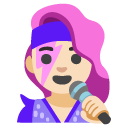


Appearance varies by platform and device. Google Noto, Twemoji, and OpenMoji are open-source.