🚶🏽♀️
The Emoji
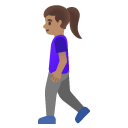
Woman Walking: Medium Skin Tone
U+1F6B6 U+1F3FD U+200D U+2640 U+FE0F · :woman_walking_medium_skin_tone:
Trend 62
Meaning layers
- interpretation
- Used to signal leaving a situation, moving on from drama, or quietly exiting a toxic scenario with elegance. Often implies unbothered energy — 'I'm just walking away from this.'
- tiktok usage
- Appears in POV videos and 'girl walking away from problems' trends, or used in comment sections to indicate someone mentally leaving a conversation.
- irony level
- 5 / 10
Platform meanings
- meaning
- Symbolizes unbothered energy, walking away from negativity, or a solo girl era aesthetic. Used in comment sections to react to drama by signaling exit.
- trend usage
- Used in 'walking away from my situationship' or 'girl walking into her best era' trend formats. Often appears with trending audio like dramatic or empowering soundbites.
- hashtags
- #girlwalk#walkingaway#unbothered#maincharacter#girlera
- virality score
- 65 / 100
Cultural meanings
🇺🇸
Western / Gen-Z
Iconic shorthand for 'I'm out' or 'main character walking away' — embraced fully for its unbothered and empowered feminine connotation. Medium skin tone makes it especially relatable for mixed-race and brown Gen Z users.
🇵🇰
Pakistan & India
Used casually to indicate someone is going for a walk (evening walks are a strong cultural practice), but also adopted by younger users on Instagram and WhatsApp to signal walking away from drama or toxic situations.
🌍
Middle East
Generally interpreted literally as a woman going for a walk; in younger social media contexts, it signals independence and quiet confidence, though public female solo walking can carry social nuance in some areas.
🌐
Global Neutral
Universally understood as a woman walking — a simple, clean mobility emoji that reads as pedestrian movement regardless of cultural context.
🇧🇩
Bangladesh
Primarily used in literal contexts — going for a walk or commuting. Among urban youth, it carries the 'moving on' connotation borrowed from Indian and global social media trends.
🇱🇰
Sri Lanka
Used to indicate physical walking in daily conversations; younger Sri Lankan users on Instagram and TikTok borrow its 'walking away' cultural meaning from global social media.
🇨🇳
China
On WeChat and Douyin, primarily used to indicate going for a walk — a common healthy lifestyle activity. Younger users may use it to signal leaving a group chat or conversation gracefully.
🇯🇵
Japan
Interpreted as polite disengagement or physical movement; on LINE and Twitter Japan, it can signal someone stepping away from a tense conversation without confrontation, aligning with indirect communication norms.
🇰🇷
South Korea
Used on KakaoTalk and Instagram to indicate exercise walks or evening strolls — a popular wellness activity. Also used among younger Koreans to signal 'walking away' from cringe or second-hand embarrassment moments.
🇹🇼
Taiwan
Commonly used to indicate going for a walk in neighborhood or nature settings; Taiwanese youth also use it to signal stepping away from toxic energy in group chats.
🇭🇰
Hong Kong
Used practically to indicate walking or commuting; in more expressive online contexts, younger Hong Kongers use it to signal quiet exits from drama or group chat chaos.
🇵🇭
Philippines
Very popular on Facebook and TikTok to indicate 'I'm moving on' or 'not my problem' — Filipinos have adopted the 'walking away' meme format enthusiastically.
🇮🇩
Indonesia
Commonly used on WhatsApp and TikTok to signal going for a walk or, increasingly, to indicate 'jalan-jalan' (casual strolling/outing culture) and moving on energy among youth.
🇹🇭
Thailand
Used on Line and Instagram for literal walks or fitness context; younger Thai users have adopted the 'unbothered woman walking' meaning from global TikTok trends.
🇻🇳
Vietnam
On Zalo and TikTok, used to indicate a casual walk or outing; Gen Z Vietnamese users use it to signal gracefully exiting drama in a non-confrontational way.
🇲🇾
Malaysia
Popular on WhatsApp and Instagram for both literal walks and 'moving on' symbolism — Malaysian youth use it frequently in the context of leaving toxic situations or relationships.
🇸🇦
Saudi Arabia
Among younger Saudi women, this emoji has taken on an empowering connotation — particularly meaningful given recent social freedoms allowing women to walk, drive, and move more freely in public life.
🇦🇪
UAE
Used across multicultural UAE social media spaces in both literal and symbolic contexts; expat communities use it fluidly with the global 'walking away' meaning.
🇪🇬
Egypt
Used on WhatsApp and TikTok to signal physical movement or, among younger Egyptians, to indicate walking away from a bad situation — often paired with humor.
🇹🇷
Turkey
Common on Instagram and WhatsApp among Turkish youth; the 'I'm done with this' connotation has been adopted alongside its literal walking meaning.
🇮🇷
Iran
Used on Instagram and Telegram (popular platforms) to indicate walks or outdoor movement — among Iranian youth, it quietly signals independence and moving forward.
🇳🇬
Nigeria
Highly popular on WhatsApp and Twitter Nigeria — adopted enthusiastically for the 'walking away from nonsense' meaning, often paired with sharp humor or comebacks.
🇿🇦
South Africa
Used on Instagram, Twitter, and WhatsApp to signal both physical outings and the 'not my problem, I'm leaving' attitude — resonates strongly in South Africa's vibrant meme culture.
🇬🇧
UK & Ireland
Used ironically and humorously across Twitter, Instagram, and WhatsApp — British and Irish users lean into the passive-aggressive 'and I'm walking' humor with deadpan delivery.
🇫🇷
France
Used casually on Instagram and WhatsApp to indicate walks — a beloved French daily activity. Younger users also borrow the global 'walking away' meaning in online discourse.
🇩🇪
Germany
Primarily used in practical contexts — indicating a walk or outdoor activity. In online spaces, younger Germans use it to signal stepping away from unproductive arguments.
🇪🇸
Spain & Italy
Used enthusiastically to indicate walks, evening paseos, or outdoor culture — both Spain and Italy have strong walking cultural traditions. Youth also use it for 'I'm out' energy.
🇧🇷
Brazil
Very popular on Instagram and WhatsApp — Brazilians use it with high expressiveness for both walks and the 'I'm unbothered, I'm walking away' meme format. Highly relatable in the context of moving on from drama.
🇲🇽
Mexico
Used on WhatsApp and TikTok to indicate walks or signal 'voy a caminar' (I'm going for a walk). Younger Mexican users have fully adopted the 'walking away from toxicity' meaning.
🌎
Latin America
Across Latin America, used to indicate physical walks, outdoor activities, and among youth, to signal graceful exits from drama — a universally relatable expression of moving on.
🇦🇺
Australia & NZ
Used casually across Instagram, WhatsApp, and TikTok to indicate walks or hikes — both countries have strong outdoor culture. Also used with dry humor to signal leaving a situation.
How its meaning shifted
- 2010
Emoji did not yet exist in this form; the base walking person emoji was in early Unicode but lacked gender and skin tone modifiers — this specific variant was unavailable.
- 2015
Introduced as part of the Unicode 8.0 skin tone modifier rollout — initially used almost exclusively for literal walking representation and diversity inclusion in digital conversations.
- 2020
Gained momentum in 'walking away' meme culture and 'main character' energy trends on TikTok and Instagram; became a staple in self-empowerment and moving-on content.
- 2026
Fully embedded in the cultural lexicon of unbothered femininity, boundary-setting, and solo girl era content — used fluidly across all major platforms in both literal and deeply symbolic contexts.
See it on every platform
Compare with
Adjacent emojis
Share & embed
Frequently asked
01What does the 🚶🏽♀️ Woman Walking: Medium Skin Tone emoji mean?
A woman walking depicted with medium skin tone (Fitzpatrick scale type IV), representing a female pedestrian in motion on two legs.
02What does 🚶🏽♀️ mean on TikTok?
Symbolizes unbothered energy, walking away from negativity, or a solo girl era aesthetic. Used in comment sections to react to drama by signaling exit.
03What does 🚶🏽♀️ mean on WhatsApp?
Indicates someone is leaving, stepping out, going for a walk, or emotionally exiting a conversation.
04What does 🚶🏽♀️ mean in Gen-Z slang?
Used to signal leaving a situation, moving on from drama, or quietly exiting a toxic scenario with elegance. Often implies unbothered energy — 'I'm just walking away from this.'
05Is the 🚶🏽♀️ emoji safe to use?
A woman walking — used for fitness, mobility, empowerment, and leaving situations. Clean, neutral, and positive in all standard contexts.
06What does 🚶🏽♀️ mean in texting?
Walking symbolizes forward momentum and autonomy. For women especially, this emoji can evoke a sense of self-directed purpose, boundary-setting, and quiet empowerment — a subtle form of emotional self-regulation expressed visually.
07What is the shortcode for 🚶🏽♀️?
The shortcode for Woman Walking: Medium Skin Tone is :woman_walking_medium_skin_tone:
08What does 🚶🏽♀️ mean in dating?
Rarely flirtatious on its own; sometimes used to play hard to get — 'catch me if you can' energy, or signaling disinterest in a low-confrontation way.
Safety & usage
- Safe meaning
- A woman walking — used for fitness, mobility, empowerment, and leaving situations. Clean, neutral, and positive in all standard contexts.
- Caution
- Extremely rare toxic usage — could theoretically be used to mock someone being told to 'walk away' dismissively, but this is not a common pattern.
No significant warnings. This emoji is one of the safest in the pedestrian/person category. Not associated with harassment, hate, or NSFW content.
How it looks across platforms
Appearance varies by platform and device. Google Noto, Twemoji, and OpenMoji are open-source.