🧕🏻
The Emoji
Woman With Headscarf: Light Skin Tone
U+1F9D5 U+1F3FB · :woman_with_headscarf_light_skin_tone:
Trend 58
Meaning layers
- interpretation
- Used to represent Muslim identity, hijabi culture, modest fashion, or simply to represent oneself or a friend who wears a headscarf. Also used in solidarity or allyship contexts.
- tiktok usage
- Appears in hijabi lifestyle content, modest fashion videos, Muslim POV trends, and 'being a hijabi girl' storytelling formats.
- irony level
- 2 / 10
Platform meanings
- meaning
- Represents hijabi identity, Muslim lifestyle content, and modest fashion culture.
- trend usage
- Used in hijabi POV videos, 'day in the life of a Muslim girl' content, modest fashion hauls, and Ramadan content series.
- hashtags
- #HijabiFashion#ModestStyle#MuslimGirl#HijabiTikTok#RepresentationMatters
- virality score
- 62 / 100
Cultural meanings
🇺🇸
Western / Gen-Z
Seen as a symbol of representation and diversity; hijabi Gen Z creators have normalized it as a cool, fashionable identity marker rather than just a religious symbol.
🇵🇰
Pakistan & India
Deeply meaningful for Muslim women in the subcontinent; commonly used by hijabi women on social media to represent themselves and their faith with pride.
🌍
Middle East
A natural and everyday self-representation emoji for millions of women; carries no special novelty and is used casually in daily digital communication.
🌐
Global Neutral
Universally recognized as representing a woman wearing a headscarf; understood broadly as a symbol of Muslim female identity and modest dress.
🇧🇩
Bangladesh
Widely used among Bangladeshi Muslim women online as a self-identifier; especially popular among younger hijabi women on Facebook and TikTok.
🇱🇰
Sri Lanka
Used primarily by Sri Lanka's Muslim minority community women to represent their identity; gains particular resonance in post-conflict reconciliation and diversity conversations.
🇨🇳
China
Represents Muslim Uyghur and Hui women in contexts where their identity is discussed; carries political sensitivity given ongoing human rights debates.
🇯🇵
Japan
Seen as an exotic or educational symbol representing Islamic culture; used in multicultural or diversity contexts by the small Muslim community in Japan.
🇰🇷
South Korea
Relatively uncommon; used in multicultural education content and by the small Muslim community, sometimes appearing in Korean social media when discussing global diversity.
🇹🇼
Taiwan
Used in multicultural awareness content and by Muslim Southeast Asian migrant workers; represents religious diversity in an increasingly pluralistic society.
🇭🇰
Hong Kong
Used by the Muslim minority community and in diversity discussions; relatively rare but recognized as representing Islamic identity.
🇵🇭
Philippines
Significant for the Bangsamoro Muslim population in Mindanao; used proudly by Filipino Muslim women as a representation of their identity and faith.
🇮🇩
Indonesia
Extremely common and relatable given Indonesia's massive Muslim-majority population; hijabi culture is mainstream and this emoji is used casually and frequently.
🇹🇭
Thailand
Used by Thai Muslim women, particularly from the southern provinces; represents a meaningful but minority cultural identity in the broader Thai digital space.
🇻🇳
Vietnam
Rare in mainstream usage; primarily used by Vietnam's small Muslim Cham community and in international cultural exchange contexts.
🇲🇾
Malaysia
Very common and celebrated given Malaysia's Muslim-majority status; hijabi identity is mainstream and this emoji is used freely across all social platforms.
🇸🇦
Saudi Arabia
Used casually and frequently as standard self-representation; in Saudi Arabia hijab is deeply embedded in culture and this emoji requires no special explanation.
🇦🇪
UAE
Widely used in the cosmopolitan UAE context by both Emirati and expat Muslim women; also appears in modest fashion and Islamic lifestyle content targeting the Gulf market.
🇪🇬
Egypt
Common self-representation emoji for Egyptian Muslim women, where hijab is widely worn; used across Facebook, WhatsApp, and TikTok in everyday communication.
🇹🇷
Turkey
Carries political nuance due to Turkey's history of hijab bans and AKP-era politics; used proudly by conservative Muslim women and debated in secular vs. religious online discourse.
🇮🇷
Iran
Carries significant political weight; used both by women expressing faith and by activists discussing mandatory hijab laws and women's rights protests in Iran.
🇳🇬
Nigeria
Used commonly by Northern Nigerian Muslim women and the broader West African Muslim community; represents faith, cultural pride, and regional identity.
🇿🇦
South Africa
Used by South Africa's Cape Malay and broader Muslim community women; appears in modest fashion and Islamic community content as a positive identity marker.
🇬🇧
UK & Ireland
Used by British and Irish Muslim women as a representation emoji; gains visibility during debates about religious dress in schools and public spaces.
🇫🇷
France
Particularly politically charged given France's strict secularism (laïcité) laws banning headscarves in schools; used both by Muslim women asserting identity and in political debates online.
🇩🇪
Germany
Used by Germany's large Turkish-German and Arab-German Muslim communities; appears in integration debates, identity politics discussions, and everyday Muslim community content.
🇪🇸
Spain & Italy
Used by Muslim communities in both countries; gains visibility in immigration and multiculturalism discussions, and among growing modest fashion communities.
🇧🇷
Brazil
Used within Brazil's small but growing Muslim community; represents cultural diversity and appears in Islamic community groups and modest fashion content.
🇲🇽
Mexico
Rare in mainstream usage; used within Mexico's tiny Muslim community and in educational content about global religious diversity.
🌎
Latin America
Used across Latin America's small Muslim communities and in multicultural awareness content; also appears in discussions about Islam in the Americas.
🇦🇺
Australia & NZ
Used by Australian and New Zealand Muslim women as everyday self-representation; appears in multicultural community spaces and modest fashion communities in both countries.
How its meaning shifted
- 2010
This emoji did not exist in 2010; hijabi women had no dedicated representation in standard emoji sets, leading to community advocacy campaigns.
- 2015
Still absent from the Unicode standard; Muslim women and advocacy groups were actively campaigning for headscarf emoji representation, with notable petitions gaining media coverage.
- 2020
Three years after its 2017 introduction, it was widely adopted by hijabi social media users worldwide; became standard in Muslim influencer content and Islamic community spaces.
- 2026
Now firmly embedded as a routine self-representation tool for Muslim women globally; used across all major platforms without controversy in most contexts and central to hijabi creator culture.
See it on every platform
Compare with
Adjacent emojis
- Opposite
- woman blonde hairbikinino entry
- Often confused with
- person in manual wheelchairwoman with headbandwoman health worker
- Can replace
- crescent moonmosquefolded hands
Share & embed
Frequently asked
01What does the 🧕🏻 Woman With Headscarf: Light Skin Tone emoji mean?
A woman wearing a hijab or headscarf, displayed with a light skin tone modifier. Introduced in Unicode 10.0 (2017) to represent Muslim women and others who wear headscarves.
02What does 🧕🏻 mean on TikTok?
Represents hijabi identity, Muslim lifestyle content, and modest fashion culture.
03What does 🧕🏻 mean on WhatsApp?
Used by hijabi women to represent themselves in conversation, or by friends referring to a hijabi person in the group.
04What does 🧕🏻 mean in Gen-Z slang?
Used to represent Muslim identity, hijabi culture, modest fashion, or simply to represent oneself or a friend who wears a headscarf. Also used in solidarity or allyship contexts.
05Is the 🧕🏻 emoji safe to use?
A positive representation emoji for Muslim women and others who wear headscarves; used for identity, cultural pride, modest fashion, and community belonging.
06What does 🧕🏻 mean in texting?
For many users this emoji carries deep personal and religious significance, functioning as a marker of identity and self-representation. It can evoke feelings of inclusion when used respectfully or discomfort when used reductively.
07What is the shortcode for 🧕🏻?
The shortcode for Woman With Headscarf: Light Skin Tone is :woman_with_headscarf_light_skin_tone:
08What does 🧕🏻 mean in dating?
Rarely used flirtatiously; more commonly signals religious observance which may communicate values-based compatibility to a potential partner.
Safety & usage
- Safe meaning
- A positive representation emoji for Muslim women and others who wear headscarves; used for identity, cultural pride, modest fashion, and community belonging.
- Caution
- Can be used mockingly or in Islamophobic contexts to demean or caricature Muslim women; also weaponized in anti-immigration rhetoric in some European online spaces.
Monitor for use in combination with derogatory language or in contexts designed to mock, stereotype, or dehumanize Muslim women. The emoji itself is safe but context is critical.
How it looks across platforms
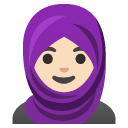


Appearance varies by platform and device. Google Noto, Twemoji, and OpenMoji are open-source.