👭🏾
The Emoji
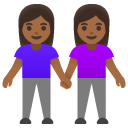
Women Holding Hands: Medium-dark Skin Tone
U+1F46D U+1F3FE · :women_holding_hands_mediumdark_skin_tone:
Trend 68
Meaning layers
- interpretation
- Used to express female friendship ('girls supporting girls'), LGBTQ+ relationships, solidarity between women, or unbreakable bestie bonds. Often paired with affirmations of WLW (women loving women) identity.
- tiktok usage
- Appears in friendship montages, WLW pride content, 'bestie' culture videos, and POC queer community content. Frequently used in captions celebrating girl friendships or queer relationships.
- irony level
- 2 / 10
Platform meanings
- meaning
- Symbolizes WLW relationships, Black and Brown girl friendships, sapphic identity, and queer POC community pride.
- trend usage
- Used in duets, friendship reveal videos, Pride Month content, and 'soft life' aesthetic videos featuring women of color supporting each other.
- hashtags
- #WLW#BlackGirlMagic#SapphicTikTok#GirlsWhoLikeGirls#BestieVibes
- virality score
- 72 / 100
Cultural meanings
🇺🇸
Western / Gen-Z
Widely recognized as a symbol of WLW relationships and Black/Brown female solidarity; used freely by LGBTQ+ Gen Z users of color as an identity marker and by all young women to celebrate female friendship.
🇵🇰
Pakistan & India
Primarily interpreted as a symbol of close female friendship or sisterhood rather than a romantic symbol; LGBTQ+ meaning is understood in urban, progressive circles but often avoided publicly due to social and legal stigma.
🌍
Middle East
Generally understood as female friendship given cultural norms around same-sex public affection; queer meaning is recognized but rarely expressed openly due to legal and social restrictions in most countries.
🌐
Global Neutral
Broadly understood as female companionship, friendship, or partnership with a melanin-positive representation; the romantic or LGBTQ+ layer is decoded based on individual context.
🇧🇩
Bangladesh
Interpreted almost exclusively as a symbol of close female friendship or sisterhood; queer connotations are rarely acknowledged in mainstream usage due to cultural and legal context.
🇱🇰
Sri Lanka
Used to express female friendship and solidarity; LGBTQ+ interpretation exists in progressive urban communities but is not mainstream given the social climate.
🇨🇳
China
Understood primarily as close female friendship ('闺蜜' energy); queer interpretation is niche and mostly limited to LGBTQ+ online communities given broader social restrictions.
🇯🇵
Japan
Evokes 'yuri' (female-female romantic/friendly) culture in anime and manga fan communities; mainstream interpretation leans toward close female friendship with queer subtext understood by informed audiences.
🇰🇷
South Korea
Associated with close female friendship or 'girl crush' culture; LGBTQ+ meaning is recognized in queer communities but is not widely expressed openly in mainstream Korean social media.
🇹🇼
Taiwan
One of Asia's most LGBTQ+-affirming cultures; this emoji is openly used to represent WLW relationships and female solidarity, with both interpretations celebrated in mainstream and queer circles.
🇭🇰
Hong Kong
Used to represent close female friendship and, in progressive circles, WLW relationships; LGBTQ+ usage has become more visible especially among younger digital natives.
🇵🇭
Philippines
Interpreted as female friendship or sisterhood primarily; LGBTQ+ usage is present and growing, especially among younger Filipinos active on TikTok and Twitter/X.
🇮🇩
Indonesia
Predominantly seen as female friendship symbolism; queer interpretation is known in LGBTQ+ underground communities but is not publicly expressed due to social and emerging legal pressures.
🇹🇭
Thailand
Understood in both friendship and LGBTQ+ contexts given Thailand's relatively visible queer culture; 'Tom and Dee' (Thai lesbian) communities may use this to represent relationships.
🇻🇳
Vietnam
Primarily interpreted as close female friendship; LGBTQ+ awareness is growing among urban youth but open queer expression via emojis remains cautious in mainstream spaces.
🇲🇾
Malaysia
Generally interpreted as female friendship due to legal and social constraints on LGBTQ+ expression; queer interpretation exists covertly in online safe spaces.
🇸🇦
Saudi Arabia
Strictly interpreted as female friendship or sisterhood in line with local social norms; any romantic or LGBTQ+ association is avoided given the legal and cultural environment.
🇦🇪
UAE
Used to express female friendship and professional female solidarity; LGBTQ+ meaning is understood by internationally connected users but not expressed openly in public digital spaces.
🇪🇬
Egypt
Understood as close female friendship or sisterly bond; LGBTQ+ connotations are not publicly acknowledged given strong social and legal restrictions.
🇹🇷
Turkey
Interpreted as female friendship in mainstream usage; LGBTQ+ communities in urban areas like Istanbul may use it to signal WLW identity privately or in safe online spaces.
🇮🇷
Iran
Used exclusively as a symbol of female friendship or sisterhood in public-facing communication; any LGBTQ+ interpretation is strictly private due to legal and social risk.
🇳🇬
Nigeria
Primarily seen as celebrating female friendship and Black sisterhood; LGBTQ+ meaning is known but rarely expressed openly given legal restrictions and social norms.
🇿🇦
South Africa
One of Africa's most LGBTQ+-affirming nations; this emoji is used both for Black female friendship/solidarity and openly for WLW relationships, particularly in Cape Town and Johannesburg queer communities.
🇬🇧
UK & Ireland
Widely used to represent WLW relationships and female friendship, with high awareness of both interpretations; frequently seen in Pride Month content and everyday female friendship expression.
🇫🇷
France
Used to express female friendship and WLW relationships in a relatively open cultural context; the skin tone specificity is noted positively as inclusive representation in diversity conversations.
🇩🇪
Germany
Recognized as a symbol of female solidarity and WLW partnerships; used in inclusive, diversity-forward digital spaces and LGBTQ+ community content with a matter-of-fact attitude.
🇪🇸
Spain & Italy
Understood as female friendship or WLW romance; southern European cultures tend to express physical female closeness openly, so the emoji can signal both without strong distinction in casual contexts.
🇧🇷
Brazil
Celebrated in both female friendship and WLW romance contexts; Brazil's large and visible LGBTQ+ community, particularly among Afro-Brazilian women, embraces this emoji enthusiastically.
🇲🇽
Mexico
Used to express close female friendship ('amigas') and, in LGBTQ+-aware circles, WLW relationships; Latinx queer women of color actively use this to represent intersectional identity.
🌎
Latin America
Broadly used across Latin America for female friendship and solidarity; LGBTQ+ usage varies by country but is most visible in Argentina, Chile, and Colombia where queer rights are more advanced.
🇦🇺
Australia & NZ
Freely used for both female friendship and WLW relationships in two of the world's most LGBTQ+-affirming countries; particularly prominent in Indigenous and Māori women's community digital spaces.
How its meaning shifted
- 2010
This specific emoji did not exist; the concept of same-sex couple emojis and skin tone modifiers had not yet been implemented in Unicode, limiting representation entirely.
- 2015
Skin tone modifiers were newly introduced to Unicode; women holding hands emoji existed in a basic form but medium-dark skin tone combinations were not yet widely supported or used.
- 2020
Gained significant traction during the Black Lives Matter movement and COVID-era digital connection surge; used to celebrate Black and Brown female solidarity alongside a growing WLW representation push.
- 2026
Established as a standard identity and affirmation emoji for WLW users of color; integrated naturally into queer POC digital culture across all major platforms with consistent recognition across demographics.
See it on every platform
Compare with
Adjacent emojis
Share & embed
Frequently asked
01What does the 👭🏾 Women Holding Hands: Medium-dark Skin Tone emoji mean?
Two women holding hands with medium-dark skin tone modifier applied to both figures, representing female friendship, partnership, or romantic relationship between women.
02What does 👭🏾 mean on TikTok?
Symbolizes WLW relationships, Black and Brown girl friendships, sapphic identity, and queer POC community pride.
03What does 👭🏾 mean on WhatsApp?
Sent between close female friends to affirm their bond, used in group chats to signal girl power or to celebrate a friend's relationship.
04What does 👭🏾 mean in Gen-Z slang?
Used to express female friendship ('girls supporting girls'), LGBTQ+ relationships, solidarity between women, or unbreakable bestie bonds. Often paired with affirmations of WLW (women loving women) identity.
05Is the 👭🏾 emoji safe to use?
Represents female friendship, sisterhood, WLW romantic relationships, and intersectional queer identity with melanin-positive representation.
06What does 👭🏾 mean in texting?
This emoji activates feelings of belonging and affirmation, particularly for Black and Brown women in LGBTQ+ communities, offering a rare sense of visible, intersectional representation in digital communication.
07What is the shortcode for 👭🏾?
The shortcode for Women Holding Hands: Medium-dark Skin Tone is :women_holding_hands_mediumdark_skin_tone:
08What does 👭🏾 mean in dating?
Used by WLW individuals to subtly or openly signal romantic interest or to indicate they are in a relationship with a woman. Can be a soft flirt when sent to a crush by a woman.
Safety & usage
- Safe meaning
- Represents female friendship, sisterhood, WLW romantic relationships, and intersectional queer identity with melanin-positive representation.
- Caution
- Extremely rare misuse; could theoretically be used dismissively or mockingly toward WLW relationships of color in hostile contexts.
Generally very safe and positive; in certain culturally conservative digital spaces, using this emoji openly may attract unwanted negative responses directed at LGBTQ+ users of color.
How it looks across platforms


Appearance varies by platform and device. Google Noto, Twemoji, and OpenMoji are open-source.