👩🏾🤝👩🏽
The Emoji
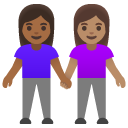
Women Holding Hands: Medium-dark Skin Tone, Medium Skin Tone
U+1F469 U+1F3FE U+200D U+1F91D U+200D U+1F469 U+1F3FD · :women_holding_hands_mediumdark_skin_tone_medium_skin_tone:
Trend 62
Meaning layers
- interpretation
- Used to express female friendship, girl gang energy, WLW (women-loving-women) relationships, or sapphic solidarity. Also used to hype up a best friend or celebrate queer love.
- tiktok usage
- Appears in 'bestie' content, sapphic thirst traps, friendship appreciation videos, and 'my girlfriend and I' POV content. Often paired with soft girl or cottagecore aesthetics.
- irony level
- 2 / 10
Platform meanings
- meaning
- Represents female friendship, sapphic couples, or girl squad moments. Frequently used in 'my bestie and I' or 'girlfriend reveal' content.
- trend usage
- Used in trending sounds celebrating girl love, pride month compilations, and 'things only WLW understand' videos.
- hashtags
- #girlsupportgirls#wlw#sapphic#bestiegoals#girlfriendcheck
- virality score
- 68 / 100
Cultural meanings
🇺🇸
Western / Gen-Z
Widely used and understood as both platonic female friendship and WLW romantic expression; celebrated especially in LGBTQ+ spaces and social media.
🇵🇰
Pakistan & India
Primarily interpreted as close female friendship (common in South Asian culture where same-sex physical affection between women is more normalized platonically); romantic subtext is less commonly assumed publicly.
🌍
Middle East
Generally read as female friendship or sisterhood; romantic WLW interpretation is largely avoided in public digital spaces due to social and legal contexts.
🌐
Global Neutral
Universally readable as two women in a positive, close relationship — whether friendship or romance depends on context.
🇧🇩
Bangladesh
Interpreted as female friendship or sisterhood; hand-holding between women is culturally normal and does not carry strong romantic connotation publicly.
🇱🇰
Sri Lanka
Used to represent female friendship or camaraderie; same-gender romantic readings are less common in mainstream usage.
🇨🇳
China
Primarily seen as a symbol of close female friendship (闺蜜); romantic connotation exists but is less openly expressed on mainstream Chinese platforms.
🇯🇵
Japan
Used in the context of close female friendships or yuri (GL) shipping culture in anime/manga fan communities; romantically used more in niche queer spaces.
🇰🇷
South Korea
Common in representations of female friendship (우정); queer romantic use is growing but still largely in underground or progressive digital spaces.
🇹🇼
Taiwan
Used openly to represent both female friendship and WLW romantic relationships, given Taiwan's more progressive stance on LGBTQ+ rights in the region.
🇭🇰
Hong Kong
Used in female friendship contexts and increasingly in queer digital spaces following growing LGBTQ+ visibility.
🇵🇭
Philippines
Seen as a sign of close female friendship; WLW romantic use is present especially among younger, urban, and digitally active communities.
🇮🇩
Indonesia
Predominantly interpreted as female friendship; romantic connotation is largely avoided due to conservative social norms.
🇹🇭
Thailand
Used for female friendship and also in the context of lesbian (Tom-Dee) relationships, which have relatively more visibility in Thai popular culture.
🇻🇳
Vietnam
Mainly interpreted as close female friendship; romantic use exists in younger and more progressive online communities.
🇲🇾
Malaysia
Read as female friendship in mainstream contexts; WLW romantic use is rare publicly due to conservative social and legal environment.
🇸🇦
Saudi Arabia
Interpreted strictly as female friendship or sisterly bond; any romantic connotation is avoided in public digital communication.
🇦🇪
UAE
Used to represent female friendship; openly queer interpretations are rare in public-facing content given the cultural and legal context.
🇪🇬
Egypt
Read as female friendship or sisterhood; romantic WLW interpretation is not widely expressed in public social media use.
🇹🇷
Turkey
Used for female friendship and solidarity; WLW romantic use is present in progressive and LGBTQ+-friendly digital communities.
🇮🇷
Iran
Interpreted as female friendship, which is culturally normative; any romantic or queer reading is kept to very private or underground spaces.
🇳🇬
Nigeria
Primarily read as close female friendship; LGBTQ+ romantic interpretation is rare in public due to strong social and legal constraints.
🇿🇦
South Africa
Used for both female friendship and WLW romantic relationships; South Africa's constitutional LGBTQ+ protections make queer readings more visible than elsewhere on the continent.
🇬🇧
UK & Ireland
Widely used for female friendship and queer relationships; very familiar to mainstream audiences given strong LGBTQ+ visibility in UK and Irish culture.
🇫🇷
France
Used for female solidarity, friendship, and queer relationships; France's secular and relatively liberal culture makes both readings common.
🇩🇪
Germany
Used in contexts of female friendship and queer love; Germany's progressive stance on LGBTQ+ rights means both interpretations are mainstream.
🇪🇸
Spain & Italy
In Spain widely read as female friendship or queer love given strong LGBTQ+ culture; in Italy primarily friendship with growing queer usage in urban spaces.
🇧🇷
Brazil
Very popular for expressing female friendship and WLW love; Brazil's vibrant LGBTQ+ culture, especially in urban areas, makes both readings extremely common.
🇲🇽
Mexico
Used for female friendship and sapphic relationships; increasingly embraced in queer spaces, especially in younger and urban Mexican digital communities.
🌎
Latin America
Across Latin America, primarily female friendship; WLW romantic use is growing alongside increasing LGBTQ+ visibility but varies significantly by country.
🇦🇺
Australia & NZ
Used openly for female friendship and WLW romantic relationships; both countries' progressive LGBTQ+ cultures make all interpretations mainstream and celebrated.
How its meaning shifted
- 2010
Emoji representing two women holding hands did not yet exist in this form; generic hand-holding or couple emojis were used without skin tone options.
- 2015
Basic couple/friends holding hands emojis existed but without diverse skin tone combinations; skin tone modifiers were just being introduced to the emoji standard.
- 2020
Multi-skin-tone combinations became available and widely used; the emoji gained traction in LGBTQ+ communities, female friendship content, and diversity-conscious social media posts.
- 2026
Mainstream across all platforms for female friendship and WLW expression; deeply embedded in queer digital culture, used casually in everyday communication without needing explanation.
See it on every platform
Compare with
Adjacent emojis
- Often confused with
- handshakepeople holding handshugging face
Share & embed
Frequently asked
01What does the 👩🏾🤝👩🏽 Women Holding Hands: Medium-dark Skin Tone, Medium Skin Tone emoji mean?
Two women holding hands, with the left woman having a medium-dark skin tone and the right woman having a medium skin tone. Represents female friendship, solidarity, partnership, or romantic relationships between women.
02What does 👩🏾🤝👩🏽 mean on TikTok?
Represents female friendship, sapphic couples, or girl squad moments. Frequently used in 'my bestie and I' or 'girlfriend reveal' content.
03What does 👩🏾🤝👩🏽 mean on WhatsApp?
Sent between close female friends to express affection, solidarity, or 'we're a team' energy. Also used by WLW couples as a shorthand for 'us'.
04What does 👩🏾🤝👩🏽 mean in Gen-Z slang?
Used to express female friendship, girl gang energy, WLW (women-loving-women) relationships, or sapphic solidarity. Also used to hype up a best friend or celebrate queer love.
05Is the 👩🏾🤝👩🏽 emoji safe to use?
A wholesome emoji representing female friendship, solidarity, or romantic love between women. Universally positive in intent.
06What does 👩🏾🤝👩🏽 mean in texting?
Evokes feelings of safety, mutual support, and emotional closeness. Psychologically linked to bonding and acceptance, especially resonant in queer communities as a symbol of visible, affirmed love.
07What is the shortcode for 👩🏾🤝👩🏽?
The shortcode for Women Holding Hands: Medium-dark Skin Tone, Medium Skin Tone is :women_holding_hands_mediumdark_skin_tone_medium_skin_tone:
08What does 👩🏾🤝👩🏽 mean in dating?
Used by women to signal romantic interest in other women, or to flirt subtly within WLW spaces. Can be dropped in a DM to hint at sapphic feelings.
Safety & usage
- Safe meaning
- A wholesome emoji representing female friendship, solidarity, or romantic love between women. Universally positive in intent.
- Caution
- Rarely misused; occasionally deployed sarcastically to mock performative female friendships or used to bait engagement in culture-war contexts.
In regions where LGBTQ+ expression is criminalized or heavily stigmatized, using this emoji with romantic intent in public-facing posts could carry personal risk. Always be mindful of your audience and platform context.
How it looks across platforms


Appearance varies by platform and device. Google Noto, Twemoji, and OpenMoji are open-source.