👩🏽🤝👩🏿
The Emoji
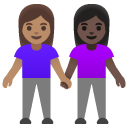
Women Holding Hands: Medium Skin Tone, Dark Skin Tone
U+1F469 U+1F3FD U+200D U+1F91D U+200D U+1F469 U+1F3FF · :women_holding_hands_medium_skin_tone_dark_skin_tone:
Trend 58
Meaning layers
- interpretation
- Used to celebrate female friendships, WLW (women loving women) relationships, and interracial solidarity. Often posted as a symbol of 'bestie energy' or queer pride between women of different backgrounds.
- tiktok usage
- Appears in videos celebrating diverse female friendships, sapphic couples, or interracial relationship content. Often paired with trending audio about self-love, friendship, or pride.
- irony level
- 1 / 10
Platform meanings
- meaning
- Represents female solidarity, queer love, and interracial friendship. Often signals WLW content or diverse female bonding.
- trend usage
- Used in Pride Month content, 'bestie check' videos, interracial couple reveals, and WLW storytimes. Frequently appears in text overlays about friendship and love.
- hashtags
- #WLW#GirlsWhoLikeGirls#InterracialCouple#Besties#PrideMonth
- virality score
- 62 / 100
Cultural meanings
🇺🇸
Western / Gen-Z
Widely used and understood as a symbol of WLW relationships or diverse female friendship; celebrated in queer and progressive spaces with minimal controversy.
🇵🇰
Pakistan & India
Most commonly interpreted as close female friendship rather than romantic partnership due to cultural norms; the skin tone combination may be noted as representing South Asian and darker-skinned South Asian women together.
🌍
Middle East
Generally interpreted as platonic female friendship; romantic interpretation is less common due to regional attitudes toward same-sex relationships, though younger, online-connected users may understand the queer reading.
🌐
Global Neutral
Universally readable as female friendship or partnership with a diversity emphasis; the clearest cross-cultural reading is two women from different backgrounds sharing a bond.
🇧🇩
Bangladesh
Interpreted as a symbol of close female friendship; the diversity aspect (different skin tones) may be noted as representing solidarity across different communities.
🇱🇰
Sri Lanka
Read primarily as female friendship or sisterhood, with the different skin tones potentially representing diverse ethnic communities within or across South Asia.
🇨🇳
China
Interpreted mainly as close female friendship or 'sisters'; queer reading is less prominent due to platform restrictions and cultural context, though younger users on international platforms may understand it.
🇯🇵
Japan
Often read as close female friendship or 'yuri' (female-female affection) in online spaces; the skin tone diversity adds a global or inclusive dimension not always culturally prominent in Japan.
🇰🇷
South Korea
Interpreted as close female friendship or, among younger K-pop and queer-aware audiences, as WLW affection; the diverse skin tones may be less culturally significant given Korea's relatively homogeneous demographic context.
🇹🇼
Taiwan
In Taiwan's relatively LGBTQ+-progressive environment, this emoji is understood as either close female friendship or a same-sex relationship, with the diverse skin tones appreciated as representing inclusivity.
🇭🇰
Hong Kong
Read as female friendship or a queer relationship depending on the user's community; diversity of skin tones is appreciated in the internationally connected Hong Kong context.
🇵🇭
Philippines
Widely used for close female friendship ('bestie' culture is strong); the WLW reading is understood by younger Filipinos, and the diverse skin tones may reflect the country's varied ethnic complexions.
🇮🇩
Indonesia
Primarily interpreted as close female friendship; the romantic interpretation is less common in mainstream use due to cultural and religious context, though online-savvy youth may understand its queer resonance.
🇹🇭
Thailand
In Thailand's relatively LGBTQ+-tolerant culture, especially among youth, this emoji can represent both close female friendship and queer female relationships; skin tone diversity resonates in a country with varied skin complexions.
🇻🇳
Vietnam
Mainly interpreted as close female friendship; younger, internationally connected Vietnamese users may recognize the WLW context, while the skin tone combination may represent diverse Southeast Asian backgrounds.
🇲🇾
Malaysia
Read primarily as female friendship; the queer interpretation is less openly used due to legal and cultural context, though the emoji is still used to celebrate diverse female bonds.
🇸🇦
Saudi Arabia
Interpreted as female friendship or sisterhood; same-sex romantic reading is not commonly expressed publicly, though the emoji may be used privately among LGBTQ+ individuals online.
🇦🇪
UAE
Similar to Saudi Arabia — primarily read as female friendship; the diversity of skin tones may be appreciated in the UAE's multicultural environment, representing women from different nationalities bonding.
🇪🇬
Egypt
Used to express female friendship and solidarity; romantic interpretation between women is rarely expressed publicly, but the emoji is popular for celebrating close female bonds.
🇹🇷
Turkey
Interpreted as close female friendship by most users; younger, more progressive Turks may use it to signal queer affirmation, while the diverse skin tones represent cross-cultural solidarity.
🇮🇷
Iran
Used discreetly in private chats to represent female friendship; in LGBTQ+ spaces accessed via VPN, it may carry queer meaning, but public romantic interpretation is avoided.
🇳🇬
Nigeria
Mostly read as close female friendship or sisterhood; queer interpretation is less openly expressed due to cultural and legal context, but the emoji celebrates female bonds across Nigeria's diverse ethnic groups.
🇿🇦
South Africa
In South Africa's legally LGBTQ+-affirming environment, this emoji is used both for diverse female friendship and WLW relationships; the diverse skin tones resonate strongly in the Rainbow Nation context.
🇬🇧
UK & Ireland
Widely understood as both close female friendship and WLW relationships; the interracial skin tone combination is celebrated in multicultural British and Irish contexts.
🇫🇷
France
Used to represent female friendship or a queer female relationship; France's relatively secular and progressive culture means both readings are socially accepted, and the diversity of skin tones reflects France's multicultural population.
🇩🇪
Germany
Interpreted as female solidarity, diverse friendship, or a WLW relationship; Germany's strong DEI culture means the diverse skin tones are positively recognized as a representation of inclusion.
🇪🇸
Spain & Italy
Used for close female friendship or queer relationships; both Spain (highly progressive on LGBTQ+ issues) and Italy (more traditional but with growing acceptance) receive this emoji differently depending on generational context.
🇧🇷
Brazil
Widely used to celebrate female friendship, WLW relationships, and racial diversity — all culturally resonant themes in Brazil; the diverse skin tones reflect Brazil's multiracial society.
🇲🇽
Mexico
Used primarily for close female friendship; queer reading is growing especially among younger urban Mexicans, and the skin tone diversity resonates in a country with varied Indigenous, mestizo, and Afro-Mexican heritage.
🌎
Latin America
Broadly used to celebrate female friendship and sisterhood; queer interpretation is increasingly recognized among youth, while the skin tone diversity reflects the region's broad racial diversity.
🇦🇺
Australia & NZ
Understood as both diverse female friendship and WLW relationships; both Australia and New Zealand have progressive LGBTQ+ cultures, and the diverse skin tones are celebrated in their multicultural societies.
How its meaning shifted
- 2010
This specific emoji did not exist in 2010; general couple or people-holding-hands emojis were yellow/neutral and lacked skin tone or gender diversity options.
- 2015
Basic holding-hands emojis began gaining skin tone modifiers; same-sex couple representation was emerging but interracial combinations with multiple skin tones were not yet available.
- 2020
With Unicode's expanded ZWJ sequences enabling multi-skin-tone holding-hands combinations, this emoji became available and was quickly adopted by queer women and diversity advocates, gaining traction during pandemic-era Pride Month celebrations.
- 2026
Mainstream use across platforms for celebrating diverse female friendships and WLW relationships; deeply integrated into queer female online culture and DEI-focused content, with consistent use during Pride Month and year-round in inclusive communities.
See it on every platform
Adjacent emojis
- Often confused with
- women with bunny earspeople hugginghandshake
- Can replace
- red heartrainbow flagtwo hearts
Share & embed
Frequently asked
01What does the 👩🏽🤝👩🏿 Women Holding Hands: Medium Skin Tone, Dark Skin Tone emoji mean?
Two women holding hands, with the left woman having a medium skin tone and the right woman having a dark skin tone, representing female friendship, partnership, solidarity, or romantic connection between women of different skin tones.
02What does 👩🏽🤝👩🏿 mean on TikTok?
Represents female solidarity, queer love, and interracial friendship. Often signals WLW content or diverse female bonding.
03What does 👩🏽🤝👩🏿 mean on WhatsApp?
Sent between close female friends to express affection, solidarity, or to celebrate their friendship — especially across racial or cultural boundaries.
04What does 👩🏽🤝👩🏿 mean in Gen-Z slang?
Used to celebrate female friendships, WLW (women loving women) relationships, and interracial solidarity. Often posted as a symbol of 'bestie energy' or queer pride between women of different backgrounds.
05Is the 👩🏽🤝👩🏿 emoji safe to use?
Represents female friendship, female solidarity, interracial bonding, and WLW (women loving women) relationships in a warm and affirming way.
06What does 👩🏽🤝👩🏿 mean in texting?
This emoji evokes feelings of acceptance and unity. Psychologically, it signals openness, diversity appreciation, and emotional warmth — particularly resonant for people in interracial friendships or relationships who rarely see their dynamic represented.
07What is the shortcode for 👩🏽🤝👩🏿?
The shortcode for Women Holding Hands: Medium Skin Tone, Dark Skin Tone is :women_holding_hands_medium_skin_tone_dark_skin_tone:
08What does 👩🏽🤝👩🏿 mean in dating?
Used by WLW (women who love women) to subtly signal interest or romantic availability. Can be a low-key way for queer women to express affection or attraction without being overt.
Safety & usage
- Safe meaning
- Represents female friendship, female solidarity, interracial bonding, and WLW (women loving women) relationships in a warm and affirming way.
- Caution
- Extremely rarely misused; in very niche contexts could be used dismissively or sarcastically to mock diversity representation, but this is not a common pattern.
This emoji is overwhelmingly used positively. In regions with anti-LGBTQ+ laws or strong cultural taboos, users should be aware that the romantic interpretation may draw negative attention if used publicly. No hate speech associations.
How it looks across platforms


Appearance varies by platform and device. Google Noto, Twemoji, and OpenMoji are open-source.