👩🏽🤝👩🏾
The Emoji
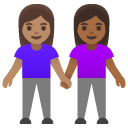
Women Holding Hands: Medium Skin Tone, Medium-dark Skin Tone
U+1F469 U+1F3FD U+200D U+1F91D U+200D U+1F469 U+1F3FE · :women_holding_hands_medium_skin_tone_mediumdark_skin_tone:
Trend 68
Meaning layers
- interpretation
- Used to express girl squad energy, WLW (women loving women) pride, best friend goals, or soft sapphic vibes. Also used to celebrate diversity in friendships and relationships.
- tiktok usage
- Appears in WLW content, friendship montages, 'my person' tributes, and lesbian/bisexual pride videos. Often paired with soft aesthetic edits.
- irony level
- 2 / 10
Platform meanings
- meaning
- Represents WLW love, best friend goals, and queer female identity; frequently used in sapphic and pride content.
- trend usage
- Used in 'my person' trend videos, pride montages, interracial couple content, and friendship anniversary posts.
- hashtags
- #WLW#SapphicTikTok#GirlFriends#PrideTikTok#BlackGirlMagic
- virality score
- 72 / 100
Cultural meanings
🇺🇸
Western / Gen-Z
Widely recognized as both a WLW relationship symbol and a diverse-friendship emoji; celebrated openly in progressive Gen Z spaces online and offline.
🇵🇰
Pakistan & India
Primarily interpreted as two female friends or sisters holding hands, which is culturally common and unremarkable; queer readings are rare in mainstream contexts but recognized in urban youth spaces.
🌍
Middle East
Generally read as two female friends or relatives, as female physical affection is socially acceptable between women; LGBTQ+ interpretation is largely avoided or unacknowledged publicly.
🌐
Global Neutral
Universally understood as two women sharing a moment of connection, whether friendly or romantic depending on cultural lens.
🇧🇩
Bangladesh
Interpreted almost exclusively as close female friendship or sisterhood; holding hands between women is normal social behavior and does not carry romantic connotations in mainstream usage.
🇱🇰
Sri Lanka
Seen as a symbol of female companionship; the skin tone diversity may be noted positively in multicultural contexts, with romantic readings rare in mainstream circles.
🇨🇳
China
Read as close female friendship ('闺蜜' bestie culture); same-sex romantic interpretation exists in LGBTQ+ online communities but is avoided in public or mainstream digital spaces.
🇯🇵
Japan
Associated with 'yuri' (lesbian) culture in anime/manga fandoms and also with close female friendships ('joshi tomodachi'); dual-skin-tone aspect appreciated for diversity representation.
🇰🇷
South Korea
Used in the context of '우정 (friendship)' between women or subtly in WLW K-pop fan communities; increasingly used openly in younger queer-friendly online spaces.
🇹🇼
Taiwan
One of Asia's most LGBTQ+-accepting cultures; this emoji is openly used to represent same-sex female couples or diverse female friendships without significant stigma.
🇭🇰
Hong Kong
Used in both platonic and romantic contexts; the younger generation familiar with LGBTQ+ culture uses it openly, while older generations default to the friendship reading.
🇵🇭
Philippines
Commonly interpreted as female best friends; queer readings exist in progressive urban youth communities, but the dominant interpretation remains platonic sisterhood.
🇮🇩
Indonesia
Almost exclusively interpreted as female friends or sisters; LGBTQ+ readings are recognized only in underground or online queer communities due to social conservatism.
🇹🇭
Thailand
Thailand's relatively open culture toward female same-sex affection means this is used for both close friendships and 'tom-dee' (Thai lesbian) relationships without much controversy.
🇻🇳
Vietnam
Primarily seen as female friendship; female physical closeness is culturally normal, and the romantic reading is mainly recognized in younger, internet-savvy demographics.
🇲🇾
Malaysia
Generally read as close female friends; LGBTQ+ interpretation is recognized in progressive online spaces but largely suppressed in public discourse due to conservative norms.
🇸🇦
Saudi Arabia
Interpreted strictly as female friends or family members; same-sex romantic reading is not publicly acknowledged and would be considered inappropriate.
🇦🇪
UAE
Similar to Saudi Arabia; seen as close female friends or colleagues. Dubai's more cosmopolitan scene may allow subtle queer readings in expat or online communities.
🇪🇬
Egypt
Understood as female friends or sisters; female physical closeness is culturally acceptable, but romantic same-sex interpretations are not publicly recognized.
🇹🇷
Turkey
Dual reading: older or conservative users see close female friends; younger urban users and LGBTQ+ communities in Istanbul use it openly for same-sex female relationships.
🇮🇷
Iran
Primarily read as female friends or family; queer interpretation exists underground but is not public due to legal and social restrictions.
🇳🇬
Nigeria
Seen as female friends or sisters; the skin tone diversity resonates positively in multiethnic contexts, but romantic same-sex interpretation is largely taboo publicly.
🇿🇦
South Africa
One of Africa's most progressive countries on LGBTQ+ rights; used openly for both female friendship and same-sex relationships, especially in Cape Town and Johannesburg communities.
🇬🇧
UK & Ireland
Widely embraced for WLW relationships and diverse female friendships; the mixed-skin-tone aspect is positively received in multicultural British and Irish communities.
🇫🇷
France
Used for female friendships and romantic partnerships; France's laïcité and relatively liberal social norms mean WLW readings are normalized, especially in urban areas.
🇩🇪
Germany
Seen as a symbol of female solidarity, diverse friendship, or same-sex partnership; Germany's strong LGBTQ+ rights framework makes both readings equally acceptable.
🇪🇸
Spain & Italy
In Spain, openly embraced for WLW and friendship use; in Italy, more commonly read as close female friends, though younger generations use it for queer relationships too.
🇧🇷
Brazil
Brazil's vibrant LGBTQ+ culture, especially in São Paulo and Rio, means this is used for both diverse female friendships and WLW couples; skin tone diversity also resonates strongly.
🇲🇽
Mexico
Used for close female friendships ('amigas') primarily; WLW reading growing in urban youth culture, with the skin tone combo reflecting Mexico's mestizo diversity.
🌎
Latin America
Broadly used for female friendship solidarity across Latin America; queer readings vary by country, with more progressive use in Argentina and Chile versus more conservative readings elsewhere.
🇦🇺
Australia & NZ
Openly used for WLW relationships and diverse female friendships in both Australia and New Zealand, both of which have strong LGBTQ+ acceptance and multicultural diversity.
How its meaning shifted
- 2010
This specific emoji did not exist yet; general hand-holding emojis were not available, and representation of same-sex or skin-tone-diverse couples was absent from emoji standards.
- 2015
Emoji skin tone modifiers were introduced (Unicode 8.0), but gender-combination and multi-person skin tone mixing were still limited; early same-sex couple emojis began appearing without skin tone diversity.
- 2020
Multi-person skin tone combinations became standardized (Unicode 12.1); this emoji gained traction in Pride Month campaigns, diversity advocacy, and WLW social media communities during a peak in social justice visibility.
- 2026
Established as a standard symbol for both diverse female friendship and WLW relationships; usage normalized across platforms and cultures, with high recognition among Gen Z and Gen Alpha as an inclusive representation emoji.
See it on every platform
Adjacent emojis
- Often confused with
- people holding handswoman and man holding handshugging face
- Can replace
- red heartrainbow flagtwo hearts
Share & embed
Frequently asked
01What does the 👩🏽🤝👩🏾 Women Holding Hands: Medium Skin Tone, Medium-dark Skin Tone emoji mean?
Two women holding hands, depicted with medium skin tone and medium-dark skin tone respectively, representing female companionship, friendship, solidarity, or romantic partnership between women.
02What does 👩🏽🤝👩🏾 mean on TikTok?
Represents WLW love, best friend goals, and queer female identity; frequently used in sapphic and pride content.
03What does 👩🏽🤝👩🏾 mean on WhatsApp?
Sent between close female friends to express affection, solidarity, or 'we're ride or die'. Also used by queer couples as a relationship identifier.
04What does 👩🏽🤝👩🏾 mean in Gen-Z slang?
Used to express girl squad energy, WLW (women loving women) pride, best friend goals, or soft sapphic vibes. Also used to celebrate diversity in friendships and relationships.
05Is the 👩🏽🤝👩🏾 emoji safe to use?
Female friendship, sisterhood, diverse companionship, WLW romantic partnership, solidarity between women of different ethnicities.
06What does 👩🏽🤝👩🏾 mean in texting?
Holding hands is one of the most universally recognized gestures of connection and trust. The cross-skin-tone pairing amplifies themes of inclusivity and bridging differences, triggering feelings of social warmth and acceptance.
07What is the shortcode for 👩🏽🤝👩🏾?
The shortcode for Women Holding Hands: Medium Skin Tone, Medium-dark Skin Tone is :women_holding_hands_medium_skin_tone_mediumdark_skin_tone:
08What does 👩🏽🤝👩🏾 mean in dating?
Used by women flirting with or expressing interest in other women; a subtle but clear signal in WLW dating spaces that someone is queer or interested in female partnership.
Safety & usage
- Safe meaning
- Female friendship, sisterhood, diverse companionship, WLW romantic partnership, solidarity between women of different ethnicities.
- Caution
- Rarely used toxically; occasionally weaponized in anti-LGBTQ+ contexts as a target for harassment, or used mockingly to dismiss female relationships.
Generally a very safe emoji. In highly conservative or anti-LGBTQ+ digital spaces, sharing this emoji could attract negative responses. No inherent NSFW content.
How it looks across platforms


Appearance varies by platform and device. Google Noto, Twemoji, and OpenMoji are open-source.