🚺
The Emoji
Women’s Room
U+1F6BA · :womens_room:
Trend 38
Meaning layers
- interpretation
- Used ironically to signal female-only spaces, girl talk, or sisterhood moments. Also deployed when discussing women-only content, venting sessions, or as a shorthand for 'girls only' energy.
- tiktok usage
- Appears in 'girls only' POV videos, 'what girls actually talk about in the bathroom' skits, and feminist commentary content.
- irony level
- 5 / 10
Platform meanings
- meaning
- Symbol of female-coded spaces, used in girl talk, feminist, or bathroom-bonding content.
- trend usage
- Paired with 'girls only' POV videos and skits about female restroom culture and secret conversations.
- hashtags
- #girlsonly#bathroomtalk#girltalk#womenonly#girlcode
- virality score
- 42 / 100
Cultural meanings
🇺🇸
Western / Gen-Z
Embraced ironically to signal girl-coded spaces and used in feminist or solidarity content online. Often appears in 'girls only' TikTok trends and memes about the iconic women's bathroom social experience.
🇵🇰
Pakistan & India
Used primarily in its literal sense to indicate women's facilities or women-only spaces. Also appears in women's community group chats and events signaling female-only gatherings.
🌍
Middle East
Understood literally as a women's facility marker; in online spaces it signals women-only content or groups where female users feel safer engaging. Culturally resonant given gender-segregated public spaces.
🌐
Global Neutral
Universally recognized as the women's restroom symbol; used across digital contexts to indicate female-only spaces, women's events, or to mark gender in forms and bios.
🇧🇩
Bangladesh
Used in a literal wayfinding sense and in women-only digital communities. Increasingly adopted by younger urban women to signal female solidarity in social media posts.
🇱🇰
Sri Lanka
Primarily literal — used to indicate women's facilities in shared location information. In younger digital circles, adopted to signal all-female social gatherings.
🇨🇳
China
Recognized as the women's restroom symbol (女厕); used practically in location sharing. On Chinese social platforms like Weibo and Xiaohongshu, it appears in female lifestyle content.
🇯🇵
Japan
Highly recognizable as the 女性用 (women's use) symbol. Used matter-of-factly in digital communication; on platforms like LINE and Twitter Japan it may appear in women-only community contexts.
🇰🇷
South Korea
Understood as the women's restroom marker and used on platforms like KakaoTalk for practical wayfinding. Among younger Koreans, it signals girl group energy or female-coded aesthetic content.
🇹🇼
Taiwan
Used literally for restroom indication and in female community spaces online. Taiwanese Gen Z users incorporate it in girl gang posts and female empowerment content on Instagram and Threads.
🇭🇰
Hong Kong
Practical usage for restroom signage in digital contexts. Also appears in feminist discourse on platforms like LIHKG and Instagram, particularly around gender equity conversations.
🇵🇭
Philippines
Used for practical wayfinding and in female-centric social media content. Filipino women use it in group chats and online communities to signal safe, women-centered spaces.
🇮🇩
Indonesia
Understood as a standard women's facility symbol. In digital communities, appears in women-only WhatsApp groups and Instagram content about female empowerment and sisterhood.
🇹🇭
Thailand
Recognized as the women's restroom symbol and used in location sharing. In Thai social media, it may also appear in content related to women's spaces and increasingly in LGBTQ+ discourse.
🇻🇳
Vietnam
Used literally in navigation contexts and in women's community groups on Facebook and Zalo. Younger Vietnamese users may use it in girl squad content on TikTok.
🇲🇾
Malaysia
Practical use for restroom indication; also appears in women-only WhatsApp and Telegram groups. Used in Muslim women's community spaces to signal gender-appropriate content.
🇸🇦
Saudi Arabia
Used to indicate women's sections in gender-segregated spaces — culturally significant given the prevalence of gender-separated public areas. Online, it marks women-only digital communities.
🇦🇪
UAE
Both literal restroom marker and digital signal for women-only spaces. In the cosmopolitan UAE online space, it appears in expat and local women's community content on Instagram.
🇪🇬
Egypt
Used to indicate women's facilities and women-only spaces. In Egyptian social media, it signals female community spaces and appears in women's rights and empowerment content.
🇹🇷
Turkey
Recognized as the standard women's restroom symbol. Used in Turkish social media by women's groups and feminist communities, particularly on Twitter/X during gender-related discourse.
🇮🇷
Iran
Used primarily as a practical women's facility marker. In online spaces, it may signal women-only communities; carries particular weight in the context of women's rights movements in the country.
🇳🇬
Nigeria
Used literally for facility direction and in women-only community groups on WhatsApp and Facebook. Nigerian female content creators use it in girl power and women's empowerment content.
🇿🇦
South Africa
Recognized as the women's restroom symbol and used in practical contexts. In South African social media, it appears in feminist and gender equity discourse, particularly on Twitter/X.
🇬🇧
UK & Ireland
Understood as the loo symbol for women; used humorously in British and Irish social media. Appears in girls' night out content and in feminist commentary on UK Twitter/X.
🇫🇷
France
Used practically for restroom indication; in French online culture it occasionally appears in gender and feminist discourse. French Gen Z may use it ironically in commentary on gender norms.
🇩🇪
Germany
Recognized as the Damentoilette symbol; used matter-of-factly in digital communication. Appears in women's professional networks and feminist groups on German social platforms.
🇪🇸
Spain & Italy
Practical restroom symbol; in social media it signals women-only gatherings or feminist content. Southern European girl group culture embraces it for signaling female friendship and solidarity.
🇧🇷
Brazil
Used for restroom indication and as a marker for women-centric social content. Brazilian women use it extensively in feminist content and girl power posts on Instagram and TikTok.
🇲🇽
Mexico
Recognized restroom symbol; also used in female community spaces online. Mexican Gen Z and millennial women use it in girl squad content and feminist commentary on social media.
🌎
Latin America
Broadly understood as the women's facility symbol across Latin America. Used in feminist movements' digital content and in female community spaces on Instagram and WhatsApp.
🇦🇺
Australia & NZ
Used casually for restroom indication and in girl gang social content. Australian and NZ users may deploy it humorously in memes about the famous women's bathroom bonding experience.
How its meaning shifted
- 2010
Almost exclusively used in its literal sense — to indicate women's restrooms or female-designated spaces in digital maps, guides, and informational content.
- 2015
Began appearing in social media to mark women-only groups and events. Emoji keyboards made it accessible, and it started appearing in female community spaces online.
- 2020
Adopted into feminist and gender discourse online; used in memes about women's bathroom culture and girl solidarity. Became a marker for female-coded digital spaces.
- 2026
Multifaceted usage — literal, feminist, ironic, and aesthetic. Central in 'girl' trend content (girl math, girl dinner lineage), gender discourse, and women's community digital spaces. Also subject to debate in gender-inclusive conversations.
See it on every platform
Compare with
Adjacent emojis
- Opposite
- mens roomno entry signman
- Often confused with
- person in suit levitatingdancerspurple circle
- Can replace
- womanwomen with bunny earsgirl
Share & embed
Frequently asked
01What does the 🚺 Women’s Room emoji mean?
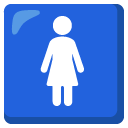
The Women's Room emoji depicts the international symbol for a women's restroom, typically showing a stylized female figure in a dress or skirt on a blue or purple background.
02What does 🚺 mean on TikTok?
Symbol of female-coded spaces, used in girl talk, feminist, or bathroom-bonding content.
03What does 🚺 mean on WhatsApp?
Quick shorthand for 'girls only' chat or indicating a women's restroom location when sharing directions.
04What does 🚺 mean in Gen-Z slang?
Used ironically to signal female-only spaces, girl talk, or sisterhood moments. Also deployed when discussing women-only content, venting sessions, or as a shorthand for 'girls only' energy.
05Is the 🚺 emoji safe to use?
A universal wayfinding symbol indicating women's restrooms or women-only spaces — entirely benign and functional in most contexts.
06What does 🚺 mean in texting?
Taps into in-group identity psychology — evoking the culturally loaded concept of women-only safe spaces and the social bonding that occurs within them.
07What is the shortcode for 🚺?
The shortcode for Women’s Room is :womens_room:
08What does 🚺 mean in dating?
Rarely used in direct flirting; sometimes used to signal femininity or to tease a male partner about girl talk they're not privy to.
Safety & usage
- Safe meaning
- A universal wayfinding symbol indicating women's restrooms or women-only spaces — entirely benign and functional in most contexts.
- Caution
- Can be weaponized in online harassment targeting transgender women or in exclusionary rhetoric about gender and restroom access policies.
In the context of heated gender identity debates (particularly bathroom bills and trans rights discourse), this emoji may be used as part of exclusionary or harassing messaging. Platforms should monitor use in those specific discourse contexts.
How it looks across platforms


Appearance varies by platform and device. Google Noto, Twemoji, and OpenMoji are open-source.