🧑🏼🎨
The Emoji
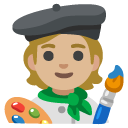
Artist: Medium-light Skin Tone
U+1F9D1 U+1F3FC U+200D U+1F3A8 · :artist_mediumlight_skin_tone:
Trend 62
Meaning layers
- interpretation
- Used to signal a creative, artsy personality or aesthetic — often ironic when someone posts something basic but calls themselves an artist. Also used sincerely by actual creatives to brand themselves.
- tiktok usage
- Appears in 'POV: you're a starving artist' videos, art process content, and self-deprecating humor about being chronically creative but broke.
- irony level
- 5 / 10
Platform meanings
- meaning
- Represents artistic content creators, art process videos, and the 'chaotic creative' archetype.
- trend usage
- Used in art speedpaint videos, creative day-in-my-life content, and trend formats like 'things only artists understand'.
- hashtags
- #ArtistLife#TikTokArtist#ArtProcess#CreativesTok#ArtTok
- virality score
- 68 / 100
Cultural meanings
🇺🇸
Western / Gen-Z
Heavily used as a creative identity marker, both sincerely and ironically; tied to the 'starving artist aesthetic' and anti-corporate creativity culture.
🇵🇰
Pakistan & India
Used by emerging digital artists, graphic designers, and art students to signal their profession; increasingly common in creative freelancing communities online.
🌍
Middle East
Associated with calligraphy artists, digital creators, and professional designers; used in social media bios by creative professionals in urban centers.
🌐
Global Neutral
Universally understood as representing an artist or creative professional; carries positive, aspirational connotations across cultures.
🇧🇩
Bangladesh
Used by growing communities of digital artists and illustrators; associated with skilled craftsmanship and the rising freelance creative economy.
🇱🇰
Sri Lanka
Associated with traditional arts and modern digital creativity alike; used in bios and posts by local artists and craft practitioners.
🇨🇳
China
Used on platforms like Weibo and Bilibili by digital artists, illustrators, and ACG (anime, comics, games) creators to signal their craft.
🇯🇵
Japan
Closely tied to manga artists, illustrators, and otaku creative culture; frequently used in pixiv and Twitter art communities.
🇰🇷
South Korea
Popular among webtoon artists, K-pop fan artists, and digital illustrators; signals membership in the vibrant Korean online art community.
🇹🇼
Taiwan
Used by illustration and design communities, often linked to the island's strong indie art and comic culture.
🇭🇰
Hong Kong
Associated with graphic designers, street artists, and independent creatives navigating a blend of Eastern and Western artistic influences.
🇵🇭
Philippines
Widely used by a large and active community of digital artists and illustrators; strongly tied to fan art and creative freelancing culture.
🇮🇩
Indonesia
Used by digital creators, illustrators, and designers; associated with the growing Indonesian creative economy and online art communities.
🇹🇭
Thailand
Common among street art enthusiasts, traditional craft revivalists, and digital artists sharing work on social platforms.
🇻🇳
Vietnam
Associated with graphic designers and digital artists; used in a growing community of young creatives building online portfolios.
🇲🇾
Malaysia
Used by multicultural creative communities; associated with both traditional art forms and modern digital design practices.
🇸🇦
Saudi Arabia
Used by artists navigating a rapidly changing creative landscape; associated with Vision 2030 cultural initiatives and a growing arts sector.
🇦🇪
UAE
Common in Dubai and Abu Dhabi's vibrant arts scene; used by professional artists, designers, and participants in events like Art Dubai.
🇪🇬
Egypt
Associated with a rich tradition of art and design; used by modern illustrators, graphic designers, and street artists in Cairo's creative scene.
🇹🇷
Turkey
Used by graphic designers, illustrators, and traditional artists blending Ottoman and contemporary aesthetics in their work.
🇮🇷
Iran
Used within active underground and online art communities; signals creative identity among painters, illustrators, and independent artists.
🇳🇬
Nigeria
Associated with Afrofuturist artists, digital illustrators, and a booming creative scene; tied to the Lagos art community's growing global profile.
🇿🇦
South Africa
Used by a diverse arts community merging African heritage with contemporary design; common in Cape Town and Johannesburg creative circles.
🇬🇧
UK & Ireland
Widely used by art school students, illustrators, and independent creatives; carries both sincere professional meaning and ironic self-deprecating humor.
🇫🇷
France
Carries strong cultural resonance given France's historic artistic heritage; used sincerely by professionals and students in fine arts and design.
🇩🇪
Germany
Associated with Bauhaus-influenced design culture and contemporary art; used by designers, illustrators, and art school communities.
🇪🇸
Spain & Italy
Carries deep cultural weight given both countries' rich artistic traditions; used by modern creatives honoring and subverting that heritage.
🇧🇷
Brazil
Widely used by a vibrant community of street artists, graphic designers, and digital creators; tied to Brazil's colorful and expressive visual culture.
🇲🇽
Mexico
Associated with muralism heritage and contemporary digital art; used by creatives channeling Frida Kahlo-era expressiveness into modern formats.
🌎
Latin America
Broadly used across Latin American creative communities to signal artistic identity; tied to vibrant traditions of visual storytelling and craft.
🇦🇺
Australia & NZ
Used by indie artists, graphic designers, and Indigenous art advocates; carries both professional meaning and casual creative pride.
How its meaning shifted
- 2010
The artist emoji concept did not exist in this form; creative identity was expressed with basic symbols like ✏️ or 🎨 without person representation.
- 2015
Early person-with-palette emojis began appearing in Unicode proposals; used primarily in literal professional contexts without irony or identity layering.
- 2020
Gained significant traction as skin tone modifiers became normalized; widely adopted by digital artists on TikTok and Instagram during the pandemic creative boom.
- 2026
Deeply embedded in creative professional branding across all platforms; used both sincerely as identity marker and ironically in AI art debate contexts.
See it on every platform
Adjacent emojis
- Often confused with
- mageelfperson with probing cane
- Can replace
- artist paletterainbowsparkles
Share & embed
Frequently asked
01What does the 🧑🏼🎨 Artist: Medium-light Skin Tone emoji mean?
A person with medium-light skin tone depicted as an artist, typically shown holding a palette and paintbrush, representing creativity, visual arts, and artistic professions.
02What does 🧑🏼🎨 mean on TikTok?
Represents artistic content creators, art process videos, and the 'chaotic creative' archetype.
03What does 🧑🏼🎨 mean on WhatsApp?
Signals someone is working on a creative project or identifying themselves as an artistic person in conversation.
04What does 🧑🏼🎨 mean in Gen-Z slang?
Used to signal a creative, artsy personality or aesthetic — often ironic when someone posts something basic but calls themselves an artist. Also used sincerely by actual creatives to brand themselves.
05Is the 🧑🏼🎨 emoji safe to use?
Represents artistic professions, creative identity, and self-expression in a wholly positive and inclusive context.
06What does 🧑🏼🎨 mean in texting?
Signals a strong identification with creative self-expression; psychologically linked to the need for autonomy and mastery. Using this emoji often reflects an internalized artistic identity rather than just a job title.
07What is the shortcode for 🧑🏼🎨?
The shortcode for Artist: Medium-light Skin Tone is :artist_mediumlight_skin_tone:
08What does 🧑🏼🎨 mean in dating?
Used as a flirty signal that someone is interesting, expressive, and non-conventional — e.g., 'I'll paint you someday 🧑🏼🎨' carries romantic undertones.
Safety & usage
- Safe meaning
- Represents artistic professions, creative identity, and self-expression in a wholly positive and inclusive context.
- Caution
- Occasionally used dismissively to mock someone's creative work as pretentious, or sarcastically during AI art controversies to demean human artists.
Generally safe for all ages and contexts; no significant misuse patterns. May appear in heated art community debates about AI-generated content versus human creativity.
How it looks across platforms


Appearance varies by platform and device. Google Noto, Twemoji, and OpenMoji are open-source.