🐈⬛
The Emoji
Black Cat
U+1F408 U+200D U+2B1B · :black_cat:
Trend 82
Meaning layers
- interpretation
- Symbol of mysterious cool, witchy aesthetic, bad luck irony, and 'chaotic but unbothered' energy. Used to self-identify as someone who is dark, quirky, independent, or aligned with cottagecore/witchcore aesthetics.
- tiktok usage
- Heavily used in WitchTok and dark aesthetic communities. Often paired with moon emojis to signal mystical vibes or posted when something unlucky happens as humorous self-deprecation.
- irony level
- 6 / 10
Platform meanings
- meaning
- Represents WitchTok identity, 'cursed girl' aesthetic, black cat energy in relationships, and generally mysterious or nocturnal vibes.
- trend usage
- Central to the 'black cat vs golden retriever' relationship trend where the black cat is the reserved, cool, slightly mysterious partner. Also used in 'POV: you're a black cat' transformation videos.
- hashtags
- #blackcatenergy#witchtok#blackcat#blackcatgoldenretriever#darkaesthetic
- virality score
- 85 / 100
Cultural meanings
🇺🇸
Western / Gen-Z
Deeply embedded in Gen Z internet culture as the symbol of 'black cat energy' — representing the cool, reserved, slightly cursed partner in the viral relationship dynamic meme. Universally understood as witchy and mysterious.
🇵🇰
Pakistan & India
In traditional contexts, a black cat crossing your path is a bad omen, so this emoji is often used to express misfortune humorously. Among urban Gen Z, the western witchy aesthetic interpretation is gaining traction.
🌍
Middle East
Black cats have mixed connotations — in some Islamic traditions they are associated with jinn and bad omens, making this emoji sometimes used to express superstitious unease. Younger users adopt the global internet aesthetic meaning.
🌐
Global Neutral
Universally recognized as representing a black cat, broadly understood as symbolizing mystery, Halloween, and superstition across cultures regardless of local nuance.
🇧🇩
Bangladesh
Similar to India and Pakistan — the black cat is a symbol of bad luck in folk tradition, so this emoji is often used humorously when something goes wrong. Western aesthetic usage is growing among youth.
🇱🇰
Sri Lanka
Black cats carry superstitious bad luck associations in local folklore, and the emoji is commonly used to joke about misfortune. Urban youth increasingly use it with the global 'cool mystery' interpretation.
🇨🇳
China
Black cats (黑猫) are generally not as negatively stigmatized as in Western superstition — they can be seen as protective. The emoji is often used among younger Chinese users to express a cool, aloof, or edgy personality online.
🇯🇵
Japan
Japan has a complex relationship with black cats — while 招き猫 (maneki-neko) is lucky, black cats specifically can be seen as both lucky and unlucky depending on context. The emoji is popular in gothic lolita and dark kawaii subcultures.
🇰🇷
South Korea
Among Korean Gen Z, this emoji is used to express the 'cool and aloof' personality type, aligning with the Korean concept of someone who is mysteriously attractive. Popular in dark aesthetic communities on social media.
🇹🇼
Taiwan
Used similarly to Japan and South Korea — the black cat emoji carries a cool, mysterious aesthetic vibe and is popular in gothic and alternative fashion communities online.
🇭🇰
Hong Kong
The emoji is used in Hong Kong's vibrant internet culture primarily to express a dark or mysterious aesthetic, often among alternative fashion and art communities.
🇵🇭
Philippines
Black cats are sometimes associated with witchcraft (kulam) in Filipino folklore, giving this emoji a slightly eerie connotation when used traditionally. Younger users adopt it for Halloween and general dark aesthetic purposes.
🇮🇩
Indonesia
In Indonesian culture, black cats are sometimes linked to supernatural or mystical forces. The emoji is used with a mix of superstitious humor and western aesthetic appreciation among younger Indonesian users.
🇹🇭
Thailand
Thailand has its own rich tradition of mysticism, and black cats are sometimes seen as having spiritual significance. The emoji is used both to express superstitious humor and as part of the global dark aesthetic trend.
🇻🇳
Vietnam
Black cats are generally considered bad luck in Vietnamese folk belief, so this emoji appears in humorous bad luck contexts. Gen Z users in Vietnam also use it for the aesthetic and witchy connotations.
🇲🇾
Malaysia
Carries superstitious overtones in some Malaysian cultural contexts but is broadly used by younger Malaysians to express dark aesthetic vibes, Halloween spirit, or humorous bad luck.
🇸🇦
Saudi Arabia
In conservative cultural contexts, black cats may carry negative supernatural associations. The emoji is used cautiously, primarily among younger urban Saudis who engage with global internet culture.
🇦🇪
UAE
In the UAE's cosmopolitan digital environment, the emoji is used broadly with global aesthetic and Halloween associations by younger users, while older generations may retain traditional superstitious interpretations.
🇪🇬
Egypt
Egypt has ancient associations between cats and the divine, though black specifically can carry some superstitious weight in modern folk belief. The emoji is used humorously for bad luck or as part of the global dark aesthetic.
🇹🇷
Turkey
In Turkish folk tradition, a black cat can be an omen, but the emoji is widely used among Turkish Gen Z in its global internet sense — mysterious, cool, and witchy. Very popular in Halloween and dark aesthetic communities.
🇮🇷
Iran
Black cats carry mixed supernatural associations in Iranian folklore. Among younger, internet-savvy Iranians, the emoji is used for its global aesthetic meaning — mystery, darkness, and cool independence.
🇳🇬
Nigeria
In some Nigerian cultural contexts, black cats can be associated with witchcraft and dark mysticism, giving this emoji a particularly charged meaning. Younger Nigerians use it both ironically and as part of global Halloween/witch aesthetics.
🇿🇦
South Africa
South Africa's diverse cultural landscape means interpretations vary — some communities associate black cats with traditional spiritual beliefs while urban youth use it freely in the global aesthetic sense.
🇬🇧
UK & Ireland
Strong Halloween and witchcraft cultural associations make this emoji very popular in the UK and Ireland. In the UK, a black cat crossing your path is actually considered good luck, giving the emoji a slightly more positive spin than in the US.
🇫🇷
France
French internet users use this emoji to express mystery and dark elegance — it aligns well with the French cultural appreciation for the macabre and sophisticated. Popular in alternative fashion and art communities.
🇩🇪
Germany
In Germany, black cats crossing from right to left are bad luck while left to right is good — creating nuanced usage. German internet users typically use it in its global aesthetic sense for Halloween and dark themes.
🇪🇸
Spain & Italy
Both Spain and Italy have strong superstitions around black cats, particularly in older generations. Younger users have embraced the global internet aesthetic, using it for Halloween content and dark or mysterious self-expression.
🇧🇷
Brazil
Brazilian internet culture has fully adopted the 'black cat energy' meme and dark aesthetic usage. Black cats carry both the traditional bad luck superstition (shared in folklore) and the modern cool mystique for younger Brazilians.
🇲🇽
Mexico
Mexico's rich tradition of Día de los Muertos and spiritual folklore makes the black cat a culturally resonant symbol. The emoji is used warmly in spooky/mystical contexts and is highly popular during Halloween and Día de los Muertos season.
🌎
Latin America
Across Latin America, black cats occupy a dual space of folk superstition and modern aesthetic appreciation. The emoji is widely used for Halloween content, bad luck humor, and by younger users who align with dark or witchy aesthetics.
🇦🇺
Australia & NZ
Australian and New Zealand Gen Z use this emoji in the same way as Western Gen Z broadly — for black cat energy memes, witchy aesthetics, and Halloween content. Black cats crossing your path are considered bad luck in local folk belief.
How its meaning shifted
- 2010
The dedicated black cat ZWJ emoji did not exist yet. The general cat emoji 🐱 or 🐈 was used for all cats. Black cat references online were made with text or generic cat emojis.
- 2015
Still pre-ZWJ black cat. Users were combining text descriptions with generic cat emojis for black cat references. Halloween usage was common but lacked a dedicated symbol.
- 2020
The 🐈⬛ emoji was introduced as part of Emoji 13.0 in 2020, immediately gaining traction in Halloween content, witchcore communities, and among cat lovers who specifically owned black cats.
- 2026
Fully established as a cultural icon representing the 'black cat personality' archetype, witchy aesthetic, and the iconic relationship dynamic meme. One of the most culturally loaded animal emojis in Gen Z communication.
See it on every platform
Emoji combinations
Adjacent emojis
- Opposite
- four leaf cloverdog facesun
- Often confused with
- cat facecat with wry smileleopard
Share & embed
Frequently asked
01What does the 🐈⬛ Black Cat emoji mean?
A black cat emoji, depicted as a sleek dark-furred feline with yellow or green eyes, introduced as a ZWJ sequence combining 🐈 and ⬛.
02What does 🐈⬛ mean on TikTok?
Represents WitchTok identity, 'cursed girl' aesthetic, black cat energy in relationships, and generally mysterious or nocturnal vibes.
03What does 🐈⬛ mean on WhatsApp?
Casual cat lover expression or used to represent bad luck humorously in everyday conversation.
04What does 🐈⬛ mean in Gen-Z slang?
Symbol of mysterious cool, witchy aesthetic, bad luck irony, and 'chaotic but unbothered' energy. Used to self-identify as someone who is dark, quirky, independent, or aligned with cottagecore/witchcore aesthetics.
05Is the 🐈⬛ emoji safe to use?
Represents black cats, Halloween spirit, witchy aesthetics, bad luck humor, mysterious personality, and the 'black cat energy' relationship archetype. Completely safe for general use.
06What does 🐈⬛ mean in texting?
Black cats evoke a dual psychological response — superstition-rooted unease in some cultures versus deep affection and identification with the misunderstood in others. Users who embrace this emoji often signal a comfort with being 'different' or overlooked, mirroring how black cats are statistically adopted less often.
07What is the shortcode for 🐈⬛?
The shortcode for Black Cat is :black_cat:
08What does 🐈⬛ mean in dating?
Used as a subtle signal of mysterious, edgy personality. Sending 🐈⬛ can mean 'I'm interesting and a little unpredictable' — a low-key flirtation tool for alternative/goth/indie crowds.
Safety & usage
- Safe meaning
- Represents black cats, Halloween spirit, witchy aesthetics, bad luck humor, mysterious personality, and the 'black cat energy' relationship archetype. Completely safe for general use.
- Caution
- Extremely rarely, could be used in targeted harassment to call someone a 'jinx' or imply they bring misfortune to others, but this is not a common usage pattern.
In some cultural contexts, particularly in communities with strong supernatural belief systems, this emoji can inadvertently carry negative spiritual connotations. Generally harmless in most contexts.
How it looks across platforms
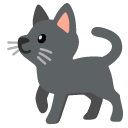


Appearance varies by platform and device. Google Noto, Twemoji, and OpenMoji are open-source.