👷🏼
The Emoji
Construction Worker: Medium-light Skin Tone
U+1F477 U+1F3FC · :construction_worker_mediumlight_skin_tone:
Trend 48
Meaning layers
- interpretation
- Used to signal hustle culture, grinding mentality, or doing actual hard work — sometimes ironically when someone is barely doing anything. Also used to flex a blue-collar pride aesthetic or mock white-collar overcomplication of simple tasks.
- tiktok usage
- Appears in 'day in my life' construction or trade worker videos, DIY build content, and ironically when someone is 'constructing' an excuse or a plan. Common in 'build different' motivational content.
- irony level
- 5 / 10
Platform meanings
- meaning
- Signals hard work, trades life, DIY projects, or hustle content. Also used ironically in 'building' metaphors.
- trend usage
- Common in trade school pride videos, construction time-lapses, and 'skilled trades pay more than your degree' discourse content.
- hashtags
- #tradeslife#constructionworker#buildingdifferent#hardhat#skilledtrades
- virality score
- 52 / 100
Cultural meanings
🇺🇸
Western / Gen-Z
Used ironically to flex hustle culture or mock corporate complexity by contrasting it with real physical labor. Also used genuinely by trades-proud Gen Z workers pushing back against the college-only narrative.
🇵🇰
Pakistan & India
Represents the large and culturally significant labor workforce; can evoke both respect for hard physical work and sensitivity around labor class dynamics in South Asian social contexts.
🌍
Middle East
Associated with the massive migrant construction labor force that built Gulf infrastructure; carries complex connotations around class, migrant worker identity, and economic development.
🌐
Global Neutral
Universally understood as a symbol of construction work, physical labor, and industriousness — broadly positive and non-controversial in most global contexts.
🇧🇩
Bangladesh
Carries deep meaning related to the readymade garment and construction industries; often used with pride by workers or advocates highlighting the backbone role of laborers in the economy.
🇱🇰
Sri Lanka
Represents infrastructure and construction development, often used in contexts celebrating national building projects or the hardworking labor community.
🇨🇳
China
Associated with rapid urban development and China's construction boom; evokes images of large-scale infrastructure projects and the migrant worker population that drives them.
🇯🇵
Japan
Used in professional and formal contexts related to construction and engineering — carries connotations of precision, discipline, and craftsmanship in Japanese work culture.
🇰🇷
South Korea
Linked to Korea's renowned construction conglomerates like Samsung C&T and Hyundai E&C; also used in conversations about blue-collar dignity versus Korea's intense white-collar academic culture.
🇹🇼
Taiwan
Associated with infrastructure development and engineering pride; used in trade contexts and sometimes in discussions about Taiwanese manufacturing and construction excellence.
🇭🇰
Hong Kong
Evokes the city's ongoing construction and infrastructure expansion; also appears in discussions about labor rights and the role of foreign construction workers in the city.
🇵🇭
Philippines
Strongly associated with OFW (Overseas Filipino Worker) identity, as many Filipinos work in construction abroad — carries themes of sacrifice, family support, and working-class heroism.
🇮🇩
Indonesia
Represents the large construction and infrastructure workforce driving Indonesia's development; used with respect for laborers contributing to national growth.
🇹🇭
Thailand
Connected to Thailand's booming construction sector and the significant Burmese migrant worker population; can carry nuanced class and migration connotations.
🇻🇳
Vietnam
Used in contexts of national development pride — Vietnam's rapid construction and urbanization makes this emoji relatable and widely positive in Vietnamese digital culture.
🇲🇾
Malaysia
Associated with construction site culture and the large migrant worker workforce from neighboring countries; used both straightforwardly for work and in advocacy for labor rights.
🇸🇦
Saudi Arabia
Strongly connected to Saudi Arabia's Vision 2030 mega-construction projects like NEOM; also carries awareness of the migrant labor workforce from South and Southeast Asia.
🇦🇪
UAE
Evokes the iconic skyline construction of Dubai and Abu Dhabi built largely by migrant labor; used in both celebratory contexts about development and critical discussions about worker rights.
🇪🇬
Egypt
Associated with construction and infrastructure development along the Nile corridor and new capital projects; represents pride in building the nation's future.
🇹🇷
Turkey
Linked to Turkey's extensive domestic construction boom and the significant Turkish construction industry operating internationally across Central Asia and Africa.
🇮🇷
Iran
Represents domestic construction and engineering; used in contexts of infrastructure development and acknowledging the skilled labor workforce in Iranian society.
🇳🇬
Nigeria
Associated with Nigeria's infrastructure growth and the booming construction sector in Lagos and Abuja; used to represent hardworking laborers and emerging construction entrepreneurs.
🇿🇦
South Africa
Connected to construction and mining labor; carries complex class and racial history given apartheid labor dynamics, but increasingly used simply for trades pride and development.
🇬🇧
UK & Ireland
Used straightforwardly for tradespeople, builders, and construction workers — part of a culturally respected working-class identity with strong trade union associations.
🇫🇷
France
Associated with the valued 'artisan' tradition; used in contexts celebrating skilled craftspeople and construction workers, with strong union culture connotations.
🇩🇪
Germany
Strongly positive — German Handwerk (craftsmanship) culture means construction workers are highly respected; this emoji carries connotations of precision, reliability, and trade skill.
🇪🇸
Spain & Italy
Linked to artisan and construction traditions; in Spain often tied to neighborhood development pride, in Italy evokes master craftsmanship and historic restoration work.
🇧🇷
Brazil
Used with energy and pride in construction and civil engineering contexts; also appears in discussions about informal 'peão' (blue-collar) labor culture and São Paulo's skyline growth.
🇲🇽
Mexico
Strongly associated with skilled construction labor both domestically and in the US diaspora context; used with pride for the 'albañil' (bricklayer/mason) identity and working-class resilience.
🌎
Latin America
Broadly represents the large construction and informal labor workforce across Latin America; used with pride for blue-collar workers who literally build their nations.
🇦🇺
Australia & NZ
Very relatable in the tradie (tradesperson) culture of both countries — construction workers are well-paid and highly respected; used confidently in trade professional contexts.
How its meaning shifted
- 2010
Rarely used — the skin tone modifier variant didn't yet exist; the base construction worker emoji was primarily used literally to indicate someone was at a job site or doing home repairs.
- 2015
Skin tone variants introduced; the medium-light tone version began appearing as users explored diverse representation options, mostly used in a straightforward, literal work context.
- 2020
Increased use in hustle culture content, trades vs. college discourse, and blue-collar pride movements on TikTok and Twitter. Also used in COVID-era essential worker appreciation content.
- 2026
Widely used across trades pride content, skilled labor shortage discussions, DIY culture, ironic hustle commentary, and Gen Z blue-collar identity reclamation — one of the more culturally loaded labor emojis.
See it on every platform
Compare with
Adjacent emojis
- Often confused with
- guardpolice officerperson wearing turban
Share & embed
Frequently asked
01What does the 👷🏼 Construction Worker: Medium-light Skin Tone emoji mean?
A construction worker wearing a hard hat with medium-light skin tone, representing someone who works in construction, building, or labor-intensive industries.
02What does 👷🏼 mean on TikTok?
Signals hard work, trades life, DIY projects, or hustle content. Also used ironically in 'building' metaphors.
03What does 👷🏼 mean on WhatsApp?
Sent to indicate someone is busy with physical work, at a job site, or doing home repairs. Casual shorthand for 'I'm working hard right now.'
04What does 👷🏼 mean in Gen-Z slang?
Used to signal hustle culture, grinding mentality, or doing actual hard work — sometimes ironically when someone is barely doing anything. Also used to flex a blue-collar pride aesthetic or mock white-collar overcomplication of simple tasks.
05Is the 👷🏼 emoji safe to use?
Represents construction workers, physical labor, trades professionals, and the act of building or creating something tangible.
06What does 👷🏼 mean in texting?
Evokes a sense of tangible productivity and working-class dignity. Psychologically linked to identity pride around physical labor and the satisfaction of building something concrete and real.
07What is the shortcode for 👷🏼?
The shortcode for Construction Worker: Medium-light Skin Tone is :construction_worker_mediumlight_skin_tone:
08What does 👷🏼 mean in dating?
Sometimes used flirtatiously to signal that someone is 'building something' with a romantic partner, or to hint at being hardworking and reliable — a subtle flex of dependability.
Safety & usage
- Safe meaning
- Represents construction workers, physical labor, trades professionals, and the act of building or creating something tangible.
- Caution
- Rarely used toxically, but could be deployed disparagingly in class-based commentary to demean someone's job or education level.
Minimal risk; no documented use as a coded hate symbol or targeted harassment tool. Skin tone variants should always be used thoughtfully to represent real diversity rather than mockery.
How it looks across platforms
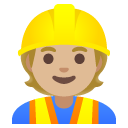


Appearance varies by platform and device. Google Noto, Twemoji, and OpenMoji are open-source.