HomeEmojis👩🏿❤️👩🏼 Couple With Heart: Woman, Woman, Dark Skin Tone, Medium-light Skin ToneField Guide
👩🏿❤️👩🏼
The Emoji
Couple With Heart: Woman, Woman, Dark Skin Tone, Medium-light Skin Tone
U+1F469 U+1F3FF U+200D U+2764 U+FE0F U+200D U+1F469 U+1F3FC · :couple_with_heart_woman_woman_dark_skin_tone_mediumlight_skin_tone:
Trend 68
Meaning layers
- interpretation
- Used by Gen Z to celebrate WLW (women loving women) relationships, queer love, and interracial lesbian couples. Often dropped casually to signal sapphic pride or support for LGBTQ+ relationships without needing words.
- tiktok usage
- Appears in WLW couple content, sapphic TikToks, Pride month videos, and queer relationship storytelling. Used in 'POV: you're in a sapphic relationship' content.
- irony level
- 1 / 10
Platform meanings
- meaning
- Represents WLW couples, sapphic content, and queer love celebration. Used as a visual shorthand for lesbian or bisexual female relationships.
- trend usage
- Appears in #WLW, #SapphicTikTok, and Pride content. Creators use it in couple reveal videos, 'meet my girlfriend' content, and LGBTQ+ storytime videos.
- hashtags
- #WLW#SapphicTikTok#LesbianCouple#PrideMonth#GirlfriendGoals
- virality score
- 72 / 100
Cultural meanings
🇺🇸
Western / Gen-Z
Widely used and celebrated as a symbol of WLW love and queer visibility; considered empowering and normalized in progressive Western Gen Z spaces. The mixed skin tones are appreciated as a nod to interracial queer relationships.
🇵🇰
Pakistan & India
Rarely used openly due to cultural and legal stigma around same-sex relationships; may appear in private LGBTQ+ spaces or among younger urban progressive communities, but public use carries significant social risk.
🌍
Middle East
Largely avoided due to legal prohibitions and social taboos around same-sex relationships across most Middle Eastern countries; used only in private, discreet LGBTQ+ communities or diaspora networks.
🌐
Global Neutral
Recognized globally as a same-sex female couple emoji; reception varies dramatically by regional cultural and legal context, ranging from celebration to avoidance.
🇧🇩
Bangladesh
Extremely rare in public usage due to strong cultural and religious conservatism regarding same-sex relationships; may circulate in underground LGBTQ+ digital spaces.
🇱🇰
Sri Lanka
Mostly avoided in mainstream usage given social conservatism; occasionally seen in urban, progressive Sri Lankan youth circles or diaspora communities.
🇨🇳
China
Used cautiously within LGBTQ+ communities on platforms like Weibo and Douban; censorship and social pressure mean it's often used in coded or private contexts rather than openly.
🇯🇵
Japan
Used within Japan's relatively visible but still niche LGBTQ+ community; appears in Pride content and yuri (WLW) fan communities, though mainstream public use remains limited.
🇰🇷
South Korea
Appears in South Korean LGBTQ+ communities and queer ally spaces, particularly on Twitter and Instagram; mainstream use is limited due to ongoing debates about LGBTQ+ rights in Korean society.
🇹🇼
Taiwan
Freely used and celebrated in Taiwan, which has the most progressive LGBTQ+ rights landscape in Asia; appears in Pride content, couple posts, and general affirmation of same-sex relationships.
🇭🇰
Hong Kong
Used within Hong Kong's LGBTQ+ community, particularly among younger generations; visibility has become more complicated in recent years due to shifting political climate.
🇵🇭
Philippines
Used in Filipino LGBTQ+ circles; the Philippines has a complex relationship with queer identity — culturally somewhat tolerant but lacking legal recognition, so use is common online but nuanced.
🇮🇩
Indonesia
Avoided in public-facing Indonesian social media due to strong religious and social conservatism; may appear in private or anonymous LGBTQ+ digital spaces.
🇹🇭
Thailand
Used openly in Thailand's relatively visible LGBTQ+ community, particularly in Bangkok's queer spaces; Thailand has a culturally accepted LGBT presence, making this emoji more common in Thai queer content.
🇻🇳
Vietnam
Appears in Vietnamese LGBTQ+ communities, which have grown more visible; used in Pride-related content and queer youth spaces, though mainstream acceptance is still evolving.
🇲🇾
Malaysia
Largely avoided in public use due to legal and religious constraints on same-sex relationships; may circulate in private LGBTQ+ Malaysian communities or diaspora networks.
🇸🇦
Saudi Arabia
Not used openly; same-sex relationships are illegal and highly stigmatized, making this emoji essentially absent from public Saudi digital spaces. Private use exists only in deeply discreet contexts.
🇦🇪
UAE
Rarely used publicly; same-sex relationships face legal restrictions in the UAE, though expat and tourist communities in cities like Dubai may use it more freely in private spaces.
🇪🇬
Egypt
Very rare in public-facing Egyptian social media due to legal and social stigma; limited to private or diaspora LGBTQ+ Egyptian communities.
🇹🇷
Turkey
Used within Turkey's LGBTQ+ community, particularly in Istanbul; despite growing restrictions on public Pride events, the emoji circulates in online queer Turkish spaces and international diaspora communities.
🇮🇷
Iran
Extremely rare due to severe legal penalties for same-sex relationships; only in deeply private or diaspora contexts outside Iran.
🇳🇬
Nigeria
Largely avoided due to legal prohibitions on same-sex relationships; may be used discreetly by Nigerian LGBTQ+ individuals in private or diaspora digital communities.
🇿🇦
South Africa
Openly used and celebrated in South Africa, which has constitutionally protected LGBTQ+ rights and one of Africa's most visible queer communities; appears in Pride content and couple posts.
🇬🇧
UK & Ireland
Widely used and normalized in UK and Irish digital spaces; associated with Pride, queer visibility, and relationship representation. Used by WLW couples, allies, and LGBTQ+ organizations.
🇫🇷
France
Used in French LGBTQ+ spaces and by younger generations celebrating queer love; France's secularism and civil union frameworks make this a recognized symbol of same-sex relationships.
🇩🇪
Germany
Openly used in Germany's progressive LGBTQ+ landscape; appears in Pride content, political advocacy posts, and everyday couple representation among German queer communities.
🇪🇸
Spain & Italy
Common in Spanish queer spaces given Spain's strong LGBTQ+ rights protections; Italian usage is more regional but growing as LGBTQ+ visibility increases, particularly in northern Italy.
🇧🇷
Brazil
Widely used in Brazil's large and vibrant LGBTQ+ community; Brazil has one of the world's biggest Pride parades and strong queer cultural presence, making this emoji common in couple and Pride content.
🇲🇽
Mexico
Used in Mexican LGBTQ+ communities, particularly in urban centers like Mexico City; growing visibility and legal recognition of same-sex relationships has made queer couple emojis more common.
🌎
Latin America
Usage varies widely across Latin America; more common in countries with greater LGBTQ+ legal protections (Argentina, Chile, Uruguay, Colombia) and less visible in more conservative nations.
🇦🇺
Australia & NZ
Freely and openly used across Australia and New Zealand, both of which have strong LGBTQ+ rights cultures and legalized same-sex marriage; common in Pride content, couple posts, and everyday queer expression.
How its meaning shifted
- 2010
This specific emoji did not exist in 2010; same-sex couple emojis and skin tone modifiers were not yet part of Unicode, and queer representation in emoji was largely absent.
- 2015
Skin tone modifiers were introduced to Unicode in 2015, and same-sex couple emojis gained visibility around this period; early usage was largely celebratory and politically significant following marriage equality milestones.
- 2020
By 2020, this emoji was in active use within WLW and LGBTQ+ communities on TikTok, Instagram, and Twitter; increasingly normalized as queer couple representation became more mainstream in digital spaces.
- 2026
Widely normalized across progressive digital platforms; used casually by WLW couples and LGBTQ+ communities without the novelty of earlier years. The mixed skin tones are particularly valued for representing interracial queer relationships.
See it on every platform
Adjacent emojis
- Often confused with
- two women holding handswomen with bunny earshandshake
Share & embed
Frequently asked
01What does the 👩🏿❤️👩🏼 Couple With Heart: Woman, Woman, Dark Skin Tone, Medium-light Skin Tone emoji mean?
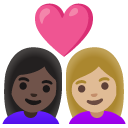
A couple with a heart between two women, with the left woman having dark skin tone and the right woman having medium-light skin tone, representing a same-sex female couple in a romantic relationship with diverse skin tones.
02What does 👩🏿❤️👩🏼 mean on TikTok?
Represents WLW couples, sapphic content, and queer love celebration. Used as a visual shorthand for lesbian or bisexual female relationships.
03What does 👩🏿❤️👩🏼 mean on WhatsApp?
Signals a same-sex female relationship or romantic connection between two women in private chats. Used by couples to communicate love and affection.
04What does 👩🏿❤️👩🏼 mean in Gen-Z slang?
Used by Gen Z to celebrate WLW (women loving women) relationships, queer love, and interracial lesbian couples. Often dropped casually to signal sapphic pride or support for LGBTQ+ relationships without needing words.
05Is the 👩🏿❤️👩🏼 emoji safe to use?
Represents love and romantic partnership between two women with diverse skin tones; used to celebrate WLW relationships, queer identity, and inclusive representation.
06What does 👩🏿❤️👩🏼 mean in texting?
This emoji carries deep emotional weight for LGBTQ+ individuals, particularly WLW communities, as it provides visible representation. Seeing oneself reflected in an emoji can reinforce identity validation and a sense of belonging.
07What is the shortcode for 👩🏿❤️👩🏼?
The shortcode for Couple With Heart: Woman, Woman, Dark Skin Tone, Medium-light Skin Tone is :couple_with_heart_woman_woman_dark_skin_tone_mediumlight_skin_tone:
08What does 👩🏿❤️👩🏼 mean in dating?
Used by women flirting with women to signal romantic interest, especially when combined with personal messages. It's a subtle but clear declaration of sapphic interest.
Safety & usage
- Safe meaning
- Represents love and romantic partnership between two women with diverse skin tones; used to celebrate WLW relationships, queer identity, and inclusive representation.
- Caution
- Occasionally weaponized by bad-faith actors to mock LGBTQ+ visibility or used in anti-queer harassment contexts; also misappropriated in fetishizing contexts by those who sexualize same-sex female relationships for non-affirming reasons.
While the emoji itself is positive and representational, users in regions with anti-LGBTQ+ laws should be aware that public use could carry social or legal risks. The emoji may also attract homophobic harassment in certain online spaces.
How it looks across platforms
Appearance varies by platform and device. Google Noto, Twemoji, and OpenMoji are open-source.